



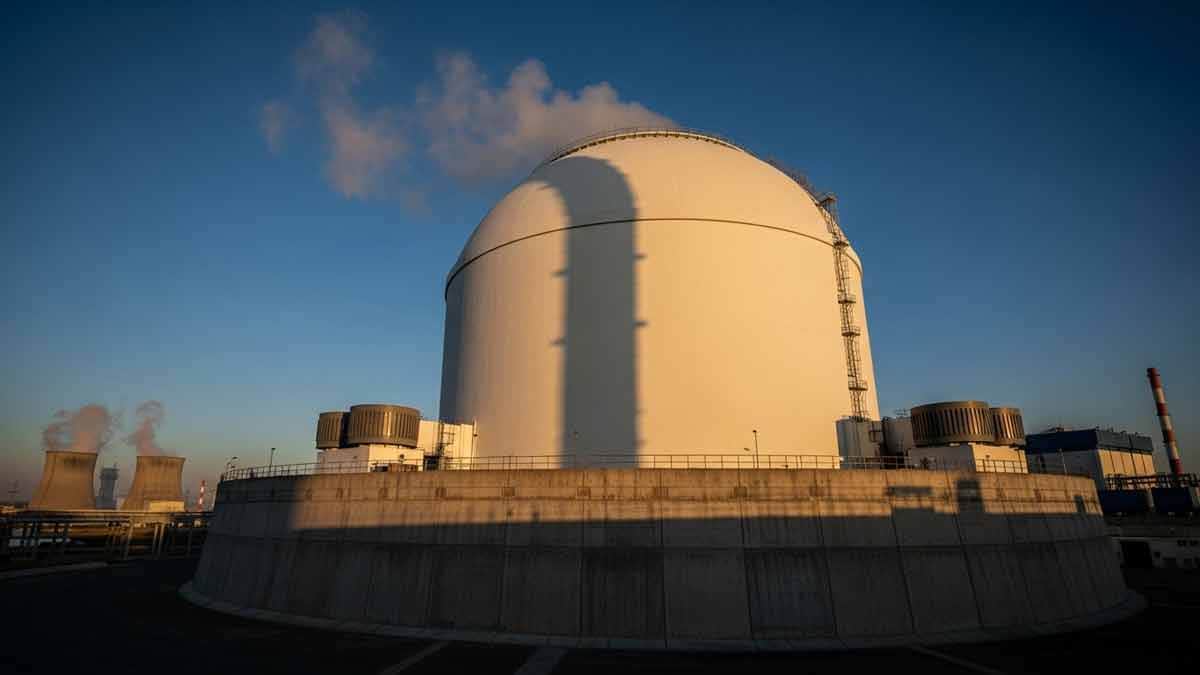
Pressurised Heavy Water Reactors (PHWRs) are emerging as the preferred starting point for private companies preparing to enter India’s nuclear power sector, largely because the country has decades of experience with the technology and an established domestic supply chain.
Small modular reactors (SMRs) remain a key component of India’s nuclear expansion plans. The Nuclear Energy Mission announced in the Union Budget 2025-26 targets 100 GWe of nuclear power capacity by 2047 and aims to develop and operationalise at least five indigenous SMRs by 2033.
However, private-sector companies appear to favour India’s indigenous 700 MWe PHWR design for their initial projects, citing established design standards, regulatory experience and a largely domestic supply chain. SMRs and foreign reactor technologies could be considered at a later stage as the sector gains experience.
At a recent industry event in Delhi, participants identified the supply chain and standardised reactor designs as among the key challenges facing the expansion of private nuclear power.
“We have an advantage in India that we have 700 MWe design, which is standard, approved, operational, and has regulatory blessings. And most importantly relative supply-chain in India. So it’s almost indigenised, 90-95 per cent indigenised,” Vivek Sharma, Business Head of Adani Atomic Energy, was quoted as saying by The Indian Express.
Sharma said international reactor technologies, including SMRs and boiling water reactors (BWRs), would require substantial localisation in India to become commercially viable.
Naveen Ahlawat, President and Head of Sustainability and Decarbonisation at Jindal Steel Limited, also indicated that the company favours 700 MWe PHWRs in the initial phase because of the established supply chain and industrial ecosystem around the technology.
Besides Adani and Jindal, several other firms, including Reliance Industries, Tata Power, Hindalco Industries and JSW Energy, have shown interest in the nuclear sector following policy changes aimed at opening up greater private participation. The SHANTI Act, 2025, provides a legal framework for wider participation by private players in nuclear power generation and other peaceful nuclear activities, subject to regulatory oversight.
Public-sector companies are also preparing to expand their presence in nuclear power. NTPC has set a target of contributing 30 GW of nuclear capacity by 2047. Its joint venture with the Nuclear Power Corporation of India Ltd (NPCIL), Anushakti Vidhyut Nigam Ltd (ASHVINI), is developing the 4×700 MW Mahi Banswara Rajasthan Atomic Power Project in Rajasthan, based on indigenous PHWR technology.
Speaking during the panel discussion, NTPC Projects Director K. Shanmugha Sundaram said PHWRs and pressurised water reactors (PWRs) would account for around 80 per centof the company's targeted 30 GW nuclear capacity.
“Currently, the only available technology in India is PHWR. Naturally, that is the cheapest form of nuclear power available right now. Then we have PWRs, which are already there in Kudankulam. Then we have SMRs, for which it is too early to say,” Sundaram said.
The emerging preference for PHWRs among private players, however, is unlikely to signal a rejection of SMRs, but rather reflects a pragmatic first step for companies entering the nuclear sector.
