



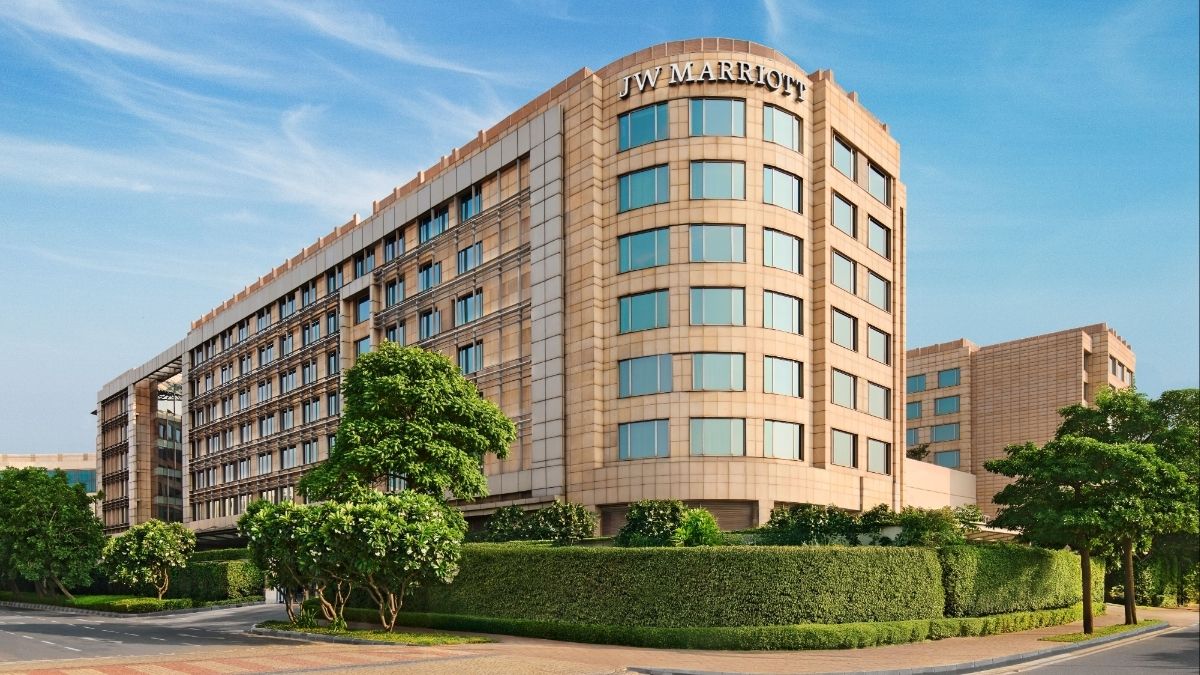
Seventy-one lakh passengers used Delhi’s Indira Gandhi International Airport in the month of May this year. For 19 lakh passengers out of it—that’s more than 1 out of every 4 passengers—Delhi wasn’t their final destination. They were just passing through India’s busiest airport by changing flights and heading to another city.
Add to that the increasing number of business visitors to the city, here on quick visits or events like exhibitions, conventions or weddings. Or the burgeoning ambitions of India’s globally-mobile airlines like IndiGo or Air India, which want to bring in passengers from the length and breadth of the country (and beyond) to hub airports before flying them to global destinations, à la Emirates in Dubai. Then you get a sense of the increasingly mad scramble to set up airport hotels attached to Indian airports in recent years.
Nikhil Sharma, Managing Director & COO, South Asia, of Radisson Hotel Group, was recently quoted by news agencies: “As air connectivity improves, we are seeing a clear rise in demand for well-located hotels that cater to transit passengers, airline crew, and business travellers seeking convenience, efficiency, and seamless access to key commercial hubs.”
The Oberoi group did daintily dip its toes into the scene with its subsidiary ‘Trident’ brand hotels near airports in Chennai and Delhi (in Kochi, too, though the airport itself shifted to another location the same year, eventually leading to the hotel being sub-leased to another company), they were never proper airport hotels in the true sense of the term—the hotels were some distance away, and the focus was not really on the passengers as customers.
That way, Indian Hotels, the Tata company that runs the ‘Taj’ chain of hotels, has been the big mover in recent years. Not only does it run big premium airport hotels outside Bengaluru T2 and Mumbai T1, but its planned 400-room luxury Taj hotel outside Delhi’s T3 (in partnership with Chalet) promises to be a game-changer. The group also won an international tender process to operate a 5-star, 112-key property adjacent to Cochin International Airport in Kerala, as well (Kochi’s airport has the highest non-metro international air traffic in the country).
Now everybody in the hospitality sector is interested. Global major Intercontinental (IHG) has just tied up with Adani to launch five airports with a total of 1,500 rooms and attached to Adani-run airports in the country like Mangaluru and Thiruvananthapuram (Adani is the biggest private airport operator in India, running both Mumbai airports as well as Ahmedabad’s SVP). IHG will use its sub-brands Kimpton as well as Holiday Inn for these airport ventures.
“Airports have... moved well beyond being purely transit assets. Today, the most successful airport hotels sit at the centre of larger commercial ecosystems and cater to a much broader mix of demand including business travel, MICE, airline crew, transit passengers and increasingly local communities,” said Sudeep Jain, Managing Director, South West Asia, IHG Hotels & Resorts, in an interview with THE WEEK.
“In India, the opportunity is particularly compelling because we are in the middle of an unprecedented infrastructure expansion cycle,” he added. “Airports are becoming economic hubs, supported by commercial developments, business districts, retail and improved connectivity.”
The initial driver is the passenger himself—as transit passenger numbers grow, more and more travellers would want to have a space to refresh and relax between flights.
Once IndiGo and Air India get more international transit passengers, this would be more institutionalised (Air India already does this to a limited degree in Delhi for long-haul passengers coming in from the west and who have a connecting flight onward to another part of India with a long time gap). Airlines would also need (like the Centaur and ITDC hotels earlier catered to during Air India’s sarkari days) more rooms once traffic goes up and outstation crew would need to be put up.
But that alone is not what is behind the present ‘gold rush’. As Jain explained, “The fundamental driver is not the airport (but) the economic activity that develops around it—when travel increases, commercial activity follows. Airport corridors are becoming destinations in their own right, attracting businesses, meetings, warehousing, retail and increasingly mixed-use development. That creates multiple demand streams for hospitality.”
“When we look at airport hospitality, we don’t see a niche category. We see a long-term infrastructure-led opportunity,” Sudeep says, as the rest of the hotel industry surely nod in agreement.
