



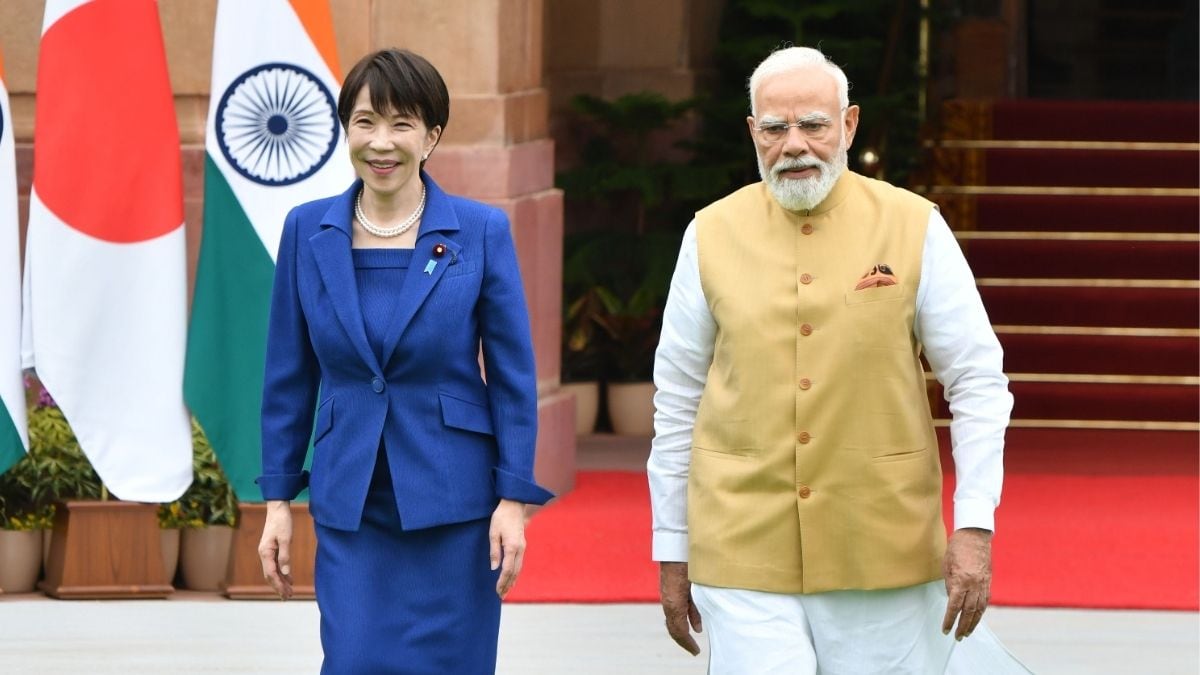
Prime Minister Narendra Modi and his Japanese counterpart Sanae Takaichi used their bilateral summit in New Delhi this week to deepen economic and energy ties, with both leaders reaffirming a target of ¥10 trillion in Japanese investment into India set at last year's summit.
Speaking at the India-Japan Business Forum, Modi urged industry leaders to ensure this investment target is not merely met but surpassed over the next decade, while also calling for a doubling of the number of Japanese companies operating in India.
He highlighted India's 7.7 per cent GDP growth in the last financial year and noted that a Japan Bank for International Cooperation survey has ranked India as the most promising destination for Japanese businesses for the fourth consecutive year.
On energy security, the petroleum ministries of both countries signed a joint statement committing to cooperation on strategic petroleum stockpiling, coordination with oil-producing nations, and joint efforts towards market stabilisation amid ongoing volatility linked to the Strait of Hormuz.
The two sides also agreed to explore joint investments in maritime energy transport and to deepen institutional collaboration between bodies such as India's Strategic Petroleum Reserves Limited and Japan's JOGMEC and JBIC.
Separately, Japan reaffirmed its support for India's membership of the International Energy Agency.
Trade cooperation also advanced, with both leaders marking over fifteen years since the India-Japan Comprehensive Economic Partnership Agreement and agreeing to accelerate its review to make it more forward-looking.
Modi announced a new "Japan Business Week" initiative through which senior officials from the Prime Minister's Office will engage directly with Japanese companies to address ease-of-doing-business concerns.
The two countries also reaffirmed commitment to the Mumbai-Ahmedabad High Speed Rail project, with Japan expressing support for India's target of commencing operations on priority sections by 2027.
