



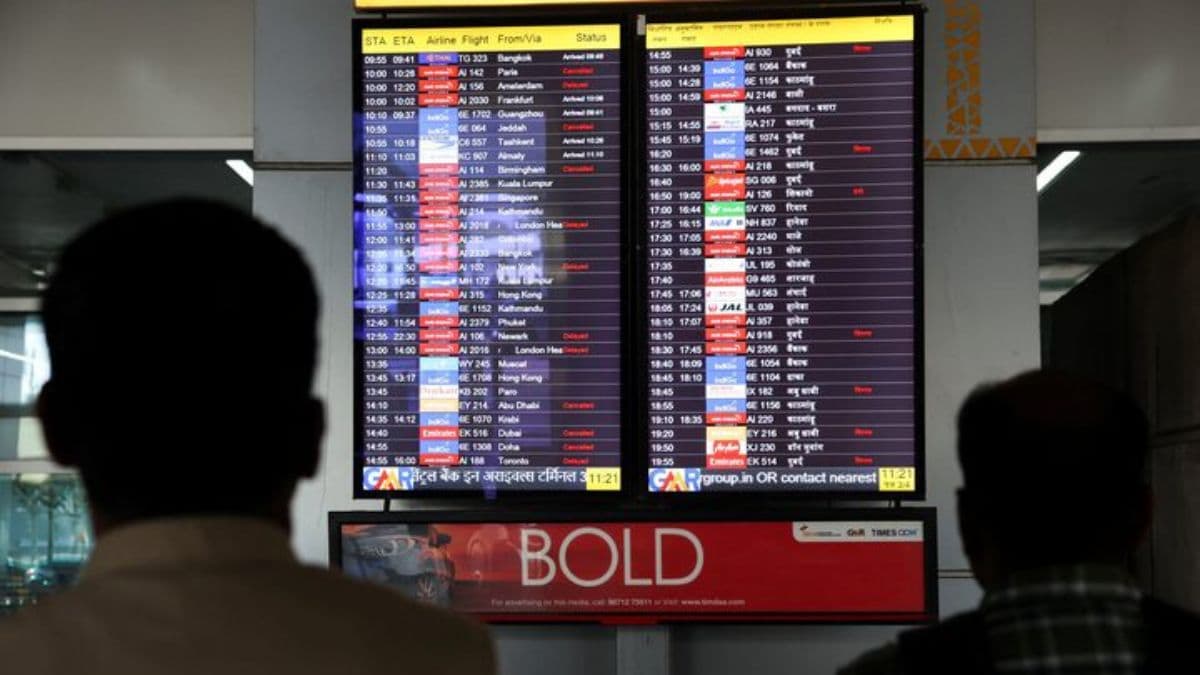
The rules have been written into law. The powers are there. Even then, why is the Indian government not moving in to regulate sudden spurts in the price of air tickets?
This was the question that came into public discourse this weekend, thanks to a Supreme Court hearing on a plea filed by a social activist who called for transparency and the protection of passenger rights in domestic aviation, in order to control what was termed “unpredictable fluctuations”.
The good news for you, passenger, is that the government counsel responded in court saying that it is considering all aspects and that the consultation process was already on.
In other words, India could well have airfares being regulated by the government in the near future.
This is big, because the Centre had always maintained that dynamic pricing was an aviation standard all over the world, and that the government would not want to intrude on free market dynamics.
There were exceptions, like during COVID-19, when the government imposed price bands based on distances.
The aim, then, was twofold: ensure that hapless passengers did not have to pay through their nose to get to wherever they wanted during that period of crisis, and at the same time, ensure that embattled airline companies did not shut down or face predatory pricing.
Interestingly, the Supreme Court case has been going on for some time now, and the government had initially not taken it seriously. It did not even file a response at one hearing a few months ago.
However, matters came to a head this weekend, when the presiding judges themselves expressed their displeasure at the system of dynamic pricing in airfares.
According to reports, the bench of Justices Vikram Nath and Sandeep Mehta said:
“Try to give some relief to the people ... on the same day, on flights to the same sector, one airline charges Rs 8,000, while the other airline charges Rs 18,000 for the economy class.”
And even better, the government’s solicitor general said a new rule is in effect and that corresponding rules are in the process of consultations.
The rule referred to is the Bharatiya Vayuyan Adhiniyam, 2024 which came into effect as law early last year.
The law does empower the government to address predatory pricing, algorithm-based fluctuations, and excessive ancillary charges. The difference—according to the litigator—is that they are not being enforced.
Now, after the court intervening and the government responding that it is looking into it, the question is whether a fare cap will become a reality in India, and also, how—will it be a permanent feature, or will it be temporary, like December last year, when the government went for price caps of airfares, only to withdraw it later.
The bigger question will also be how India’s airlines will react to it.
Of the four pan-national airline companies, IndiGo is the only one making profits, while Air India is in dire straits with losses ballooning to Rs 22,000 crore, and its parent company Tata getting increasingly reticent to pump more money into it.
Both SpiceJet and Akasa are also in the red. Recently, the government cut landing and parking charges at Indian airports for domestic airlines by 25 per cent, and while it was said to be a cushion for the Iran war impact, there is an increasing reasoning that this move is a prelude to the impending regulation of airfares, too.
Globally, most free market countries let demand and supply dictate airfares, though with riders.
Even Europe, while allowing dynamic pricing, strictly enforces ‘public service obligations’ by capping fares for local residents of remote islands like those of Spain and France.
China follows a mixed model—business and tourist destinations follow dynamic pricing, while fares are controlled by the government on other routes to keep them affordable and running (kind of similar to India’s UDAN, but on a larger scale).
The US allows free pricing, but its Department of Transport strictly regulates additional charging, including charges on baggage, seats etc.
Which model India will eventually adopt, and whether it will make its domestic passenger or the airline companies happy, is a question whose answer will be keenly awaited.
