



With the Supreme Court dismissing a PIL challenging the Centre’s Ethanol Blending Programme that pushed the rollout of E20 petrol—fuel blended with 20 per cent ethanol, the common Indian will now have to check if their vehicle is indeed E20-compliant.
In India, most cars manufactured from 2023 onwards, specifically since the adoption of Bharat Stage 6 (BSVI) Phase 2, are designed to run E20 fuel.
Ethanol, more commonly known as alcohol, is chemically different from petrol, which multiple studies show could affect engine performance and cut fuel economy by a tiny 1 to 3 per cent margin.
However, older vehicles were not designed for ethanol, and it could potentially cause long-term engine wear, along with rusting of pipes, and so on.
List of E20-compliant cars
Honda cars in India have been E20-compliant since 2009. All Honda cars manufactured in India since January 1 2009, are E20 fuel material-compatible. The latest models are fully optimised for E20 by default.
“Material-compatible” means that the car’s components can handle the ethanol in the fuel without damage. “Fully compatible” and “compliant” mean that the engine is calibrated and tested for E20.
Maruti Suzuki made its entire product lineup E20-compliant since April 2023. The following made on or after April 2023 under BSVI Phase 2 are E20-compliant: WagonR, Alto K10, Celerio, Eeco, Ignis, S-Presso, Swift, Dzire, Baleno, Fronx, Jimny, Brezza, Grand Vitara, Invicto, Ertiga, and XL6.
Hyundai’s strong lineup of Venue, Exter, Grand i10 Nios, i20 standard, i20 N-Line, Verna, Aura, Alcazar, Creta, and Tucson is also E20-compliant since April 2023 (BSVI Phase 2).
Tata Motors, back in February 2023, already put out a release stating that all their vehicles from then on will adhere to BSVI Phase 2 standards, hence they are E20-compliant. These include the Altroz (new and old), Curvv, Nexon (new and old), Punch, Tiago, Tigor, Harrier, and Safari.
Toyota already confirmed that its older models are not for E20 fuel. However, their lineup, including Glanza, Innova Crysta, Innova Hycross, Urban Cruiser Hyryder, Fortuner, Hilux, and Vellfire since 2023, are E20 compliant.
Mahindra’s XUV 3XO, XUV 7OO, Thar, Thar Roxx, and Scorpio N, and other models since 2023, have been E20 compatible since April 2023.
MG, like the other above, also saw to it that its offerings, like Astor, Hector, Hector+, and Gloster, have been E20-compliant since BSVI Phase 2 kicked in in April 2023.
Kia Sonet, Carens, Carens Clavis, and Seltos have also been E20 compatible since April 2023
Both Skoda and Volkswagen have made their entire India lineup E20-compliant since 2023. These include Kylaq, Kushaq, Kodiaq, Slavia, and Octavia for Skoda, and Taigun and Virtus for Volkswagen. All new models are E20-compliant by default.
Note: This list is from manufacturer statements and public information. Please check with your service centre and manufacturer for absolute certainty.
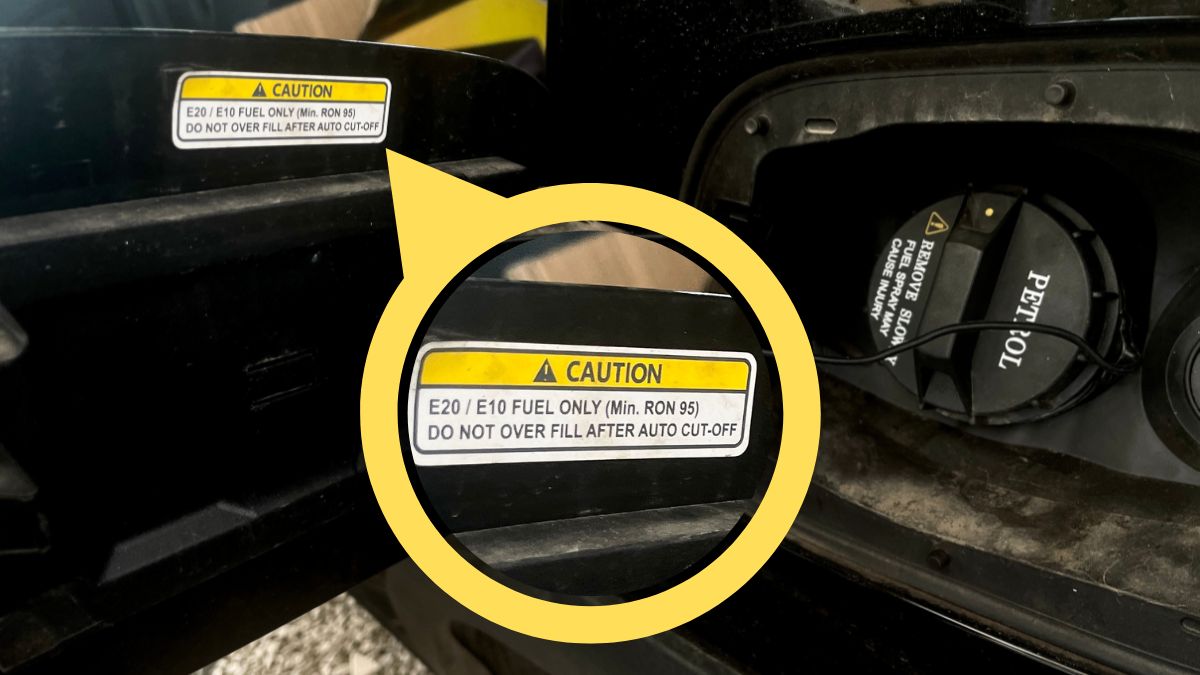
BONUS: Check the inside of the fuel inlet flap
THE WEEK team went to check a few cars that are compatible with E20 fuel.
The April 2023-make Tata Altroz did not have any markings, but the 2024-make Mahindra XUV 3XO had clear instructions stating that it was both E10 and E20 fuel compatible. In fact, it said that it was ONLY compatible with E10 and E20 petrol (pictured above).
