



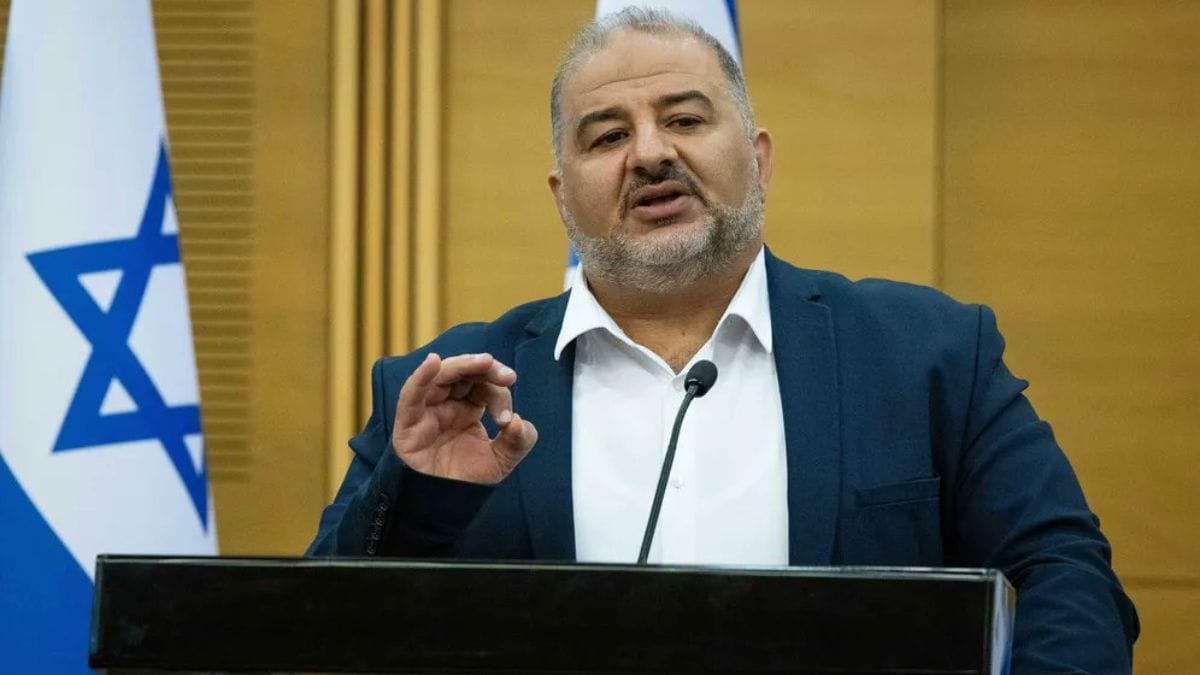
The decision of the Islamic Movement of Israel, or Ra’am, to contest separately from the reconstituted Arab Joint List in the upcoming Knesset election represents a deliberate exchange of pre-electoral unity for post-electoral autonomy. In Israel’s proportional representation system, the formation of a government needs a simple majority of 61 in the 120-seat Knesset. With the current political landscape highly unpredictable, pre-poll predictions show a neck-and-neck race between the pro- and anti-Netanyahu blocs, placing the Arab factions in a decisive kingmaker position.
Recent polls put both the pro- and anti-Netanyahu blocs at roughly 50-55 seats each, leaving the remaining 11-15 seats to the Arab parties, specifically the reformed Hadash-Ta’al-Balad Joint List and Ra’am. The scenario mirrors the 2021 elections: without support from the Arab factions, any prospective government will likely collapse unless a member of the pro- or anti-Netanyahu bloc crosses the aisle for a cabinet position.

Ra’am’s independent candidacy preserves a political identity distinct from that of Hadash, Ta’al, and Balad. Emerging from the Southern Branch of the Islamic Movement, Ra’am retains a socially conservative religious constituency, particularly among Negev Bedouin. Yet, describing it strictly as an Islamic party overlooks its recent evolution. Party leader Mansour Abbas has actively pursued organisational independence from the movement’s Shura Council, positioning Ra’am as a civic vehicle for Muslims, Christians, Druze, and prospective Jewish partners. Placing former Yesh Atid lawmaker and police commander Yoav Seglovitz, a Jewish Zionist, second on Ra’am’s electoral slate reinforces this pivot. The decision to contest separately from the united Arab list protects not an exclusive identity, but Ra’am’s unique synthesis of cultural conservatism, civic pragmatism, and coalition-oriented politics. However, its continuing transformation remains constrained by strong organisational and electoral ties to the Islamic Movement.
This nuanced positioning would be difficult to maintain within a unified Arab slate. Hadash’s socialist and binational orientation, Balad’s Palestinian nationalism, and Ta’al’s comparatively pragmatic nationalism form an alliance rooted in collective Arab representation rather than participation in a government led by a Zionist party. During unity negotiations, Abbas reportedly demanded that any joint slate remain a technical arrangement, preserving Ra’am’s freedom to join a coalition after the election. Running independently circumvents a potential veto from other factions and provides prospective coalition builders with an identifiable partner whose mandate favours practical governance over permanent opposition.
The 2021 election precedent makes this strategy credible. After leaving the Joint List ahead of the election, Ra’am secured only four seats but leveraged the political stalemate to enter the Bennett-Lapid government. As the Israel Democracy Institute (IDI) noted, Ra’am deliberately deemphasised its Islamist orientation and the Palestinian national question, focusing instead on crime, housing, infrastructure, and economic development to build legitimacy among Jewish coalition partners.
However, the autonomy does not automatically guaranteeinfluence, as several leaders have been cautious or negative towards a coalition with Ra’am. B’Yachad (Together) party leader Naftali Bennett has pledged to rely solely on Zionist parties, refusing to partner with Ra’am. Gadi Eisenkot’s Yashar has likewise avoided a formal embrace, floating instead the idea of a minority government sustained by Arab abstention. Avigdor Liberman has also rejected such an arrangement entirely. Thistraps Ra’am in a paradox, where the anti-Netanyahu opposition parties desperately need Arab support, yet they fear that overt dependence will repel right-wing voters and validate Netanyahu’s claim that an alternative government lacks Zionist legitimacy. Consequently, Ra’am may be forced to exert influence indirectly, through abstention, external support, or confidence-and-budget agreements, rather than cabinet membership.
Conversely, running separately carries an inherent electoral risk. Historically, Arab political unity has boosted voter turnout and reduced the risk of falling below the 3.25 per cent electoral threshold. In 2020, the unified four-party Joint List won 15 seats. In contrast, after Ra’am’s departure, in 2021 the fracturedArab lists secured only ten seats, amid sharply lower turnout. While current polls show both Ra’am and the Joint List safely clearing the threshold, minor shifts could alter this balance. Fragmentation maximises Ra’am’s bargaining power if both lists survive and Arab voters remain mobilised.
Ra’am’s solo run is a calculated gamble, trading collective electoral strength for autonomous coalition leverage. If the major blocs remain deadlocked, Abbas will be positioned to negotiate with Yashar, B’Yachad, or a broader anti-Netanyahu alignment over municipal budgets, public security, and the mainstreaming of Arab political participation. Yet, his influence remains contingent on electoral arithmetic and the willingness of Zionist parties to cooperate. Ultimately, the true test of Abbas’s strategy will only begin once the ballots are counted.
The author is a doctoral candidate at the Centre for West Asian Studies, Jawaharlal Nehru University, New Delhi.
