



When I first arrived in New York almost five decades ago, we students, filled with nostalgia for the food we left behind, would hightail it to Sixth Street on the Lower East Side, where Indian restaurants stood cheek by jowl. We were convinced everything was being prepared in a single kitchen and simply distributed among the various establishments. It all tasted the same, and worse, seemed designed around the stereotypical idea of what the average American thought Indian food should be. In short, it was awful.

Decades passed. Restaurants came and went. Some were genuinely good, but most remained rooted in the familiar vocabulary of dal makhani, tandoori chicken and naan. Indian food in New York seemed trapped in a formula, much as Italian cuisine once was during the red sauce culture. Then Italian cooking underwent its own renaissance, embracing its micro-regional identities—Tuscany, Puglia, Sicily, Calabria and beyond. Italian food became not one cuisine, but a constellation of distinct traditions. We wondered when Indian cuisine would experience its own awakening away from the generic culinary gesture.
The answer arrived in 2021, when Unapologetic Foods burst onto the New York scene with Roni Mazumdar and Chintan Pandya at the helm. Their philosophy was radical in its simplicity: Indian food needed no explanation, dilution or apology. It could be unapologetically Indian. And New Yorkers responded.
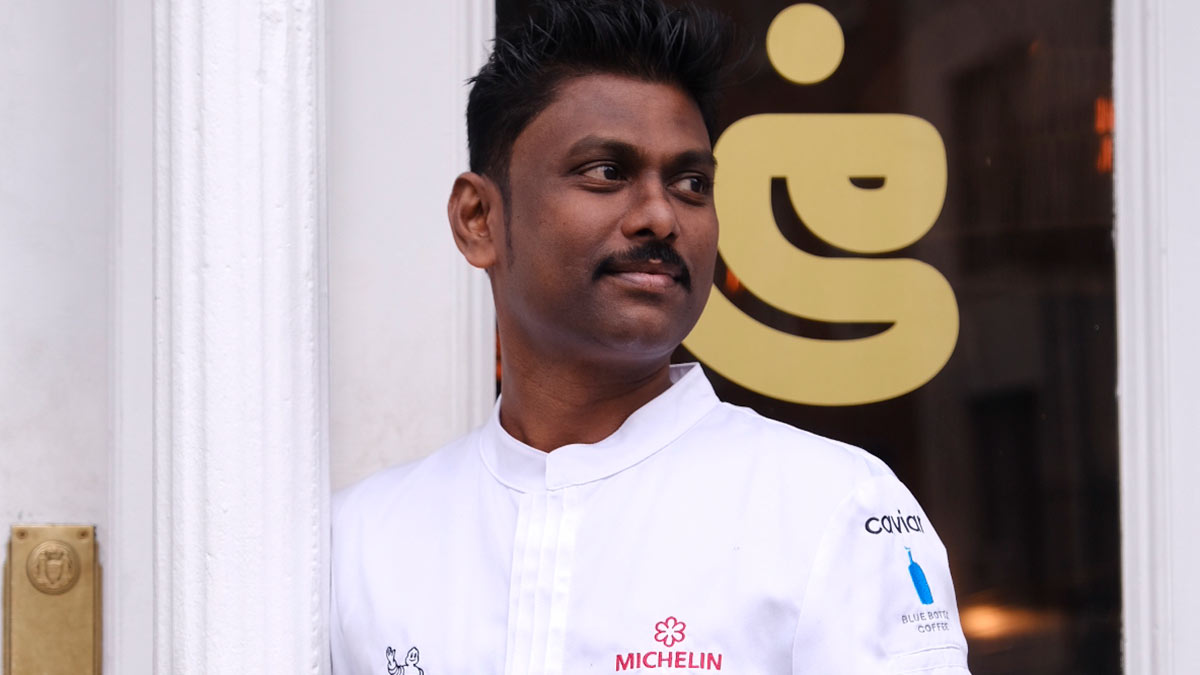
In October 2021, chef Vijay Kumar took that idea further with Semma, bringing the deeply rooted cuisine of Tamil Nadu to the West Village. This was not the idli-and-dosa shorthand of Little India or Queens, but regional cooking presented with refinement, confidence and a sense of place.
The accolades were quick and extraordinary. Kumar won the prestigious James Beard Foundation Award; The New York Times named Semma its No 1 restaurant of the year; and in 2022, Semma received a Michelin star, which it has retained ever since.
Yet Kumar’s greatest achievement may be cultural rather than culinary. His cooking transforms memory and heritage into something immediate and contemporary. Nathai Pirattal, the restaurant’s iconic snail curry served with kal dosas to scoop up the curry, resurrects a dish rooted in the landscape and traditions of south India—food that might otherwise have disappeared from collective memory. It is followed by the signature Eral Thokku—tiger prawns with green chillies, fenugreek and curry leaves—and then completed by the sweet flavoursome Elaneer Payasam (tender coconut pudding).
“Serve food without compromise,” says Kumar. “If I am cooking honestly, people will come. A star is one night’s judgment, but watching a whole regional culture get taken seriously—that’s the real win.”
That sense of cultural responsibility connects Kumar to a new generation of south Indian chefs arriving in New York. Among them is Chef Vinu Raveendran, whose journey to Manhattan began far from Kerala.
After eight years with The Oberoi Hotels, Raveendran travelled to Spain to study high gastronomy at the Basque Culinary Center, immersing himself in a world driven by creativity, research and storytelling. Eight years in Dubai followed, cooking Indian cuisine while absorbing techniques from Spanish, French and Italian kitchens. Ironically, the farther he travelled, the more he found himself returning to the food of his childhood in Kerala.
“I believe chefs today are more than cooks,” says Raveendran. “We are cultural ambassadors. Every dish we serve tells the story of the people, traditions and history behind it.”
That philosophy is at the heart of Kidilum, where Raveendran is chef and partner alongside Sammeer Raajpal and mother-son duo Archana and Sidharth Sharma. The Flatiron restaurant presents Kerala through a distinctly contemporary New York lens. Brass sculptures from Kerala, kasavu saris, handcrafted tiles, coconut shells embellished with gold and carefully considered lighting evoke the region without becoming theatrical.
“We wanted to bring a piece of Kerala to Manhattan in a way that felt subtle, contemporary and sophisticated,” says Archana. “Every meal begins with the Podi Idly—an amuse-bouche that introduces guests to the initial flavours in a single bite. A must is the Chakka Cutlet made with tender young jackfruit and Nandu Curry inspired by the classic varutharacha crab curry, which preserves the deep roasted coconut flavours.”
The food follows the same philosophy. Rather than relying on a single masala, Raveendran treats individual spices—pepper, coriander, fennel, cumin, fenugreek, mustard, turmeric and curry leaves—as ingredients with distinct personalities. They are roasted, tempered, freshly ground or added whole at different stages of cooking. A dedicated spice room allows the kitchen to grind and blend in small batches, while a proprietary Kidilum garam masala provides its signature.
Even the restaurant’s visual identity began with food. During development, Raveendran sketched dishes in watercolour as a way of imagining and preserving his culinary ideas. Archana eventually framed the drawings, turning them into a small gallery within the restaurant—a quiet record of the journey from imagination to plate.
If Raveendran represents Kerala through refinement and design, chef Regi Mathew approaches it through research and memory. Mathew began his career with the Taj Group at Taj West End, Bengaluru, specialising in Thai cuisine. Over the years, he helped open nearly 100 outlets before stepping away to rediscover the cuisine of his native Kerala.
He embarked on an extraordinary culinary expedition, visiting more than 300 Kerala households and over 70 toddy shops, learning recipes and techniques from home cooks, mothers and local chefs. That research became the foundation for Kappa Chakka Kandhari in Chennai and Bengaluru and eventually Chatti by Regi Mathew in New York. “Regardless of how far I go, I will always find my way back to my roots because that is what made me who I am today,” he says.
Located near Times Square, Chatti introduces New Yorkers to the food culture of Kerala’s toddy shops—the intensely flavoured small dishes traditionally served alongside toddy, known as ‘touchings’. Its name comes from the traditional clay pot, or chatti, central to Kerala kitchens and toddy shops.
Mathew’s cooking is grounded in two principles: slow cooking and hyper-local ingredients. His inspiration comes from his mother and grandmother, who raised four boys while managing the family estate and home, using ingredients from the kitchen garden to create the dishes that defined his childhood. And the use of urulis—the shallow vessels found in almost every Kerala home—contribute to the distinct character of the cuisine.
At Chatti, classics are preserved but also thoughtfully reinterpreted. Seafood Moilee Soup captures the essence of appam and fish moilee, served with petit hoppers—kunjappam. Tapioca Mash with Clay Pot Fish Curry revisits the beloved kappa and kudampuliyitta meen curry (fish curry made with Malabar tamarind). Beef Fry has become a favourite, while the signature Cloud Pudding provides an unexpectedly delicate finale. As the guests leave, Mathew presents them with a shell as a remembrance: Hold the shell close to your ears and you will hear the sea whispering stories from distant shores.
“For me, being a chef carries a greater responsibility—I am presenting not just food, but the culture, values and beliefs that I stand for,” says Mathew.
That responsibility is increasingly shared by chefs across south India. Kerala, Tamil Nadu, Andhra and Chettinad are not variations of one cuisine; they are distinct culinary worlds shaped by geography, agriculture, trade, religion and history.
What Kumar, Raveendran and Mathew share is a conviction that these traditions deserve to be experienced on their own terms. They are not merely introducing New Yorkers to new dishes. They are changing the vocabulary through which Indian food is understood.
Perhaps that is the real revolution unfolding on New York’s dining map. Indian cuisine is finally becoming what Italian cuisine became decades ago: not a single national stereotype, but a celebration of regions, memories, histories and identities.
And this time, there are no apologies.
The writer is a global real estate adviser and lifestyle consultant in New York City. He is also an avid writer and globetrotter.
