



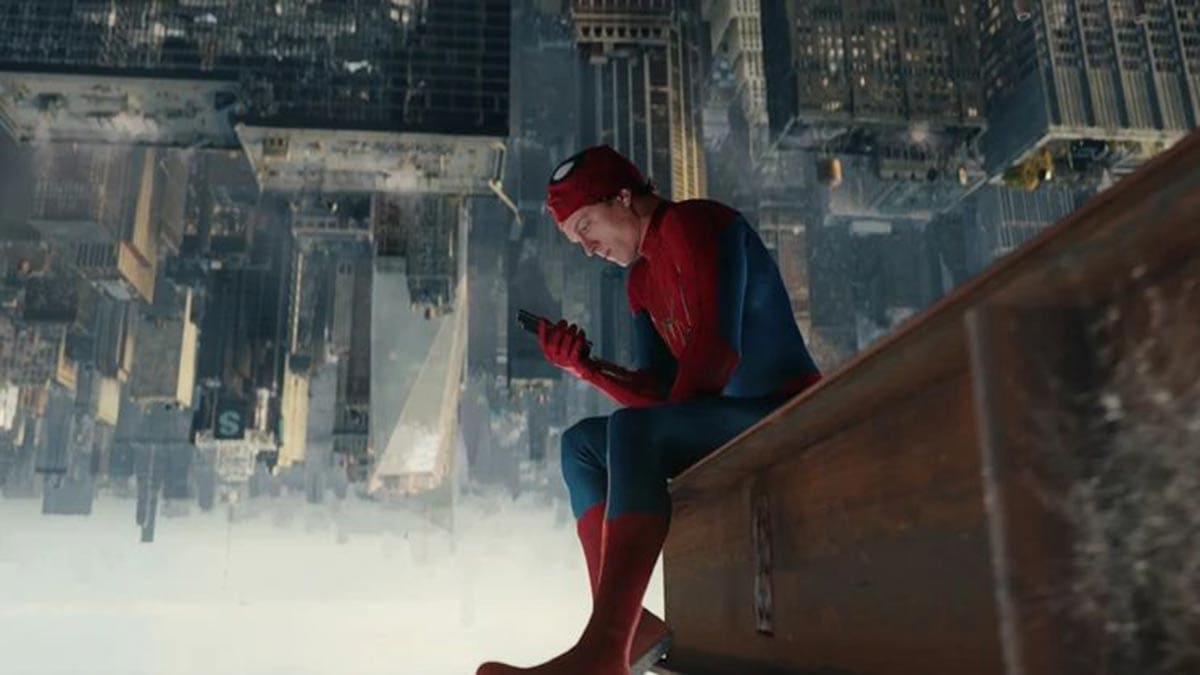
Spider-Man: Brand New Day has already bagged Marvel’s biggest solo superhero opening ever, and for good reason. It isn’t just another sequel. Set four years after the blockbuster Spider-Man: No Way Home, it finds Peter Parker (Tom Holland) living alone, forgotten by everyone he once loved, working as a full-time Spider-Man in a New York that no longer knows his name. It’s a quiet, almost lonely premise for a superhero movie, and that’s precisely the point: this film is Marvel’s most direct attempt yet to hit the reset button on its sprawling universe.
Superhero comics have always faced this strange puzzle. Characters are supposed to grow up, fall in love, even die... but they also need to stay recognisable and “forever young” for readers who are just discovering them.
Publishers solved this in a simple way: they ran more than one version of the same hero at the same time. Marvel published Amazing Spider-Man since 1963, but also launched ongoing titles like Spectacular Spider-Man (1976), Spider-Man (1990), and Ultimate Spider-Man (2000)—each with a different art style, tone and continuity. An older reader could keep following, say, Amazing Spider-Man; a younger reader could start fresh with Ultimate Spider-Man. Everyone wins.
That works beautifully in print. It falls apart on screen. Running two parallel Spider-Man film franchises would be a nightmare for an ordinary movie-goer—few want to do that level of homework before buying a ticket, especially fans of the Marvel Cinematic Universe. The whole appeal of a superhero film is spectacle, not research. That was Marvel’s headache.
Rival publisher DC Comics had a blunt solution. Between 1938 and 1985, it had created a messy, ever-expanding set of parallel worlds—a young industry making things up as it went along. In 1985, DC published a 12-issue series called Crisis on Infinite Earths, introducing two godlike cosmic beings, the Monitor and the Anti-Monitor, who could bend space and time. Their battle became the excuse to literally destroy this “infinite multiverse” and fuse the survivors into one clean, unified history. DC repeated the trick roughly every decade, and readers grew used to these resets.
DC’s film studio later applied the same logic to the big screen: change the actor, and simply declare it a new universe. Christopher Nolan’s Dark Knight trilogy is its own self-contained world; Zack Snyder’s films built the “Snyderverse”; and James Gunn’s newer films now exist in yet another, freshly rebooted DC universe. It worked: clean breaks, clearly labelled.
Marvel Studios never had that luxury. Every actor change, every new film, was folded into one single, ever-growing MCU, and audiences noticed everything. When the films were hits, that shared universe felt like a superpower. When enthusiasm cooled in recent years, that same interconnectedness started to feel like a burden: too many characters and loose threads, no clean way to simplify things without undoing established movies.
Marvel’s way out came, fittingly, from Spider-Man, this time an animated one. Sony’s Spider-Man: Into the Spider-Verse showed that audiences could happily follow several different versions of the same hero at once, as long as the film was upfront about how these worlds collide and what’s really at stake when they do.
Marvel took that lesson into the MCU through Loki, the Disney+ series that explained its multiverse rules for the first time on screen: a bureaucratic agency called the Time Variance Authority was shown policing a single “Sacred Timeline”, pruning any alternate version of events.
By the end of the show, that agency loses control, and the timeline fractures into countless branches—setting up fertile ground for many different realities to exist side by side going forward.
Spider-Man: No Way Home cashed in on that setup almost immediately and borrowed from one of the most controversial storylines in Spider-Man comics: One More Day from 2007.
In the comic, Peter’s dying Aunt May pushes him to strike a deal with Mephisto, Marvel’s version of the devil: May’s life is saved, but only if reality is rewritten so that Peter’s marriage to Mary Jane never happened at all, erasing his years of adult responsibility along with the public knowledge of his double life.
The film version starring Holland and Zendaya (MJ) had no devil and no deal—instead, Doctor Strange (Benedict Cumberbatch) cast a spell to make the world forget Peter is Spider-Man, which goes wrong and pulls in villains and Spider-Men from other films, before Peter chooses to have himself erased from his loved ones’ memories to keep them safe.
Spider-Man: Brand New Day is set four years after that memory-wipe, and the film gives Marvel a Spider-Man who can have fresh, “friendly neighbourhood” stories without contradicting anything movie-goers had already watched.
What makes this particular film notable, though, is who else shows up. Jean Grey—one of the founding members of the X-Men—enters this story. It’s a small but telling signal: rather than announcing a hard reboot the way DC does, Marvel is choosing to quietly merge its separate corners together, one soft crossover at a time. It’s a clever middle path: keep one coherent universe, the way MCU audiences expect, but borrow the comics’ oldest trick—a magical or cosmic excuse—to bring in new characters without ever hitting reset.
Between DC now running two separate universes under Gunn’s Superman and Matt Reeves’s Batman, and Marvel stitching its scattered characters into one giant web through Spider-Man, this might genuinely be the most interesting stretch superhero cinema has had in a decade.
