



THE FORMATION OF the Cockroach Janta Party (CJP) as a form of protest happened because most avenues of dissent are blocked, not only in politics but also in the media and cinema.
The tragedy is that the Bollywood of the 1950s, 1960s and 1970s produced wonderful films. The independence struggle was recent and people had an understanding of what nationalism actually was. They believed in fighting for the poor, confronting social evils and standing up against religious violence. Much of that has now been surrendered to the politics of hatred.
What we are witnessing today is the rise of a cinema that presents itself as nationalist but is actually propagating hindutva nationalism promoted by people who never participated in India's freedom struggle.
And yes, many of these films are doing well at the box office. They have succeeded in creating a mindset of hatred towards Pakistan, Muslims and all who can be thrown into the category of 'the other'. It is easy to whip up hatred. It is much harder to do the work people like Mahatma Gandhi tried to do, which was to build communal harmony.
Nationalism is a good thing when you are fighting a foreign power, as we did against the British. But today, when an ideology that openly collaborated with the British is in power, what happens when you oppose them? Are you a nationalist or an anti-national?
The irony is that the same ecosystem promoting these hyper-nationalist films is also responsible for many of the issues confronting young people today—from paper leaks to corruption and cronyism. They have enabled the concentration of economic and political power into the hands of monopolists like Adani and Ambani.
Corruption is no longer called corruption because laws are changed retroactively. If a forest is destroyed and something illegal is built, the law is simply altered to make it legal. That is corruption through power and control.
I am glad people are beginning to see through this. For a long time, I was frustrated that the youth of this country did not seem to be reacting. Now, at least, they are. That is why the emergence of the CJP is significant. But a viral internet protest is not the same thing as a movement. It is one thing to gather millions of views online; it is another to build an organisation capable of sustaining political change. Whether the CJP has that capacity and discipline remains to be seen.
The government's response has also been telling. It understood that the CJP had become too popular. In a matter of days, it amassed more followers than the BJP. Had the government cracked down on it immediately, it might only have made the movement stronger. So it chose the safety valve option, hoping the movement would fizzle out. This is particularly striking because when we tried to organise even small protests in solidarity with Palestine against the genocide in Gaza, we were denied space, perhaps because we were in the hundreds, not millions.
There is clearly a great deal of public anger. People feel that institutions no longer work for them. They see the media, the courts, investigative agencies and other institutions increasingly concentrated in the hands of those in power. As a result, they turn to whatever avenues that remain available. For many, the internet is one such avenue.
But even this space is shrinking. Just recently, YouTube flagged my 1995 documentary Father, Son and Holy War as excessively violent. This is a film that received a censor board certificate, won two National Awards and was eventually broadcast by Doordarshan after a Supreme Court ruling. The film does not glorify violence; it critiques communal violence. It is an argument against hatred. Yet decades later, YouTube says it violates its policies. Censorship, therefore, is no longer only an Indian phenomenon. It is increasingly global.
Earlier filmmakers had some recourse. There was an appeals mechanism within the censor board, and courts acted as a safeguard. Today, winning in court has become difficult because our legal system has been methodically infiltrated. To give an example: killers of rationalists like Dr Narendra Dabholkar, Govind Pansare, Prof M.M. Kalburgi and journalist Gauri Lankesh are all out on bail! Meanwhile, Umar Khalid rots in jail for six years for advocating peaceful resistance to an unconstitutional Citizenship Bill that treats Muslims as second class citizens.
If you ask me why commercial filmmakers and film workers are silent, it is because there is too much money involved. The financial stakes are so high that few have the guts to speak out. So pro-hindutva, so-called nationalist films are cashing in because that is the mood of the moment. That moment will pass. Fascism never lasts long and India will not tolerate it endlessly. Students began protests. Then Shaheen Bagh mobilised women and minorities. Then came the farmers movement. Now cockroaches and worms are proliferating. Soon, we will morph into the butterflies of a rainbow nation.
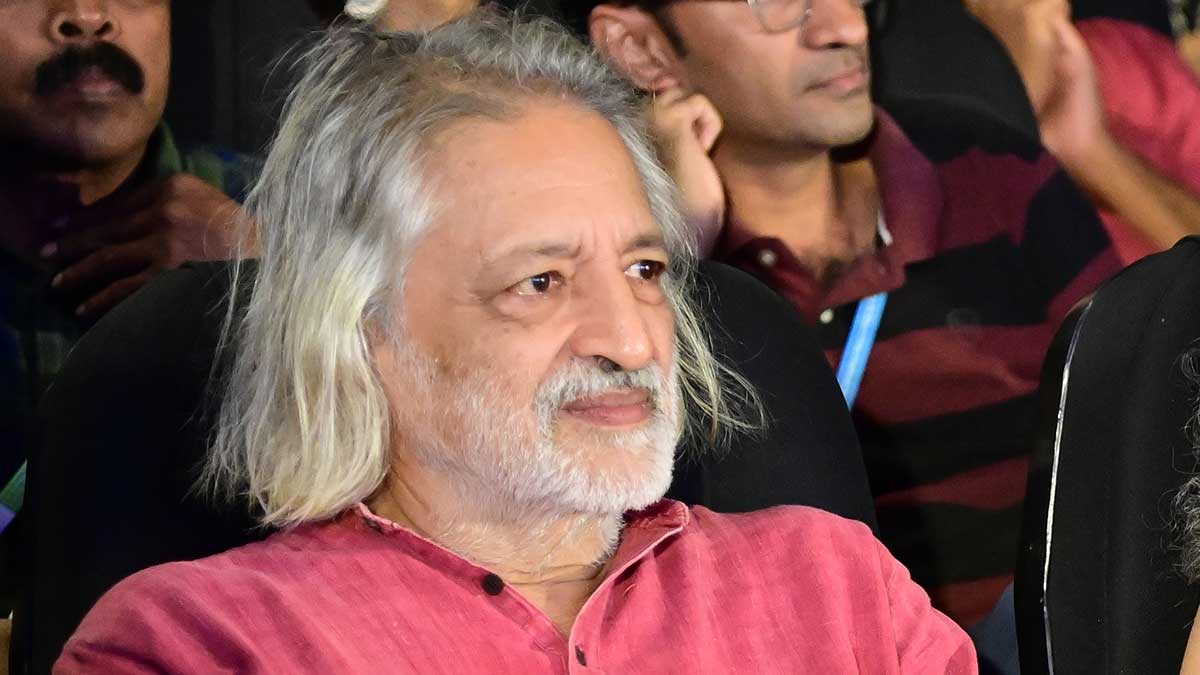
Patwardhan is an award-winning filmmaker.
As told to Shubhangi Shah.
