



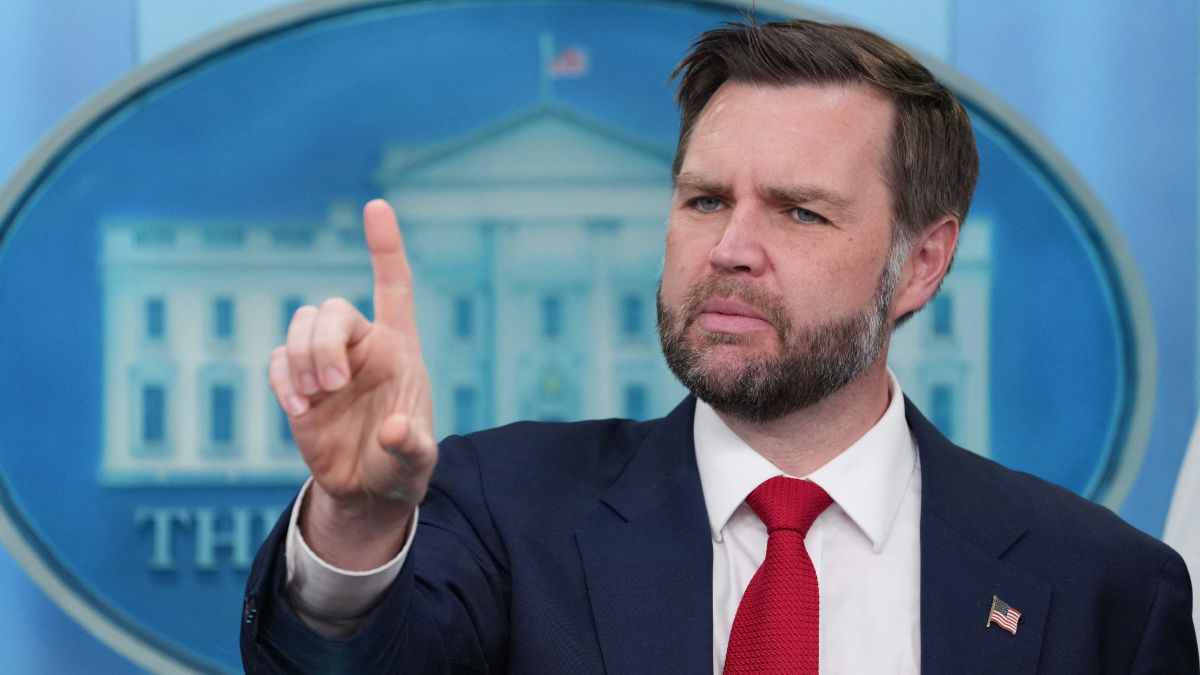
US Vice President JD Vance condemned the lack of press freedom in Pakistan and blamed the same for the delay in releasing the details of the peace deal memorandum of understanding (MoU) with Iran.
US President Donald Trump had announced that the US reached an interim peace deal with the Islamic Republic of Iran on June 15. The official text of the MoU was released two days later. Islamabad and Doha were mediators involved in the talks to end the conflict in the Middle East and open the Strait of Hormuz for trade.
According to the US Vice President, Washington wanted to release the details soon. However, the lack of press freedom in Pakistan and Qatar stood as a major hurdle. He was speaking on the podcast 'Interesting Times with Ross Douthat'.
"We actually wanted to get it out. I think part of the misalignment here is that in the Pakistani and Qatari systems, they don't quite have the First Amendment and freedom of the press," Vance reportedly said.
The First Amendment of the U.S. Constitution prohibits the government from making laws that infringe on fundamental freedoms: religion, speech, the press, assembly, and petition. It prevents the state from censoring media along with establishing a religion or stopping peaceful protests.
"And so, there isn't this expectation (in Pakistan) that the text is going to be out there for the American people to actually interrogate and look at and analyse and understand for themselves. But it will be out," he added.
The interim deal requires the United States, Iran and their allies to declare an immediate and permanent termination of military operations on all fronts, including in Lebanon. Israel, left out of the talks, says it is not a party to the deal.
A memorandum of understanding signed this week by the Iranian and U.S. presidents left discussion of Iran's nuclear programme and other tough issues until later, giving the sides 60 days to reach a lasting agreement or extend the interim deal.
Preparations for technical talks to start in the Swiss mountaintop resort of Bürgenstock were far advanced when U.S. Vice President JD Vance said on Thursday he had dropped plans to attend, two people familiar with the matter told Reuters. Earlier on Thursday, a source familiar with Tehran's thinking had said Iran's lead negotiator Mohammad Baqer Qalibaf was not planning to attend.
A Swiss foreign ministry statement said the talks had been postponed and that Switzerland remained ready to facilitate the talks and the relevant preparatory work was continuing. Iranian leaders did not immediately comment on the postponement of the meeting in Switzerland.
