


 Add as a preferred source on Google

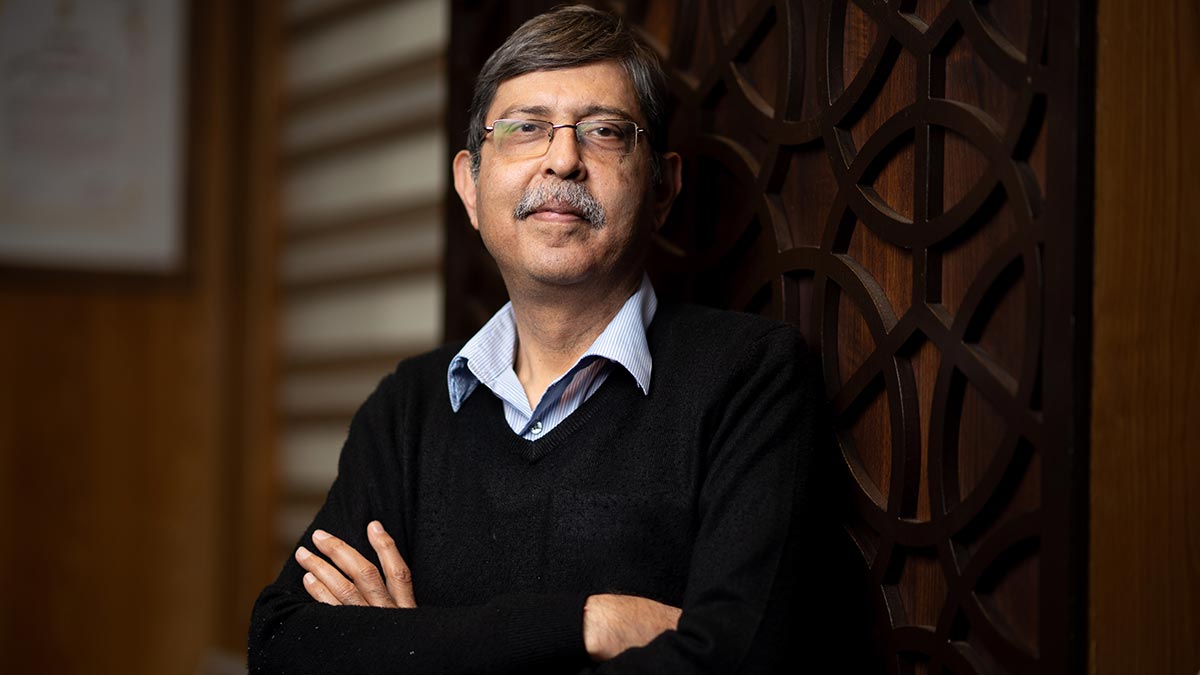
Interview/ Dr Nikhil Tandon, director, All India Institute of Medical Sciences, New Delhi
At a time when India’s health care system is grappling with a growing burden of non-communicable diseases, rising patient loads and the rapid integration of technology into medicine, the future of health care will depend as much on how efficiently care is delivered as on how advanced it becomes. For Dr Nikhil Tandon, an eminent endocrinologist, the emphasis must be on building a more stratified, evidence-driven and equitable health care system, where patients receive the right care. Excerpts from an interview:
Q/ What is your vision for AIIMS over the next few years?
Our core principles will remain intact. They are education, patient care and research. The question is how we emphasise, prioritise and implement different aspects within these three verticals.
We are in the business of delivering high-quality, dependable, ethical and empathetic health care to people across the socioeconomic spectrum, from the very privileged to the most impoverished. That commitment will continue. However, there is an increasing introduction of technology, both in terms of hardware, software and instrumentation. We need to harness these developments judiciously rather than indiscriminately adopting technologies when the same outcome could be achieved more affordably and efficiently without imposing an additional technological or financial burden, either on the health care system or the individual.
We also need to understand emerging areas such as precision and personalised health care. People often interpret these terms as requiring highly sophisticated and extremely expensive equipment or testing methodologies. But what is equally important is the ability to stratify patient populations, understand different phenotypes, responses to therapy and diagnostic algorithms.
We need to capture data effectively and develop the ability to manage it using big-data analytics. This will help us identify patterns, pathways and risk categories. For instance, not every person with diabetes necessarily requires the same investigations or interventions. We need more nuanced care delivery. This will require us to harness artificial intelligence, digital technology and big data. But it must also involve the respectful use of information. We must remember that an individual’s health parameters belong to that individual.
Q/ Can AIIMS remain a centre of excellence while catering to the masses, particularly given the enormous patient load, waiting periods and infrastructure pressures?
If you consider us a centre of excellence, then we are already catering to the masses. I would, however, disagree with casual statements about infrastructure and waiting periods that suggest AIIMS alone is responsible for providing health care to everybody. We need to understand the larger health care ecosystem. We have more than 62 operating rooms. Elective surgeries, which when I was an undergraduate here would generally finish by mid-afternoon, now continue until eight, nine or even ten at night. But I also have a responsibility towards educating my students, postgraduates and trainees. If I use them purely as service providers, I am doing them a disservice. I have to balance these responsibilities.
Our core mandate remains the same, and patient care is only one of its three components.... From a patient’s perspective, having to wait for treatment is understandably distressing. But patients are only one of the stakeholders in this relationship. I must also cater to my students, trainees and postgraduates, as well as faculty members who want to undertake nationally relevant, context-specific research. They need time to do that. We must therefore appreciate that AIIMS is not merely a hospital. It was established with a three-fold mission, and I must be allowed, encouraged and supported to contribute equitably to all three.
Q/ India is facing a growing diabetes epidemic. Where are we going wrong?
It is a combination of several things. First, we need to understand the difference between acute, finite illnesses and chronic diseases. If you develop a fever, you seek medical assistance, get diagnosed with dengue, receive treatment for five days and recover. The episode is over. Diabetes is very different. There is a strong possibility that you may be asymptomatic. Unless you are screened, you may not even realise that you have the disease. There is what we call the rule of halves, which is well-established in chronic non-communicable diseases. These are approximate figures, and the actual numbers vary. About 50 per cent of people with diabetes do not know they have the disease. Of those who are diagnosed, 50 per cent do not seek medical care. Of those who seek medical care, 50 per cent do not take treatment. And of those who take treatment, 50 per cent do not achieve their treatment targets. So you move from 50 per cent to 25 per cent to 12.5 per cent, and eventually to an even smaller proportion of people who are adequately controlled. Effectively, fewer than 10 per cent of people with diabetes may be well controlled under this illustrative framework.
Therefore, the solution must address all four stages: identification, seeking medical care, initiating treatment and achieving adequate control. The government has provided an opportunity for screening everyone above the age of 30 for diabetes, hypertension and three common cancers through its Ayushman Arogya Mandirs and other primary health care facilities.
Importantly, these facilities can also initiate treatment. The gap between diagnosis and starting treatment has narrowed considerably. However, diabetes is a chronic condition, and that brings another challenge. People may feel fatigued by the need for continuous care. Since they are often asymptomatic, their commitment to regular consultations and medication can waver over time. We therefore need mechanisms to ensure that medicines reach patients and that they are reminded to return for followup consultations, perhaps once every three months.