



The Indian farmer is stepping into a new role—not just annadata, the provider of food, but also urjadata, the producer of energy.
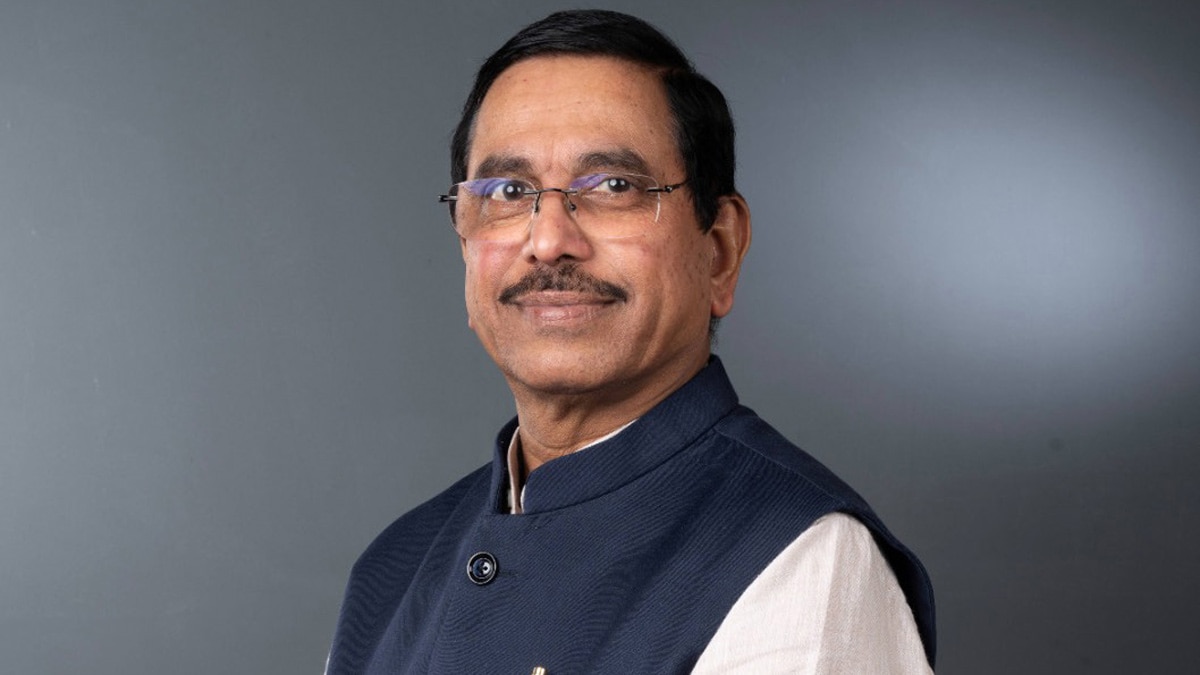
On October 21, Union Minister for New and Renewable Energy Pralhad Joshi highlighted agrovoltaics, an approach that enables farmers to harvest both crops and solar power from the same land, generating additional income while keeping their land productive.
The concept drew international attention at the seventh AgriVoltaics World Conference in New Delhi, which brought together around 400 farmers, policymakers and researchers from more than 30 countries to explore how agriculture and solar energy can work together to sustain livelihoods and accelerate the clean-energy transition.
Recognised by TIME as one of the 100 most influential climate leaders, Joshi is steering India’s ambition to achieve 500GW of non-fossil-fuel ca pacity by 2030. With the country’s installed solar capacity having crossed 308GW by September, solar power remains central to its clean-energy transition.
“The renewable-energy share in India’s installed electricity generation capacity is 53.54 per cent as of September 2026,” says Joshi. “Already, renewables have helped India save 04 lakh crore in fossil fuel- and pollution-related costs in 2024.”
A stronger push, however, is needed from state governments by quickly identifying suitable land for solar projects and easing land rules for conversion to non-agricultural purposes. Joshi is optimistic about India’s sunrise moment.
The country ranks third globally in installed solar power capacity and overtook the US in annual solar capacity additions in 2025, becoming the world’s second-largest market for new solar installations. These incremental gains, he says, will help India move closer to 500GW of non-fossil-fuel capacity by 2030.
Excerpts from an exclusive interview:
India has crossed 50 per cent of installed electricity capacity from non-fossil sources and is targeting 500 GW by 2030. What are the biggest challenges to achieving this goal? How will the ministry ensure that new capacity translates into reliable, round-the-clock clean power rather than just installed capacity?
India achieved a major milestone in June 2025 by securing 50 per cent of its cumulative installed electricity capacity from non-fossil fuel sources, five years ahead of its 2030 target under the Paris Agreement. Under the leadership of Prime Minister Narendra Modi, India became one of the first major economies to achieve this feat.
As of September 2026, renewable energy accounts for 53.54 per cent of India’s installed electricity generation capacity.
According to an IRENA (International Renewable Energy Agency) report last year, renewables helped India save 04 lakh crore in fossil fuel and pollution-related costs in 2024.
One of the biggest challenges is acquiring land for solar projects. To address this, the ministry has repeatedly written to states and Union territories, urging them to identify suitable land and ease land-use rules, including exemptions from the requirement to convert agricultural land for non-agricultural purposes.
The government has set a target of 500GW of installed electricity capacity from non-fossil fuel sources by 2030. To increase the share of renewable energy in the country’s total power generation, it is implementing a comprehensive set of measures. These include competitive bidding for renewable energy projects; expansion of transmission infrastructure through the green energy corridor and inter-state transmission system; implementation of renewable purchase obligations and energy storage obligations; and promotion of battery energy storage systems (BESS) and pumped-storage projects to integrate more renewable energy into the grid.
Other initiatives include the National Green Hydrogen Mission, promotion of offshore wind energy, implementation of PM Surya Ghar: Muft Bijli Yojana and PM-KUSUM, and support for domestic manufacturing through the production-linked incentive (PLI) scheme for high-efficiency solar PV modules.
What estimates does the government have of the additional electricity demand that AI and data centres are likely to generate over the next decade? How much of this demand will be met by renewable energy?
According to the Central Electricity Authority (CEA), India’s installed power generation capacity is about 554.54GW. The country successfully met an all-time peak electricity demand of about 271GW in the current financial year. Renewable energy sources met nearly one-third of this peak demand.
The CEA’s latest estimates project that the electricity load from data centres will increase to around 26.3GW by 2031-32.
As of August 2026, India has crossed 308GW of installed non-fossil fuel capacity, including more than 170GW of solar power and 59.24GW of wind power. The government aims to increase installed generation capacity from non-fossil sources to 500GW by 2030. According to CEA studies, this capacity is likely to rise further to 786GW by 2035-36.
Data centres will need to contract generating capacity to meet their electricity requirements. Given the government’s emphasis on expanding non-fossil capacity, a major share of their electricity demand is expected to be met through a combination of renewable energy, energy storage and nuclear power.
Energy storage is becoming critical to India’s renewable energy transition. What concrete steps is the ministry taking to accelerate battery storage and pumped-hydro projects to ensure grid stability?
The CEA has estimated that India will need around 60.63GW (336.4GWh) of energy storage capacity by 2030. This includes 18.98GW (128.40GWh) from pumped-storage plants and 41.65GW (208GWh) from BESS.
The ministry of heavy industries is implementing the national programme on advanced chemistry cell battery storage to establish large-scale domestic manufacturing facilities. The programme aims to create a competitive manufacturing ecosystem with a capacity of 50GWh and a total budgetary outlay of 018,100 crore.
The ministry of power is providing viability gap funding under various schemes to support the development of more than 43GWh of BESS capaci ty in the country.
In September 2023, the government issued a national framework for promotion of energy storage systems. It provides a roadmap for deploying storage technologies, integrating them into the electricity market and facilitating their development through appropriate regulations.
To improve project viability, Inter-State Transmission System charges have been waived for co-located BESS projects commissioned up to June 2028. Electricity supplied from BESS is also allowed to participate in the high-price day-ahead market.
The CEA has issued an advisory recommending that solar power projects be co-located with energy storage systems. It recommends storage capacity equivalent to at least 10 per cent of installed solar capacity, with a minimum storage duration of two hours, to make solar power more dispatchable.
The government has also issued a framework for developing pumped-storage projects and prepared a roadmap to achieve 100GW of hydro pumped-storage capacity by 2035-36.
India has expanded domestic solar manufacturing through the PLI scheme. What are the next policy priorities to make Indian manufacturers globally competitive while reducing dependence on imports?
As of September 2026, India’s installed solar PV module manufacturing capacity has crossed 225GW, catering to domestic demand. Domestic solar cell manufacturing capacity has also reached around 37GW.
The growing availability of solar modules is reflected in the rapid expansion of decentralised solar power. During FY 2025-26, around 16.3GW of solar capacity was added through rooftop solar and PM-KUSUM, marking the highest-ever annual addition in the distributed solar segment.
The government has taken several measures to strengthen domestic solar manufacturing and ensure the availability of photovoltaic modules for schemes such as PM Surya Ghar: Muft Bijli Yojana and PM-KUSUM.
These include the PLI scheme for high-efficiency solar PV modules, exemption from customs duty on imported capital goods used to manufacture solar cells and modules, imposition of basic customs duty, and notification of the approved list of models and manufacturers.
These measures have significantly expanded India’s domestic solar PV manufacturing capacity.
The National Green Hydrogen Mission has generated strong interest, but commercial adoption remains limited. Which sectors do you expect to drive demand, and what further policy support is needed?
The government is implementing the National Green Hydrogen Mission (NGHM), which targets green hydrogen production of 5 million tonnes per annum (MTPA) by 2030.
Under the SIGHT (Strategic Interventions for Green Hydrogen Transition) scheme, 17 companies have been awarded contracts for a cumulative green hydrogen production capacity of 7.56 lakh tonnes per annum. Another 15 companies have secured electrolyser manufacturing capacity of 3,000MW per annum.
Several Indian companies have also entered into off-take agreements with international players to export green hydrogen and its derivatives.
At present, the refinery and fertiliser sectors account for the bulk of green hydrogen demand. The Solar Energy Corporation of India has discovered prices for the production and supply of 7.24 lakh MTPA of green ammonia to 13 fertiliser units across the country. Agreements have been signed for 6.70 lakh MTPA with 11 fertiliser units.
In the refinery sector, contracts have been awarded for supplying 30,000 tonnes of green hydrogen per annum to IOC, BPCL, HPCL and Numaligarh Refinery. Refineries will continue to play a key role in driving future demand.
Beyond refineries and fertilisers, demand is expected to emerge from the steel, transport and shipping sectors, as well as export markets. Pilot projects are already under way in steel, transport and shipping.
We recently launched the Green Hydrogen Certification Portal to enhance transparency in the sector.
Under the NGHM, the government is supporting electrolyser manufacturing, green hydrogen production, the development of green hydrogen hubs, and pilot projects in steel, mobility and shipping. Going forward, the policy focus will be on building an ecosystem that supports the growth of India’s green hydrogen industry.
The PM Surya Ghar scheme has boosted rooftop solar adoption, but challenges remain in apartments and urban housing societies. How does the ministry plan to expand rooftop solar in these segments?
PM Surya Ghar: Muft Bijli Yojana has emerged as the world’s largest residential rooftop solar programme, with more than 64 lakh households benefiting across the country. One lakh households are benefiting in just six days. We are targeting around 75 lakh households by the end of the year.
Around 21 lakh households have received zero electricity bills in at least one billing cycle under the scheme. Households exporting surplus electricity to the grid have earned approximately 0421 crore, translating into an average additional income of around 03,500 per household annually.
Apartments and group housing societies represent the next major opportunity for rooftop solar expansion. Nearly 18,000 residential welfare associations (RWAs) have already adopted rooftop solar, benefiting more than 8.58 lakh households through installations on shared rooftops and in common areas.
The ministry is promoting virtual net metering (VNM), which allows electricity generated by a common rooftop solar system to be allocated virtually among multiple households. States are progressively notifying VNM regulations, while distribution companies are upgrading their billing systems to implement the framework.
Under the City Acceleration Programme (CAP), 100 cities have been identified for focused interventions to speed up rooftop solar deployment. Dedicated consultants have already been deployed in 46 of these cities.
These initiatives are expected to accelerate rooftop solar adoption in apartments, group housing societies and urban centres.
India aims to become a global clean-energy manufacturing hub. How does the ministry plan to compete with countries such as China and the US in attracting investment, technology and exports?
I believe India is already a major force in clean energy. The country has crossed 300GW of installed non-fossil fuel capacity, marking a decisive step towards energy security under the leadership of Prime Minister Narendra Modi. India’s renewable energy expansion is setting global benchmarks and strengthening its position as a trusted leader in the global clean energy transition.
India’s renewable energy capacity has grown from around 76GW in 2014 to 308.02GW by September 2026, an increase of more than 3.87 times in just 12 years. This represents a remarkable transformation in scale, speed and ambition.
India has risen to third place globally in total installed non-fossil fuel capacity. It also ranks third in solar energy capacity and second in annual solar capacity addition in 2025, having overtaken the US. In wind energy, India ranks fourth globally.
The government has introduced several measures to strengthen domestic solar PV manufacturing and improve global competitiveness of Indian manufacturers in terms of cost and technology…. These measures have helped expand domestic manufacturing capacity. India now has around 225GW of solar module manufacturing capacity across 184 manufacturing facilities. To promote the domestic manufacture of efficient, high-quality electrolysers, the specific energy consumption (SEC) of electrolysers has been included as a factor in calculating incentives. This is important because energy consumption directly affects the cost of green hydrogen production.
In addition, initiatives such as the Critical Minerals Mission aim to improve global competitiveness by securing alternative sources of minerals and raw materials critical to India’s domestic battery manufacturing ecosystem.
Coal remains essential to India’s energy security even as renewables expand rapidly. How do you envision balancing energy security, affordability and climate commitments over the next decade?
Having served as the coal and mines minister in my previous tenure, I believe India must balance energy security, affordability and climate commitments through a gradual, pragmatic energy transition rather than an abrupt reduction in coal use.
Coal will continue to play an important role, particularly as electrici ty consumption rises with economic growth, even as renewable energy capacity expands rapidly.
At the same time, investments in solar, wind, hydro, nuclear power, battery energy storage and pumped storage, along with stronger trans mission infrastructure and flexible generation, will help integrate more variable renewable energy into the grid.
We must also modernise existing coal-based power plants and improve their efficiency, reduce emissions through cleaner technologies, and ensure adequate domestic coal availability to maintain an affordable and reliable power supply.
Electrification of transport and industry, green hydrogen, energy efficiency and demand-side management can progressively reduce dependence on fossil fuels beyond the power sector.
This balanced approach will ensure reliable and affordable electricity in the near term while steadily reducing emissions intensity and increasing the share of non-fossil energy. It will also support India’s long-term climate commitments and its goal of achieving net-zero emissions by 2070.
What are the ministry’s major priorities over the next two to three years that you believe will fundamentally reshape India’s renewable energy landscape?
India reached its first 100GW of non-fossil fuel capacity in 2017, and a little over seven years to double it to 200GW. Now, India has added the next 100GW in just around two years, crossing the historic 300GW milestone. This is a new era of speed and scale under the prime minister’s leadership.
Over the next two to three years, the ministry’s priorities will focus on moving beyond rapid capacity addition to building a reliable, flexible and integrated clean-energy system.
Key priorities include accelerating the deployment of solar, wind, hybrid and round-the-clock renewable energy projects; strengthening trans mission infrastructure and Green Energy Corridors; and expanding BESS and pumped-storage projects.
Other priorities include expanding rooftop solar through PM Surya Ghar and promoting the solarisation of agriculture under PM-KUSUM; strengthening domestic manufacturing of solar PV modules, cells and other clean-energy technologies; advancing the National Green Hydrogen Mission; and promoting offshore wind, bioenergy and small hydro.
The ministry will also focus on improving grid flexibility through better forecasting, demand-side management and digital technologies.
Together, these measures will help India integrate a larger share of renewable energy into the grid, improve grid reliability, reduce dependence on fossil fuels, create domestic manufacturing and employment opportunities, and advance the country’s broader energy security and net-zero objectives.
