



KATHMANDU

I do not mean to warn the political establishment in Delhi, but rethinking the modalities of political dialogue and reimagining networks of constant engagement between the ruling coalition and an unorganised political opposition have emerged as an urgency in the digital age, where revolutions can erupt from mere hashtags.
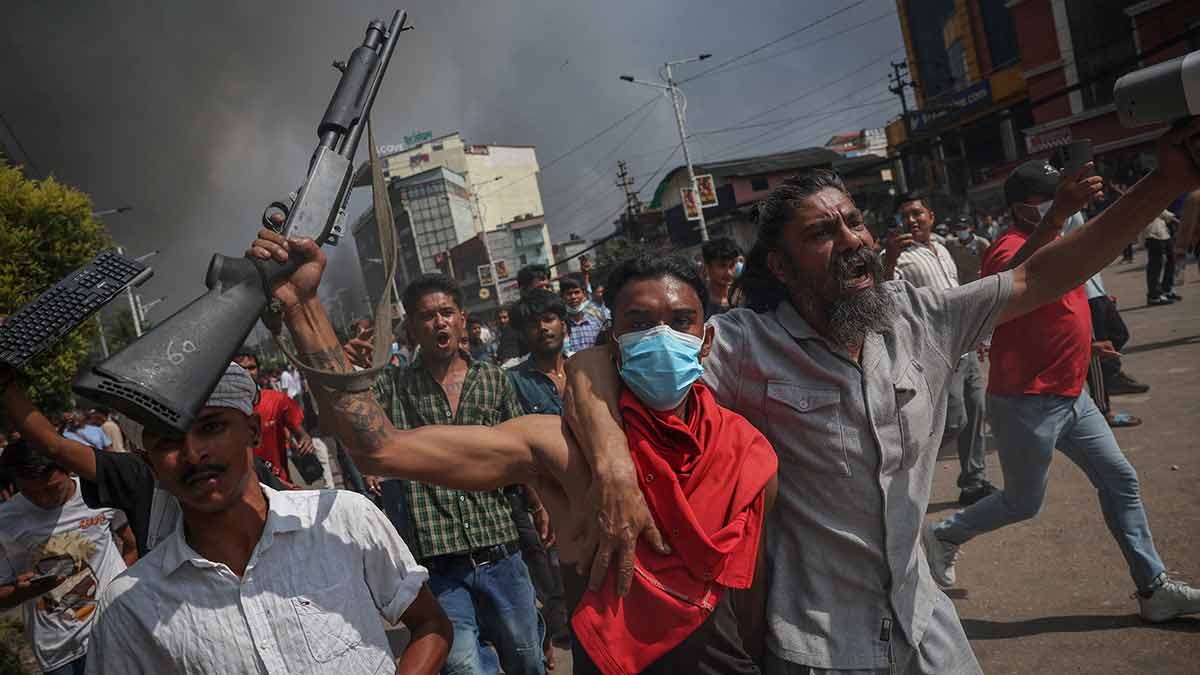
The Cockroach movement comes after two major regime shifts in India’s neighbourhood. While violence during youth-led movements in Nepal and Bangladesh has been attributed by some actors to interference induced from beyond the borders, avoiding deeper deliberations over domestic challenges and ignoring problems arising from inherited socioeconomic inequalities would only aggravate the situation. South Asian societies, shaped by caste, class, ethnic and social divisions that influence resource ownership and power structures, remain burdened by inherited inequalities. Influential families controlling political and economic spaces have deepened disparities.
Barring a few exceptions like Kerala, much of South Asia has struggled to escape the consequences of such structural inequality. Limited redistribution and welfare programmes have proved inadequate to break cycles of generational deprivation and marginalisation. Nationalist narratives, border security, global image and economic growth cannot suppress grievances when development fails to reach deprived communities. Institutional decay, executive overreach and the changing state-market-civil society relationship under neoliberalism have further widened the trust deficit, challenging the transition from procedural to substantive democracy.
Like historical inequalities and loopholes in democratisation, access to social media and digital spaces of dissent are also shared experiences among an unorganised class of voters across South Asia. The student-led movement in Bangladesh was ignited by the quota system, the Gen Z protests in Nepal gained momentum after restrictions on social media platforms and the Cockroach movement in India expanded after remarks by the chief justice of India. Yet none of these movements emerged primarily from established political parties, nor were they limited to their immediate triggers.
The youth, deprived of meaningful voices in policy-making, are attempting to shift the centres of political power from traditional political forces to grassroots movements. Across the developing world, new political forces appear to be emerging in search of a more inclusive state apparatus, shaped by voters rather than hidden alliances between political and economic elites.
However, while new spaces of dissent amplify unheard voices and enhance citizen participation, unorganised movements combined with populist tendencies may also weaken constitutional processes and institutions. The transitional government, dissolution of parliament and the Supreme Court’s strategic silence in Nepal helped facilitate a new election by avoiding further confrontation. But the process also raised questions about constitutional institutions and the sustainability of the political order adopted after 2015.
Therefore, observing constitutional processes by both the ruling establishment in Delhi and political opposition outside traditional structures, while addressing unavoidable public demands, would strengthen Indian democracy. Diverting issues of governance failures and livelihood concerns into political polarisation based on civilisation, religion and ethnicity would further obstruct democratic evolution.
Joshi is visiting faculty at the department of public policy and public management, Kathmandu University.
