



Interview/ Muzaffar A. Chishti, senior fellow, Migration Policy Institute, Washington, DC
Muzaffar A. Chishti, known in the immigration world as Muz, is recognised for his lasting impact on immigration policy in the United States. He has testified before Congress multiple times, addressing the shortcomings of the immigration system, including the effects of the racially motivated Immigration Act of 1924. “The current narrative about illegal immigration is based on a fabricated invasion,” he tells THE WEEK in an exclusive interview, calling on the leaders of sovereign nations to speak out about the rights of their own citizens. Excerpts:
Q/ It is a watershed year, with the Trump administration implementing one of the most punitive immigration policies in the history of the US.
A/ I tell my colleagues who follow immigration policies that the most important thing is to listen to what President Trump himself says. Some of the words that come out of his mouth are those that are really deep in his consciousness. Since he is convinced that he won this election, and the 2016 election, using immigration as a calling card, you have to take his views on immigration very seriously.
Q/ What is the difference between Trump 1.0 and Trump 2.0?
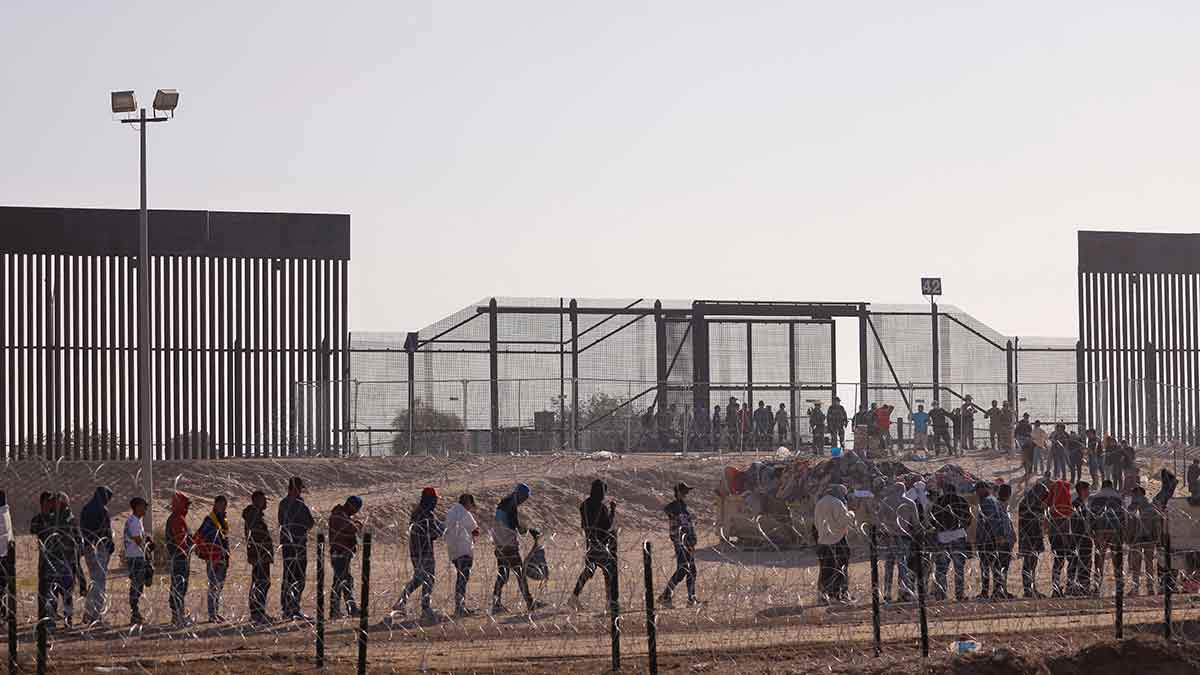
A/ The big difference is the frame the administration is using for immigration this time―‘it is an invasion, and the country is under attack’. It is not just the intensity of the enforcement actions alone; it is the “all of government” approach that is being adopted. That is why you have the department of defence, department of justice, department of homeland security, department of treasury and even the Internal Revenue Service officers, whose job is to collect taxes, being deputised for immigration enforcement. Not to mention the state department or the commerce department using diplomacy and tariffs as leverage. So that is the difference. This feels more like 9/11, except that during 9/11 we actually had an invasion. This is a fabricated invasion.
Q/ We saw US military flights landing in Amritsar with undocumented Indians in handcuffs and chains. How does it play out for the vast Indian diaspora?
A/ We generally think of the Indian diaspora as a highly educated, prosperous model minority in the US. However, we have turned a deaf ear to a growing phenomenon of an unauthorised Indian migrant population. And it is not a recent one; it has been happening for at least the last 15 years, with a large number of Indian migrants coming unauthorised at the border, both at the northern and southern borders, looking for a better life, or some would even say ‘for a life’. So, we know that the pressure to migrate is real.
What is also true is that the US legal system does not allow too many pathways for people to enter legally. Our legal immigration selection system is based on a 1952 architecture, which has been tinkered with only two or three times and has become even tougher, especially for low-skilled workers. That is anachronistic. In the legal selection system, we give high priority to close family connections and high-skilled immigrants. If you are not a high-skilled immigrant or do not have a family connection here, the options for entering the US legally are almost non-existent. So what is the alternative for those who wish to migrate to the US? Seeking asylum becomes the fallback option.
To me, the military flight of deportees to India was more of a performative action than a meaningful outcome. And the fact that India was used as a test case to demonstrate the muscular deportation machine is telling. India is a friendly country to the US, especially to this administration. So, employing a military aircraft to send deportees to a friendly country serves to amplify the narrative that, under Trump, unauthorised migration is seen as akin to an invasion. Unfortunately, I suspect a lot of human rights violations might have taken place in the process.
Q/ So, there is a human rights concern?
A/ The unfortunate fact is that handcuffs and chains are part of the ICE (Immigration and Customs Enforcement) guidelines, what in Indian parlance would be called the standard operating procedure, and they have been in place for a long time. So, deportees to India were perhaps not singled out. However, just because guidelines are followed does not mean they are acceptable. All human beings are entitled to dignity, and if that was violated in this case, we all should speak out against it. Leaders of sovereign countries have a responsibility to speak about their own citizens. Even if they have violated immigration laws, they should be deported under humane and dignified conditions.
Q/ Indians will not forget this in a hurry. How do you see it playing out in the bilateral relationship?
A/ The fact that the military flight to India received a lot of coverage in the media, even in the US, is because it did not fit into the traditional image of unauthorised migrants. The quid pro quo here will be watched with interest by many. To me, beyond the key subjects of economic and security interests, the question is whether any other aspects of immigration policy will be put on the table. Indian nationals are the hardest hit in terms of backlogs of employment-based immigrant visas and the processing of H1-B applications. Indian nationals are also some of the biggest users of practical training visas in STEM occupations. Those issues have a rightful place in negotiations between the two countries.
It is also true that a significant portion of US corporate interests rely heavily on foreign-born workers. So while we see that Trump is willing to speak harshly about unauthorised immigration, he does not take the same stance on legal immigration. In fact, at his inaugural day press conference in the Oval Office, he suggested that the US might actually need more legal immigrants if tariffs are put in place because then people will want to come and invest here. So, legal immigration may not be on the chopping block in the same way it was during the first Trump administration. However, critical demographic and labour market forces are also at play here. The US population is ageing, with a low birth rate. If you are in Nebraska or Alabama today, the person who is likely to take care of you in old age is not going to be someone born there, but someone born in a foreign country. You can multiply that across the spectrum of occupations. If we want to remain the world’s superpower, especially the economic superpower, we cannot achieve that without sustained immigration.
