



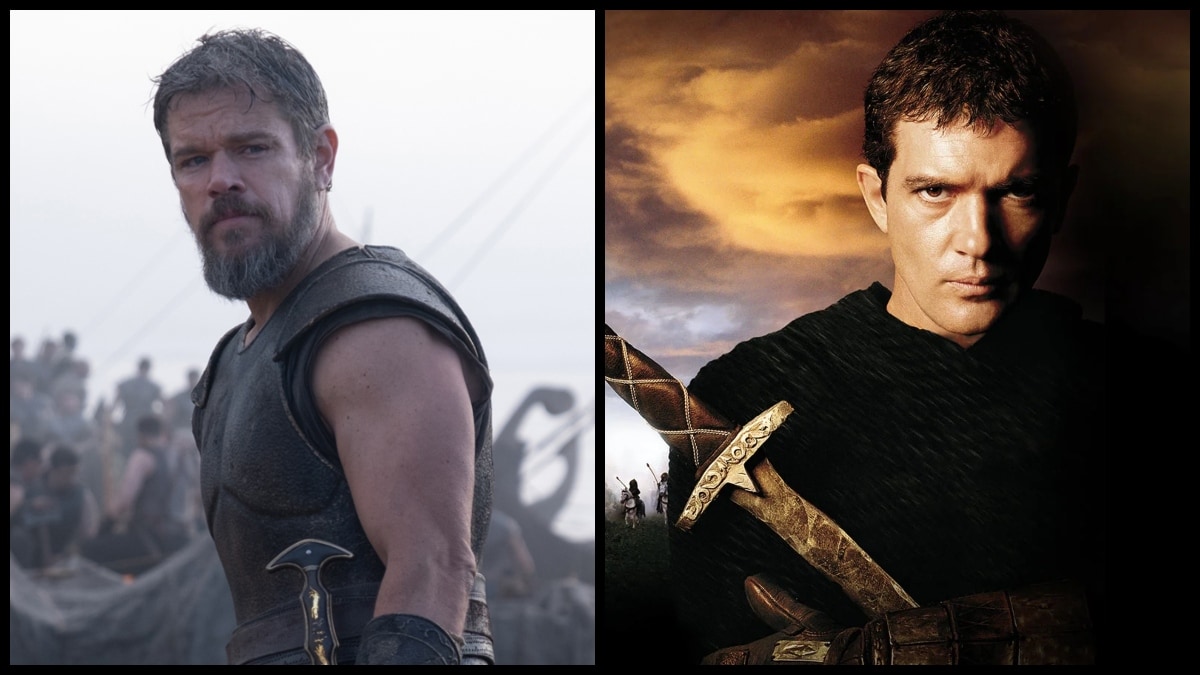
In 1976, Michael Crichton—who pioneered the techno-thriller through The Andromeda Strain and Jurassic Park—published what remains the most distinctive novel in his bibliography. Titled Eaters of the Dead, it is a retelling of Beowulf, an epic about 12 Viking warriors in sixth-century Scandinavia who are summoned to help the King of Denmark against a monster that has terrorised the royal hall for years. After a heroic fight, their leader kills the monster and its vengeful mother before returning home to become a wise and peaceful king.
Beowulf runs to more than 3,000 lines of Old English verse; readers raised on modern fiction can find it tedious. One of Crichton's friends once proposed to include it in a college course called “The Great Bores”—texts regarded as foundational to Western civilisation, such as Homer's Odyssey and Virgil's Aeneid, but which few people still read voluntarily for pleasure.
Crichton wrote Eaters of the Dead in disagreement. He wanted to prove that Beowulf, despite its weighty themes of heroism, mortality and civilisational fears, could be an exhilarating read. He based his retelling on the premise that the epic was rooted in real events, which through centuries of oral retelling had taken the embellished form that people read today.
Crichton reframed the story by introducing a narrator: Ahmad Ibn Fadlan. A real person, Ibn Fadlan was a scholar in Baghdad, and his expedition to what is now Russia is regarded as one of the earliest eyewitness accounts of Viking life and culture. Crichton, in a stroke of impish inventiveness, plucked Ibn Fadlan from the 10th century and transported him four centuries into the past. There he would meet the 12 Viking warriors assembling to aid the Danish king.
Making Ibn Fadlan the 13th man in the Viking expedition—“I felt Fadlan would not mind being revived in a new role,” Crichton wrote—is a brilliant conceit. The Arab becomes the rank outsider who makes the Viking world accessible for modern readers.
In the 1999 film adaptation, The 13th Warrior, Antonio Banderas plays Ibn Fadlan as an Abbasid ambassador with a clean-shaven face, kohl-rimmed eyes and embroidered robes. With his slight frame, Banderas's Ibn Fadlan stands in striking contrast to the heavily built, luxuriantly bearded and gleefully unkempt northmen. He is as out of place among the Vikings as a penguin among seals. His rational assumptions about the Norse world come under attack as the film progresses. Near the climax, when he comes upon piles of human skulls in the cave of the creatures terrorising the Danish kingdom, he says: “I was wrong. These are not men.”
Nolan’s own Ibn Fadlan
In The Odyssey, his 13th film as director, Christopher Nolan explores the mind of a wandering man battling similarly unsettling monstrosities. In his filmography, it is what Beowulf is to Crichton's oeuvre—a startlingly distinctive entry.
At least seven of Nolan's previous 12 films, including the Dark Knight trilogy, are set in the years they were released. Even his science-fiction films are rooted in the near-future (Inception, Tenet), or a future that is within the reach of current generations (Interstellar), but never in the distant future or in the distant past. He has also twice returned to World War II (Dunkirk, Oppenheimer), but carefully avoided the main battlefields to find drama on the margins. Before The Odyssey, the farthest Nolan had gone into the past was England of the 1890s; the result, The Prestige, a twisty thriller about two rival magicians and their obsessions, remains his most impressive film.
Given his long preoccupation with modernity, few expected Nolan to sail more than 3,000 years into the Bronze Age. Like The 13th Warrior, which was the first major Hollywood film with a Muslim hero, The Odyssey feels pleasantly radical. A prime reason is the multiethnic cast: Helen of Troy is Kenyan-Mexican; Calypso is an American with Afrikaner roots; Eumaeus is Latino; Eurylochus is British-Indian—even as Odysseus and family remain conservatively white.
Nolan's famous aversion to using computer-generated imagery has produced not just marvellous camerawork, but also ample opportunities for artisans and craftspeople. From ships, sails, oars and the Trojan horse, down to swords, shields, spears and horsehair helmets, all look physical, tangible and assembled with care. To make the city's destruction look authentic, a model built on two and a half acres was set ablaze. In Ben Stiller's Hollywood spoof Tropic Thunder, a director’s sloppiness results in an overenthusiastic crewman lighting expensive explosives before the camera is turned on. Clearly, such things did not happen on Nolan’s set: the film was shot on notoriously loud IMAX cameras, which make their presence felt, and the splendid visuals suggest every dollar well spent.
Nolan's reputation as a prudent money manager is not as well known as his obsession with verisimilitude. From Following, his debut film that was completed on a shoestring $6,000 budget, to The Odyssey, his costliest project at $250 million, he has spent close to $1.7 billion. He is the only top director who has consistently managed to finish shoots under budget.
His wife, Emma Thomas, with whom he runs his production company Syncopy, once revealed that he returned a “substantial” amount to the studio after finishing Interstellar. “The moment you go over budget,” she said, “you have lost the creative control that an obsessive director like Chris needs. He has always been extremely strategic about it.”
Losing control can wreck careers. While making The 13th Warrior, director John McTiernan went considerably over budget and delivered a film that test audiences disliked. Concerned about its investment, the studio sidelined McTiernan and brought in Crichton for reshoots and re-edits. The film became one of the most expensive failures of its time. Omar Sharif, the legendary Egyptian actor who played Ibn Fadlan's translator, announced his retirement from acting soon afterwards. McTiernan, known for Predator and Die Hard, never had another success.
In Hollywood, as in any other sphere, trust is earned in drops and lost in buckets. Nolan has built a reservoir, with few directors matching his extraordinary bankability. Even Steven Spielberg and James Cameron, the only directors whose works have together made more money than Nolan’s, do not have quite the same leverage he has with studios. According to Thomas, Nolan realised early on that “the moment you give the studios an excuse to come in, you have lost it”.
It may explain why Nolan works like a banker. On set, his days begin at 7 am and end at 7 pm, with a brief lunch break. Time is money, and money is time. He is always dressed for business—conservative suits, plain shirts and ties, formal shoes and occasionally a scarf. Stored in his coat pocket is a flask of tea. He is one Brit who earns his full name, Sir Christopher Edward Nolan.
Most of Nolan’s films, though, have a distinctively American outlook. Even The Prestige, which at the hands of a lesser director might have remained a nifty British thriller, grows into a meditation on technology, progress and the future of the Anglo-American world. Nolan often takes extreme care to dress up these recurring themes as politically neutral. In Dunkirk, the enemy is often referred to simply as “the enemy” rather than “the Germans”; the swastika is deliberately not shown; and Winston Churchill, who personally supervised the evacuation as British prime minister, is conspicuously absent.
Like Churchill, Nolan is half American. His mother, Christina, was a flight attendant working in Chicago when she met his father, Brendan, an advertising executive. The family spent much of Nolan’s childhood moving between London and Chicago.
Likewise, Nolan divides his time between writing and filming. He has written all his films except Insomnia, and has said he finds filming difficult—perhaps one reason his shoots are business-like. As a writer, reimagining a 'Great Bore' like The Odyssey, a more prominent part of the western canon than Beowulf, must have presented Nolan with a familiar problem: how do you make a nearly unreadable epic, with its weighty themes of heroism, mortality and civilisational fears, exhilarating for a modern audience?
Nolan does it by deploying his own Ibn Fadlan. Instead of transporting just one relatable human being to the past to make the story livelier, he mobilises several modern sensibilities and sends them to the Bronze Age.
Sometimes they take the form of language. The young Telemachus refers to Odysseus as “dad” rather than “father”; Odysseus vents his anger about spending “10 years on this f***ing beach”. These choices make Telemachus relatable: he becomes an ordinary boy with an absent father, rather than just the heir to a king. Similarly, the angry Odysseus might as well be the leader of a working-class crew, anxious to put an end to a particularly long and tiresome gig.
Elsewhere, the modern sensibility is moral philosophy. Nolan’s Odysseus regards war as reprehensible and the Trojan horse as an ethical crime. Or it is psychology: a war veteran battling post-traumatic stress. These threads seem bound together by Christian values. Unlike Homer's hero, Nolan's Odysseus does not enjoy sexual access to other women; he remains faithful to Penelope, as she is to him.
These sensibilities, utterly foreign to Homer's pagan world, function as Ibn Fadlans in their own right. They move subtly through the mind of a modern viewer, helping make an ancient epic socially, psychologically and linguistically legible. Judged solely on how relatable Nolan has made the Homeric world, the film is an unqualified success.
But the problem is, making something relatable is very different from making it accessible.
Classicists such as Emily Wilson, whose 2017 translation partly inspired the film, have pointed out that Nolan's modernisation of the Homeric world comes at the cost of that world itself. Gone is the glorious, Greek strangeness of the story. In its place is a spiritual sequel to Oppenheimer, about a man who agonises that his actions have nearly destroyed the world. To travel from American Prometheus, the book that inspired “Oppenheimer”, to a Greek mythological realm where one could meet an American Odysseus is to travel just a short distance.
Nolan’s Ibn Fadlans are not really meant to travel. They would rather bring Beowulf, Odysseus or the entire ancient world to the present day, for our puzzle-solving pleasure, than transport us to their bizarre world and make us understand it on its own terms.
Nolan does not make Homer's world accessible. He merely makes it relatable.
The cost of relatability
Nolan has vigorously defended his storytelling choices. In a viral interview with Chinese podcaster Zhong Shu, he said a fundamental flaw in film criticism was the assumption that if people could identify the storytelling mechanism affecting them, that mechanism had somehow failed. “People have this idea that because I can understand why the story affects me the way it does, therefore it didn't work. That's not how storytelling works,” he says.
It is an argument that carries extra weight coming from Nolan, who is not just an independent artist defending his own choices, but also the sitting president of the Directors Guild of America and one of the industry’s most influential ambassadors for the theatrical experience. This makes his argument about how storytelling should work harder to set aside.
But subjecting that argument to a stress test produces interesting results.
One of the emotional pillars of Nolan’s film is Eumaeus, a blind swineherd who is not merely a faithful servant but, in Odysseus's absence, comes close to being a surrogate father to Telemachus. Played by John Leguizamo with much pathos, Eumaeus waits for his best friend to return, even as he grooms his son. Leguizamo said Nolan pitched the role as “the most loyal character in Western literature”.
Homer, however, makes it explicit that Eumaeus is a slave. He was brought to Ithaca by Phoenician traders. Like the land and palace, Eumaeus is the king’s property. Yet Homer portrays him as noble: he has no identity and interests of his own, beyond those of his master. The man is noble because he is slavish.
In one sense, Eumaeus could be Stephen, the house slave played by Samuel L. Jackson in Django Unchained. Stephen lives in his master's house, dresses like him and eats what's left on his table. As Malcolm X once described house slaves, his master's pain “was his pain”, and he would fight harder to save the master's house than the master himself.
If Eumaeus is the most loyal character in Western literature, Stephen could well be the most loyal man in American film.
Nolan's storytelling choice to sanitise the relationship between Odysseus and Eumaeus may be emotionally effective, but it is also historically evasive.
This evasiveness becomes harder to ignore when one looks beyond the film to the places in which it was made. Several scenes, including the horse and subsequent battle, were filmed in Morocco, which, like many parts of Africa, has a long history connected to the trans-Saharan slave trade. Moroccan authorities also facilitated filming in Western Sahara, a striking landscape of white dunes that turn turquoise as they meet the Atlantic. In the film, it becomes the island of Calypso, where Odysseus is held captive for years.
Western Sahara is a disputed territory. The indigenous Sahrawi community claim sovereignty over it, while the Sahrawi Arab Democratic Republic operates in exile in neighbouring Algeria. A solution under international law remains elusive, making the territory one of Africa’s last unresolved decolonisation cases.
Nolan’s decision to film there has provoked protests. “The simple act of holding a camera in my homeland can be a crime,” wrote Mohamed Sleiman Labat, a Sahrawi artist living in refugee camps in Algeria. But when international figures like Nolan decide their “land is exotic enough,” he wrote, they are “welcomed, escorted and granted access”.
Where the two stories meet
Crichton's Ibn Fadlan works because he knows he is the stranger. He enters the Viking world with his own assumptions, sees them challenged and gradually learns to understand a culture that is not his own. He becomes a bridge between worlds, because his narrative does not erase the distance between the worlds.
Nolan's modern sensibilities work almost in the opposite direction. They enter Homer's world not to be changed by it, but to make it rational and immediately recognisable. The gods become psychological problems; the hero becomes a traumatised soldier; the slave becomes a loyal friend.
In many ways, Nolan has achieved what Crichton set out to do: he has made an ancient epic thrilling to a modern audience. But Crichton's trick—sending an outsider into an ancient world—is illuminating. Nolan's trick—smuggling modern sensibilities into Homer's world—does the work of Odysseus’s horse. It wrecks the story from within.
