



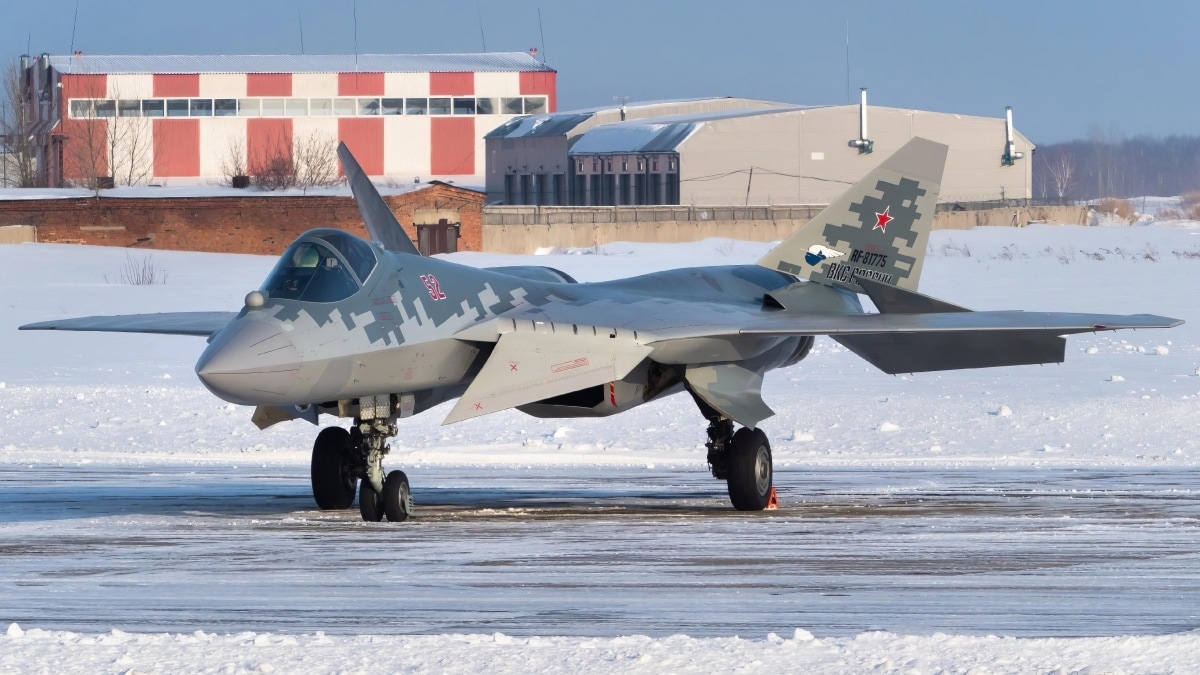
Any move by India to procure Russia's Su-57 fifth-generation stealth fighter could seriously undermine the country's indigenous Advanced Medium Combat Aircraft (AMCA) programme, former Indian Air Force chief Air Chief Marshal RKS Bhadauria has warned.
His comments come amid reports surrounding the possible procurement of Russian-made Su-57 Felon fighters, even as India has clarified that it is not considering acquiring the aircraft.
Russia, meanwhile, has been highlighting the capabilities of the Su-57 and pitching the fifth-generation fighter as being unmatched by other aircraft currently in mass production.
"The key element in achieving air superiority is the fifth-generation Su-57 fighter jet, which is unparalleled in mass production among modern global aircraft manufacturers," Deputy Commander-in-Chief of the Russian Aerospace Forces Sergey Kobylash had said, according to Russian media reports.
However, Bhadauria has cautioned against India buying the Russian fighter, arguing that even the procurement of two squadrons could have serious consequences for the AMCA programme.
During a recent media interaction, the former IAF chief was asked about reports that India could consider procuring two squadrons of Su-57 fighters. Bhadauria said he was not sure whether the IAF had formally initiated any such process.
He, however, was quite clear about what such a purchase could mean for India's indigenous fifth-generation fighter programme. "If you look at the larger picture, if you get Su-57, it is as good as killing AMCA. That is my view," Bhadauria said.
According to the former IAF chief, there would not be sufficient space for India to simultaneously pursue both programmes, and a Su-57 acquisition could divert the attention and effort required to make AMCA successful.
"Because there's no space for both. And the energy that is required for AMCA would go," he said.
Bhadauria also warned that an initial purchase of two Su-57 squadrons could eventually expand, further reducing the urgency surrounding the indigenous programme.
"The two would become four, AMCA would no longer be the critical national effort required to make it succeed, and therefore this makes all the difference," he said.
