



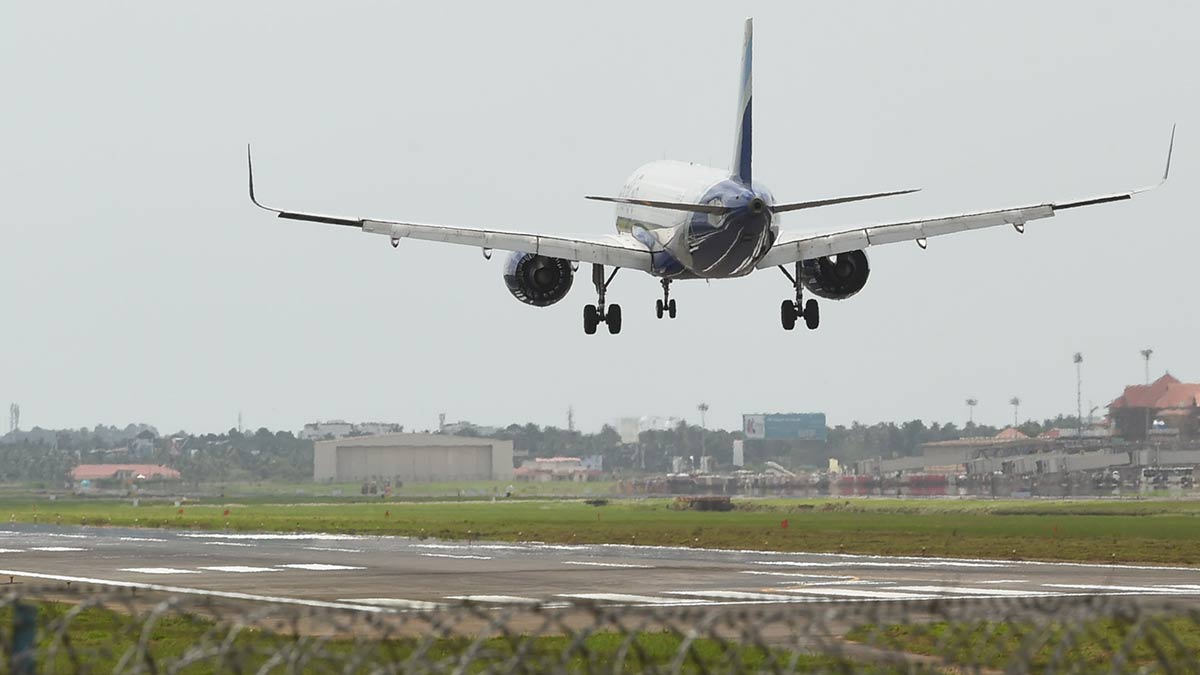
The world over, entrepreneurs have taken unfathomable risk with their money to start airlines. Results have varied. In India, Rahul Bhatia transformed his family's travel business and co-founded IndiGo, now the country's largest airline. On the other hand, Vijay Mallya tried to emulate the highs of his liquor business in aviation, but that proved to be a sobering reality check.
What if governments, especially state administrations, have similar lofty ambitions? Using public money to start an airline sounds implausible. That is why it was not surprising when Kerala Chief Minister V.D. Satheesan recently said his government had given consent to start an airline, the news drew more questions and doubts than praise.
“It's very difficult. In the airline business, you start with a disadvantage because nearly 80 per cent of the cost is not in your control," said a senior aviation executive. “The timing is all wrong. Nearly every airline is haemorrhaging from high fuel costs at the moment,” said another senior executive. That is true. Earlier this month, IndiGo announced a loss of Rs1,900 crore in the second quarter of the current financial year.
There is also the experience in recent years of two initiatives from Kerala-based businessmen—Air Kerala and Alhindair. Both seem to have run into setbacks and delays.
Does it mean then that Co-Keralam, as the planned airline is called, may end up as a pipe dream? Not really. There are enough examples to show airline business, if well thought-out and implemented, can succeed.
Regional airlines have lower operating costs and that gives them an edge over larger ones. Keralam itself has an advantage over other states with its four operational international airports and high density of traveling population. “It may be tough. But there is actually a good case for an airline in Kerala. In fact, having an airline and its supporting infrastructure could be a better option than spending thousands of crores on road projects to connect different parts of the state,” says V.J. Kurian, the former bureaucrat under whose leadership Cochin International Airport Ltd (CIAL) was established. CIAL runs Kerala's busiest airport in Nedumbassery, near Kochi.
It was under Kurian in 2012 that CIAL revived a long-pending project to launch an airline in the state. Many of the reasons that supported the decision at that time continue to be there today, says Kurian.
PEOPLE'S AIRLINE
Co-Keralam will be backed by Keralam's strong network of cooperatives. The state has more than 16,000 registered cooperative societies and, as per state government sources, they have revenues of Rs6.5 lakh crore a year. From the network, 200 cooperatives with capital raising capabilities will contribute Rs2 crore each in the planned airline's equity. Apart from this Rs400 crore, the state may raise funds from other investors, including its large diaspora.
An entity called Kerala Civil Aviation Development Co-operative Society Ltd has been set up. It held its first general body meeting in October and elected an eight-member board. The chairman and 'chief promoter' is C.N. Vijayakrishnan, a prominent leader in Keralam's cooperative sector.
Co-Keralam will be based in Kochi and its initial network will focus on short-haul flights within the state—Kozhikode and Kannur—and to neighbouring states—Bengaluru and Mangaluru in Karnataka, and Chennai, Coimbatore and Madurai in Tamil Nadu. The airline will target customers of high-speed trains and fares will range from Rs3,500 to Rs7,000.
Operating out of Keralam has certain advantages. “The state has four international airports. Right now some of these airports are underutilised,” says Kurian. Earlier, there used to be daily non-stop flights between Kochi and Thiruvananthapuram. Now it's down to three a week. There's scope to do more. “Also, given the importance of places like Sabarimala and Thekkady, there is no reason why small airports can't be built in these places to promote connectivity," he says.
There are some unanswered questions, too. Is the planned capital enough to start an airline? Who will bring aviation know-how? Can the airline generate enough traffic with Kochi as its hub?
Ground conditions are more conducive than they were in 2012. “One of the stumbling blocks at the time was the 5/20 rule to be eligible to start international operations,” says Kurian. Under 5/20, an airline needs to have at least five years of experience operating in domestic market, and should have a fleet of at least 20 aircraft. “Now, the five-year clause is no longer there,” says Kurian.
Easier conditions, however, haven't been enough as recent experience shows.
STARTING PROBLEMS
Reena Rahman, the former chief operating officer of Alhindair, was as close as one could get to launching the airline, but couldn't. “We had everything in place. Ticketing system, network, manuals, everything was ready but we couldn't start operations," she says. The main reason was unavailability of aircraft.

The Kozhikode-based airline couldn't lease an ATR aircraft from lessors. Of late, lessors have found it difficult to take back their aircraft from bankrupt airlines after being stuck in several legal cases. “That has made leasing rentals very high, especially if you are a small airline,” says a senior aviation executive. Second, these lessors have a long list of compliance requirements which can prove to be burdensome for a startup airline.
Alhindair was hoping to buy two ATR aircraft from Indonesia and start operations by last December. But that didn't work, either. Rahman has moved to Colombo to start an airline there. “It is called OCERA and has common backers as Alhindair. Once we stabilise our operations here, we will look to restart Alhindair in Keralam,” she said.
A comparison with the tourism trends between Sri Lanka and Keralam makes for an interesting study. Both tourist destinations have similar offerings when it comes to their terrain, climate and food. A recent report in The Hindu pointed out that Keralam's tourism sector has stagnated after the pandemic, and in 2025 it managed to achieve only about 70 per cent of its pre-pandemic arrivals of 10.96 lakh in 2018. On the other hand, Sri Lanka last year crossed the 2018-levels and welcomed 23.62 lakh tourists.
If the Satheesan government wants to have a profitable airline business, clearly it will have to do more to develop its tourism sector. There are a few more pre-requisites.
BOXES TO TICK
While IndiGo is the most successful airline India has ever seen, in the case of Co-Keralam, it's probably more apt to cite the example of an operational regional airline like FLY91.
The airline, co-founded by Manoj Chacko, chose to have the popular tourist destination of Goa as its hub. It had an initial funding of Rs210 crore, and started operations in 2024 with two ATR aircraft. That's very similar to Co-Keralam's own blueprint. It also matters that for regional airlines, the cost of aviation fuel in Keralam is much lower than other states owing to lower taxes.
In two years, FLY91 has scaled its operations to six aircraft, and even reported a break-even quarter in the last financial year. It has now placed an order for 40 more aircraft and is in the process of raising Rs250 crore. "That's something that Co-Keralam will also have to do," says a senior executive. "A two-aircraft operation is not enough to bring in economies of scale, or build a network. You need at least six aircraft. Second, you have to be mentally prepared to keep spending money for the first three years.”
That will test the Kerala government. Though the cooperatives may be on a strong financial footing, it will be interesting to see how often they open their tap in the future. It is important to mention here that the Kerala government has its own financial challenges, including a high proportion of public debt to its GDP.
People are an important factor. FLY91’s Chacko is known to focus on minute details to save costs. Just as Kurian did it for CIAL. Who will do that for Co-Keralam? Though the board of Kerala Civil Aviation Development Co-operative Society has eight accomplished members, there is little clarity if any of them have experience or expertise in aviation. Here, Keralam could take a leaf out of the aviation experience of the Nizam of Hyderabad and Biju Patnaik, both of whom ran successful airlines.
The 1940s were surprisingly a time of aviation boom in India. After World War 2, there was easy availability of military transport aircraft, Douglas DC-3 Dakotas, and this allowed as many as nine domestic airlines to come up. This included Deccan Airways, which was backed by Nizam Mir Osman Ali Khan. There was also Kalinga Airlines, founded by Biju Patnaik, a pilot himself.
Both leaders established airlines to make travel cheaper in their states and not be dependent on networks created by the British. One could even say they were among the earliest proponents of regional connectivity. Nizam also showed good business acumen by roping in Tata Sons to hold an equity in Deccan Airways.
There are reports of Deccan being a profitable venture for a few years. And it is undeniable that both held on strong before being merged with other airlines to form Indian Airlines.
Their experience is a good reference point for Co-Keralam. Regional connectivity still has a business case, but it has to be accompanied by sound financial backing, aviation expertise, scale and efficient operations. Of course, a formidable competitor like IndiGo will also be lurking. That's where Keralam's aviation ambitions will be tested.
