



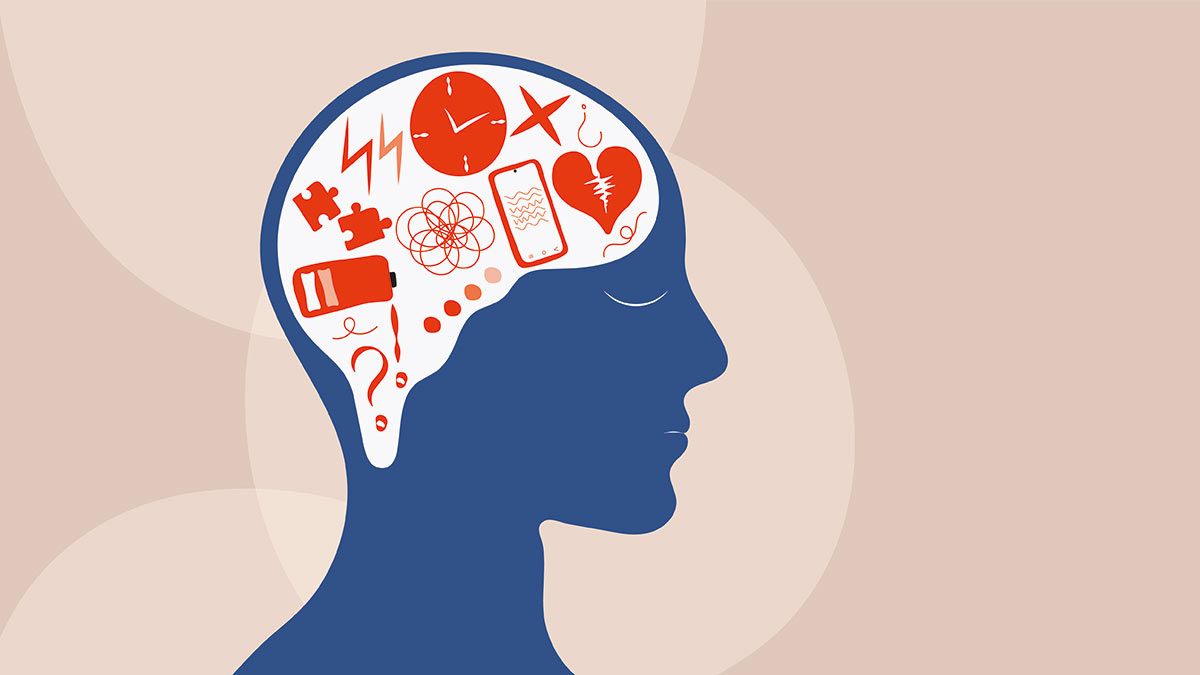
Why does a teenager seem impulsive one moment, intensely focused the next, and emotionally overwhelmed soon after? It is tempting to dismiss such behaviour as simply “being a teenager”. But neuroscience tells a more interesting story: adolescence is a period of profound brain development, when the architecture supporting decision-making, emotions, learning and behaviour is still changing.
Indian research is now adding an important piece to this puzzle. A study published in 2020, led by researchers at the National Institute of Mental Health and Neuro Sciences (NIMHANS) created age-specific Indian brain templates from MRI scans of 466 people aged six to 60. Instead of treating the brain as a single universal template, researchers divided participants into five age groups—late childhood, adolescence, young adulthood, adulthood and late adulthood. The adolescent group comprised 106 participants, aged 12 to 18, with an average age of 15.1 years, drawn from nine states across India.
The significance is subtle but important. Brain anatomy varies with age and across populations. When scientists analyse an MRI scan, they compare it with a reference or ‘template’ brain. If that template does not adequately represent the person’s age or population, the process can introduce distortions and potentially affect the interpretation of brain differences. The NIMHANS team found significant structural differences between its Indian brain templates and the widely used MNI reference template (a standardised, 3D average brain model). These differences were greatest along the front-to-back and bottom-to-top dimensions of the brain, while differences from left to right were relatively small. The researchers concluded that age- and population-specific templates could improve the accuracy of brain-mapping studies.
For teenagers, this matters because the brain cannot be understood simply as an adult brain in miniature. The adolescent years sit between childhood and adulthood, and the brain continues to undergo structural and functional change throughout this period. That does not mean every teenager’s brain develops at exactly the same pace. Nor does the study establish that teenagers are inherently irrational, emotionally unstable or destined to develop mental illness. Rather, it reinforces a crucial point for researchers: age matters when we study the brain.
The study’s broader value lies in giving Indian adolescent neuroscience a more appropriate reference point. It produced five Indian brain templates spanning ages six to 60, along with corresponding brain atlases, validated using independent Indian MRI data. This includes a template built specifically from India’s adolescent population, rather than one drawn entirely from European or North American samples. That makes the findings far more relevant to understanding the Indian adolescent brain than templates based on western populations alone.
The larger message is reassuring. The teenage brain is not “broken”, nor is it simply an unfinished adult brain. It is a brain in transition—adapting, reorganising and becoming increasingly capable of handling complex decisions, emotions and social experiences.
