



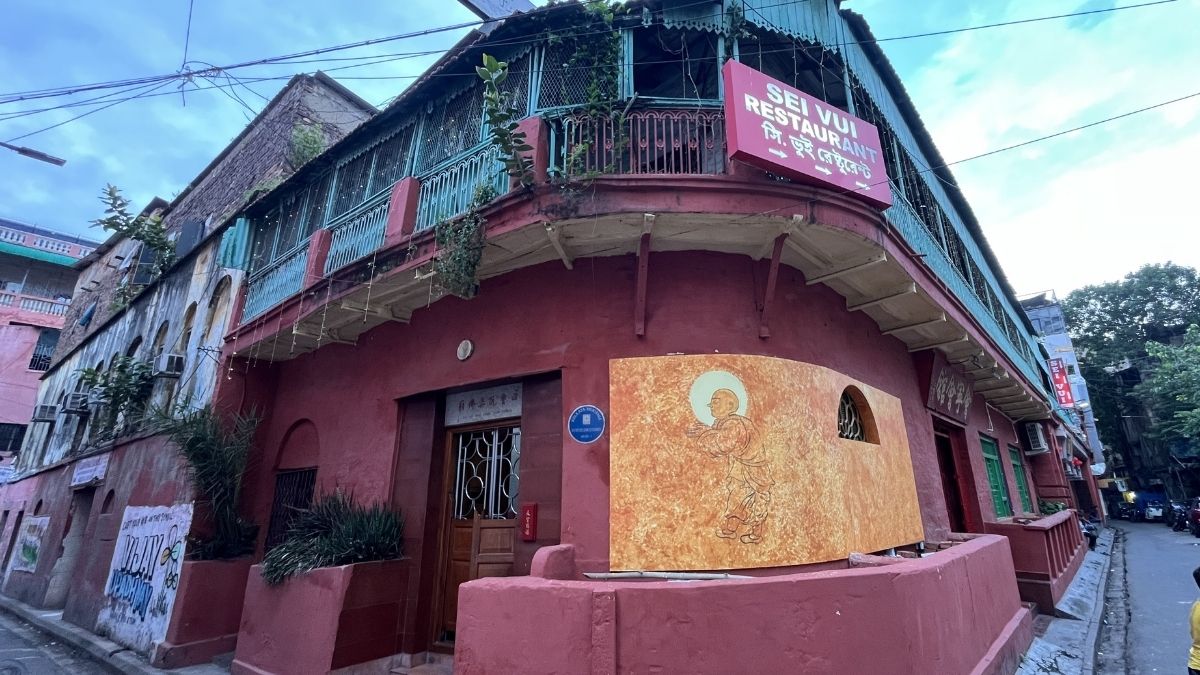
When most people think of Kolkata’s Chinese community, they think of the pre-dawn breakfast market at Tiretti Bazaar or the restaurants and former tanneries of Tangra. But the story begins much earlier.
In 1778, a Cantonese settler named Tong Achiu was granted land near Budge Budge by the then British Governor-General Warren Hastings to establish a sugar plantation. Achiu died around 1782–83, but the settlement survived and became Achipur, widely regarded as the earliest trace of Chinese settlement in undivided Bengal province during the colonial era.
More than two centuries later, that history is getting a dedicated space.
Giving Cheenapara a history
Spread across nearly 1,000 square feet, the Cheenapara Heritage Gallery — Cheenapara loosely translates to “Chinatown” — will bring together artefacts, photographs, documents and everyday objects connected to the community’s homes, occupations, institutions and traditions.

The story extends well beyond restaurants. Chinese settlers worked as carpenters, cobblers, tallow-makers, traders and tannery workers, building businesses and institutions that became part of Kolkata’s urban fabric.
Nineteenth-century accounts describe a substantial Chinese presence in the city. By the 1901 British census, 1,640 Chinese residents were recorded in Kolkata. Over time, Cantonese families became concentrated around Tiretti Bazaar, while Hakka migrants from southern China established a thriving leather-tanning economy in Dhapa and Tangra in the eastern fringes of the bustling metropolis.
Tiretti Bazaar developed into a neighbourhood with its own temples, schools, community associations, workshops and shops.
What happened to the community
At its peak, Kolkata’s Chinese community was estimated to number around 26,250. The 1962 Sino-Indian War marked a major turning point. Many families left for countries including Canada, Australia and Hong Kong. Tiretti Bazaar gradually fragmented, while Tangra’s tanneries declined or relocated.
By 2013, the city’s Chinese population had fallen to roughly 2,000.
But many remain. Temples, cemeteries, restaurants, community institutions and the old temple at Achipur continue to bear witness to the community’s long association with Bengal.
A beginning, not an endpoint
Professor Tansen Sen of New York University Shanghai, whose academic work has long explored the historical links between China, India and Bengal, has been one of the driving forces behind the project. His own connection with Bengal and his research into the region’s long history of interaction with China led him to take a particular interest in the Chinese communities of Kolkata.
The gallery focuses primarily on Tiretti Bazaar, but Professor Sen sees it as a first step towards a larger museum documenting the history of Chinese communities across India, including those in Darjeeling, Kalimpong and central and upper Assam. He has also stressed the need to protect the surviving buildings of Tiretti Bazaar and Tangra.
Kolkata-based conservation architect Sohini Pyne is curating and designing the gallery. The project is being led by the Cities, Heritage, Architecture Project (CHA), in collaboration with the Indian National Trust for Art and Cultural Heritage (INTACH), Kolkata chapter.
For Chen Yao Hua, president of the All India Chinese Association and Voiling Church and Club, long-standing institutions within Kolkata’s Chinese community, preserving this history is especially important for younger generations.
“Saving our culture and heritage through this kind of museum and gallery is very important. The present generation does not know about our long historical attachment to this city,” he said.
Why it matters
The gallery comes as the Chinese community has become a much smaller presence in Kolkata and some of the neighbourhoods associated with it have changed beyond recognition.
Its importance lies in putting that history back into Kolkata’s public record, recognising the Chinese community not simply for its finger-licking sumptuous fare, but for the role it has played in shaping the city.
The upcoming inauguration on September 5 offers Kolkata a chance to rediscover a community that has been part of its story for generations. Inside the temple of Tiretti Bazaar, the gallery will bring those fragments together, giving a forgotten chapter of Kolkata’s past a place to be seen, remembered and carried forward.
