



In 1947, planning the security of a country emerging from the throes of independence was no easy task for its first prime minister. Lord Mountbatten, the viceroy of India and former Supreme Allied Commander, Southeast Asia, shouldered the responsibility of overseeing the security of the newly independent India.
A close friend of Jawaharlal Nehru, Mountbatten proved to be a trusted adviser in shaping the country’s defence forces. He advised the Indian government to invest in the British aircraft industry, which had provided reliable and substantial support to the Allied war effort. Mountbatten helped the prime minister secure major contracts for the acquisition of 140 Hawker Hunters and 68 English Electric Canberra light bombers for the fledgling Indian Air Force. In the process, India avoided buying cheaper alternatives from other sources, particularly the Soviet Union. The French, however, received a limited number of orders for their Ouragan and Mystere jets, since these aircraft used British engines and several components sourced from British companies.
Apart from procuring British-made military aircraft, Nehru also explored the possibility of manufacturing aircraft in India, making use of the extensive repair and overhaul facilities established during the wars. It was at this juncture that William (Teddy) Petter, an eccentric but brilliant aircraft designer, entered the picture after joining Folland Aircraft as its chief designer. Petter had earlier designed the Canberra bomber and had also worked on the development of the Lysander. He was desperately seeking financial support for his project—the Gnat.
Mountbatten championed the cause that appeared attractive over other options. Weighing just 5,000lbs, the tiny fighter was designed to be inexpensive and relatively simple to manufacture. Its wings did not have integral fuel tanks thus having no fuel in the wings as conventional fighters had, making the construction less complicated. However, the aircraft could carry additional fuel in drop-tanks under the wing. Petter claimed that the wings could be manufactured at 25 per cent of the cost, and with less than 20 per cent of the labour hours required for a conventional fighter aircraft of the time. Crucially, its design allowed Hindustan Aeronautics Limited (HAL) to begin production without investing in highly specialised tooling, thereby lowering the capital requirements for India’s nascent aviation industry.
To sweeten the deal, Mountbatten coordinated with the British government to expedite deliveries, negotiate pricing and provide technical assurances. He also ensured that Indian representatives, including Nehru’s sister and high commissioner to the UK Vijaya Lakshmi Pandit, and defence secretary M.K. Vellodi, were impressed by British aviation capabilities during their visits to the Farnborough Airshow.
Finland subsequently acquired 13 Gnats, but the aircraft encountered several design-related problems. Three crashed, claiming the life of one pilot, and the aircraft became the subject of considerable criticism. The remaining aircraft were retired by 1972. The Gnat’s unconventional datum-trimming longitudinal control system and unreliable hydraulics made it a difficult aircraft to master. During its early days, the Indian fleet also experienced frequent groundings following accidents, some of which were fatal.
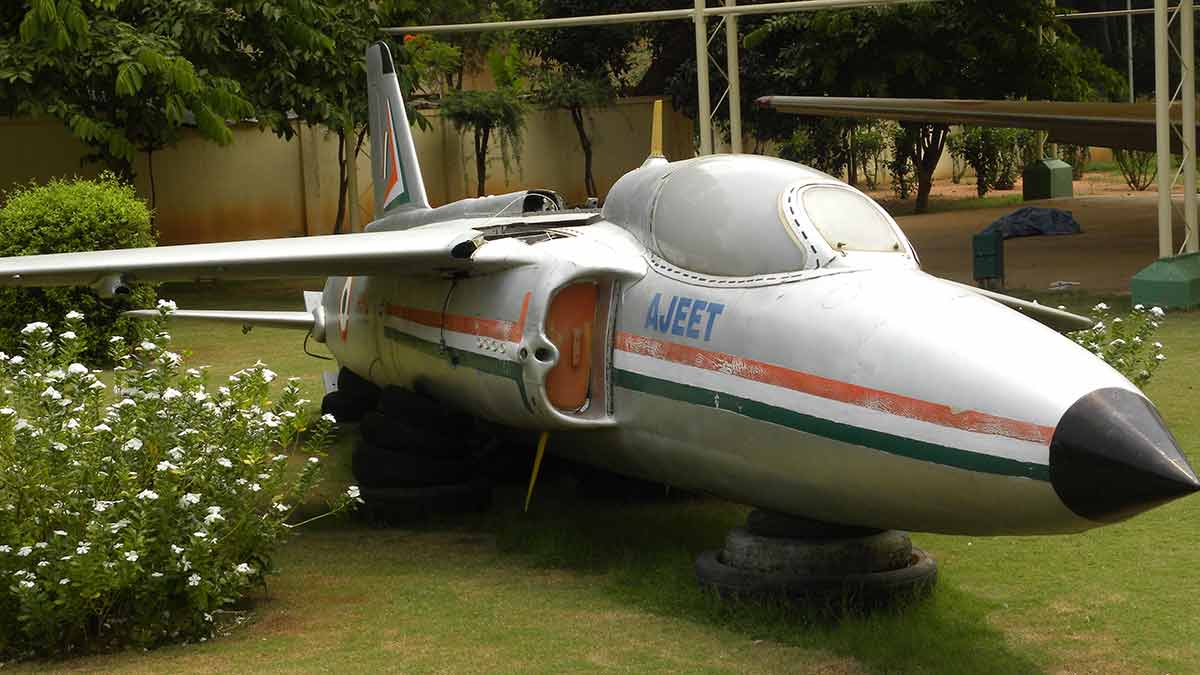
However, the Indian Gnat found its moment of glory during the 1965 India-Pakistan war, when it performed impressively against Pakistan’s F-86 jets. One of its biggest advantages was its tiny size, which made it difficult for enemy pilots to spot and engage. Efforts were subsequently made to address its design shortcomings through an upgraded version, christened the Ajeet. A total of 214 Gnat Mk 1 and 89 Ajeets were eventually built.
Amid its triumphs and tribulations, the Gnat remains a fascinating chapter in India’s aviation history; no country would have invested so much effort in managing a machine born out of the imagination of an unorthodox designer—Petter.
The writer served as the 19th Chief of the Air Staff.
