



I loved Amitabh Bachchan movies. Except for one thing. The guy was named Vijay in all his films. Looked as if his directors lacked imagination.
Something similar seems to be happening to the military mind—a dearth of imagination. Time was when officers read history, wrote poetry, recited classics, painted landscapes, played mind games, cracked jokes, charmed maidens, climbed mountains, ran miles, swam lakes, sang melodies, and fought well. Men of renaissance and refinement, there was a poetry about the way they spoke, wrote and conducted themselves.
Refinement reflected in the officers’ lingo. Look at how they chose names for their operations and exercises. From the name, you couldn’t get a clue of what the project or op was about. Overlord and Neptune were codenames for the Normandy landings. Mincemeat was an audacious British deception plan using a corpse to mislead the Germans about the 1943 invasion of Sicily. Barbarossa, named after the 12th century Holy Roman Emperor Frederick Barbarossa (Red Beard), was Hitler’s secret plan for the invasion of the Soviet Union; Sea Lion was his plan to invade Britain; Neptune Spear was the CIA’s operation to kill Osama bin Laden.
Our boys too had their flights of fancy into history and poetry. Golden Bird was a joint op by the Indian and Myanmar Armies in 1995 to flush out the ULFA and NSCN from the northeast. Falcon was a bold project launched in the 1980s to build up on the China border. Brasstacks was a tri-service exercise launched in 1986 winter to test Indian readiness against Pakistan. Leech was a controversial 1998 military intelligence sting on Landfall Island in the Andaman Sea to lure Burmese rebels. Gibraltar and Grand Slam were Ayub Khan’s plan for the 1965 war; Riddle was India’s equally audacious response to foil Gibraltar.
Heard of Op Topac? It is still not settled if it was fact or fiction; whatever it was, nothing has caught the imagination of Indian strategic planners as much as this insidious idea by which Zia-ul Haq planned in 1988 to capture Kashmir. In phase one he planned a low-level insurgency in Kashmir which would subvert the police, banks and other government offices. In phase two, Pak forces would fire on the LoC, forcing India to deploy bulk of its troops there and in Siachen. In Phase three, Pakistan would liberate the valley with the help of a radicalised populace.
Some say, Topac was fiction, created for wargaming in the Indian army; others say there indeed was a Topac plan which was picked up by a third country’s spies and shared with India. Either way, we war gamed well and foiled Topac.
Why am I talking about it now? Simple. I liked the project’s codename, said to have been inspired by Tupac Amaru, a 16th Century Peruvian who fought the Spanish conquerors. Look at the flight military fancy took across continents and centuries. A Pulitzer for that!
Sadly, our military seems to be losing this poetic touch. Look at how we are code naming ops and projects these days. When we wanted to kick out the badmashes from atop Batalik, Tololing and Tiger Hill, we called it Operation Vijay. Now when we are preparing a project to make the Army future-ready, we are calling it, too, Vijay, claiming it to be an acronym for vigilance, innovation, jointness, atmanirbharta and yodha.
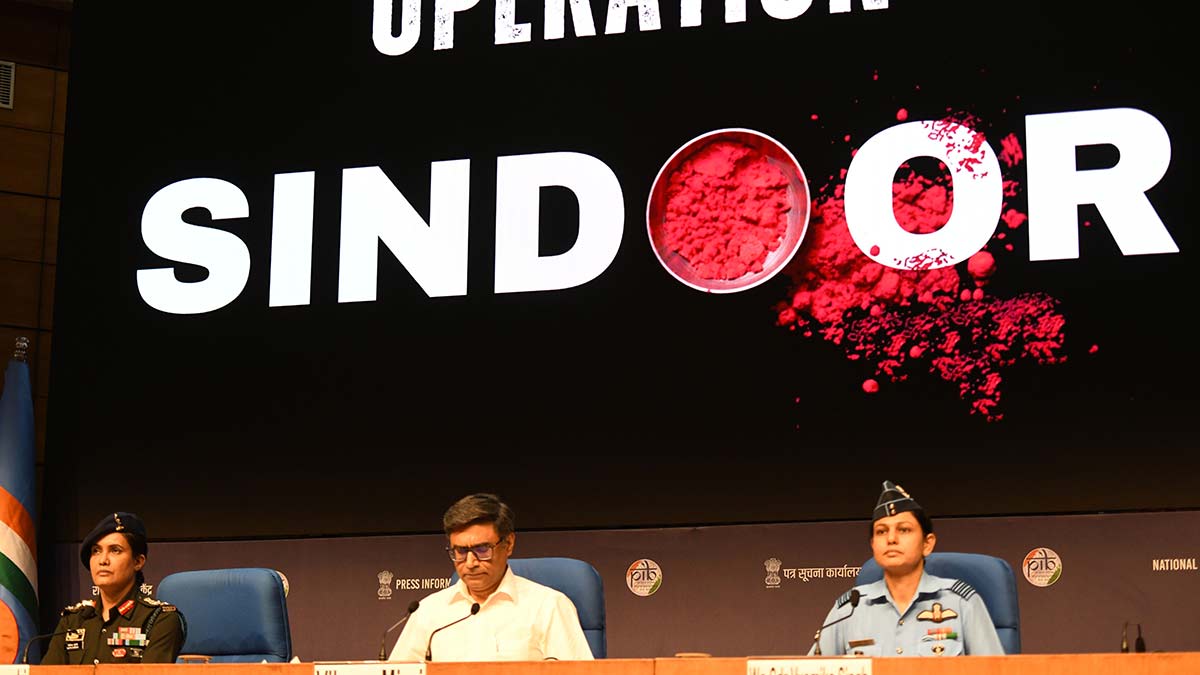
What has happened? Have we run out of ideas? Don’t want English? OK, try something like Bandar or Sindoor, two recent ones which are as good as Brasstacks or Barbarossa.
But Vijay! Too predictable, too prosaic! Have a heart, gentlemen!
prasannan@theweek.in
