


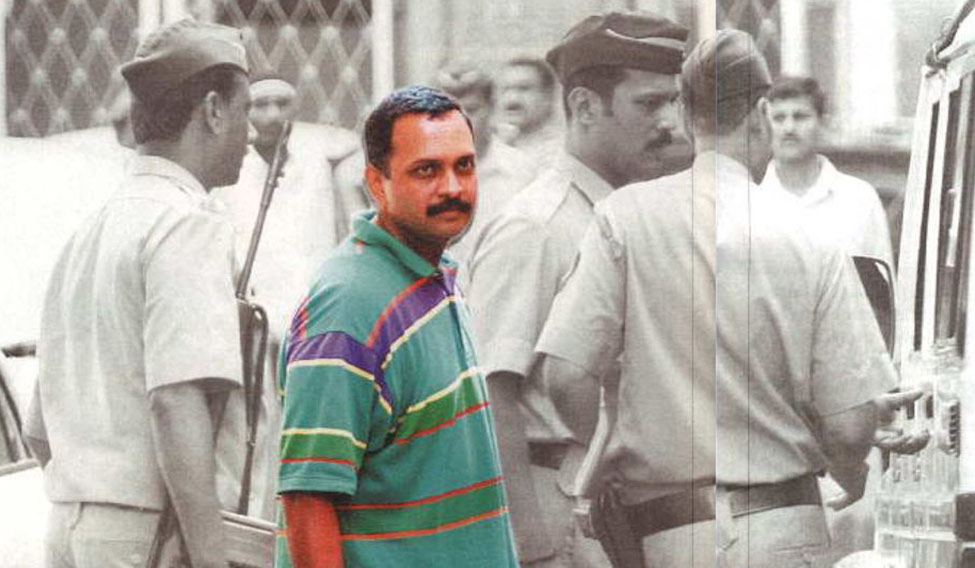
Clad in a crisp, pink shirt and black trousers, with an air of confidence and a smile on his face, Lieutenant Colonel Prasad Srikant Purohit— believed to be the main conspirator of the bomb blasts in Malegaon, Maharashtra, in September 2008 that killed seven people—walked into the Maharashtra Control of Organised Crime Act (MCOCA) court in Mumbai on July 11. The National Investigation Agency had requested the court for permission to interrogate Purohit in the blasts case. Accompanying him were two other accused—Major (retd) Ramesh Shivji Upadhyay, former president of Abhinav Bharat Sanghatana, a Hindu nationalist organisation with which Purohit was closely associated, and Sudhakar Dwivedi alias Dayanand Pandey alias Swami Amrutanand Tirth alias Shankaracharya, who allegedly gave ideological and monetary support to the organisation. Purohit's wife, Dr Aparna, a homoeopath, who had been eagerly awaiting his arrival from Taloja Jail near Panvel since morning, stood there with a calm expression. The hearing was adjourned. On July 19, the court allowed the NIA to interrogate him in police custody from July 22 to July 28, and the agency planned to take him out of Maharashtra. But on July 23, the High Court stayed the order. The NIA can, however, interrogate him in jail, but has to appeal once again to question him in police custody.
Purohit and co., including the squint-eyed sanyasin Sadhvi Pragya Thakur, who is in the custody of Madhya Pradesh Police in connection with the murder of the 2007 Samjhauta Express blast suspect Sunil Joshi, are the alleged key players in the theatre of Hindu terror, a term which gained currency after the Malegaon blasts. Purohit and 11 others were arrested by Maharashtra Anti-Terrorism Squad chief Hemant Karkare, who died fighting terrorists in the 2009 Mumbai terror attacks. A staunch follower of Hindutva nationalist Veer Savarkar, Purohit was accused of colluding with other suspects like Pragya and was charge-sheeted by the ATS.
The probe into Hindu terror, which slowed down after Karkare's death, got a shot in the arm when the Rajasthan ATS, which was probing the 2007 Ajmer dargah blast, arrested Rashtriya Swayamsevak Sangh pracharaks Devendra Gupta and Lokesh Sharma. Another breakthrough came on November 19, 2010, when the Central Bureau of Investigation arrested Aseemanand, a 60-year-old Gujarat-based sanyasi, for his alleged involvement in the blast in Hyderabad's Mecca Masjid in 2007 that killed 16 people. Aseemanand confessed to his involvement in the blasts in Ajmer and Mecca Masjid and agreed to cooperate with the investigation. On January 15 this year, a Panchkula court recorded his confession regarding the Samjhauta Express blast near Panipat that killed 68 passengers, many of whom were Pakistanis. But about a month later, he retracted his confession.
"How many terrorists have you trained in the jungles, Purohit?" was the question put to the colonel by his senior officer on October 24, 2008, at the commandant's office. What followed was his detention, interrogation and arrest by the Maharashtra Anti-Terrorism Squad, the CBI, Haryana Police and finally the NIA. However, the NIA is yet to further investigate the case and point out the lacunae in the 2008 Malegaon blast case and link it to the 2006 Malegaon blast case. He was also not named in the charge-sheet in the Samjhauta Express blast case, which was filed in June.
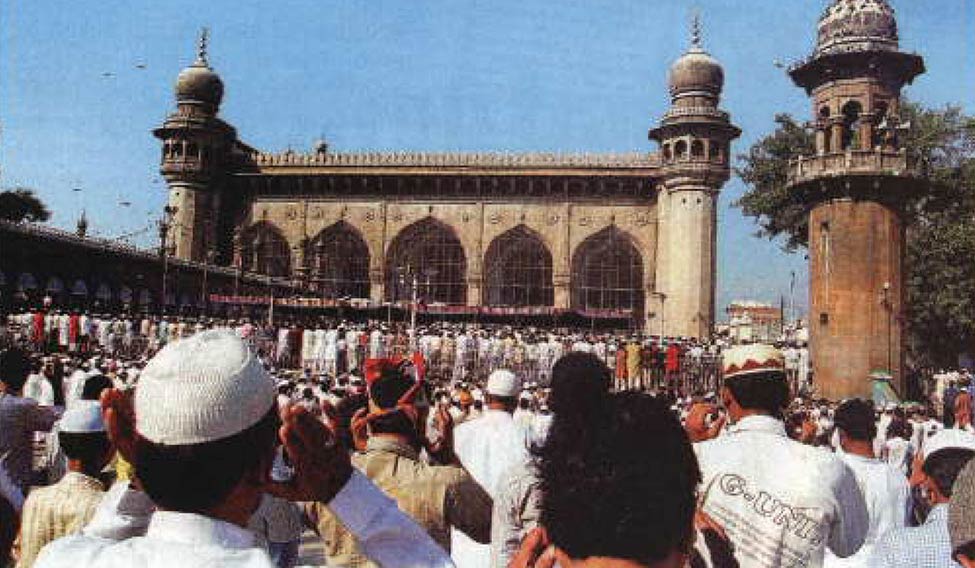 Hitting where it matters: A major breakthrough came on November 19,2010, when the CBI arrested Aseemanand, a 60-year-old Gujaratbased sanyasi, for his alleged involvement in the blast in Hyderabad's Mecca Masjid in 2007 that killed 16 people | PTI
THE WEEK gained exclusive access to the interrogation reports of Purohit and Pragya. Even as both the accused have been careful not to reveal much about each other's meetings and conversations, it is clear that they had been in touch since April 2008. It is also evident that there were clandestine meetings to discuss targeting Muslim-dominated areas.
But there are several missing links. According to the interrogation report, soon after the 2008 Malegaon blasts, Purohit met Pragya, a history postgraduate with links to several B JP and Sangh parivar leaders, at her Jabalpur ashram, where he reportedly boasted that he was responsible for the blast. However, she told him that it was her men who did it and showed him two rail tickets as proof. Purohit's lawyer could latch on to this statement to plead his client's innocence. During the several rounds of interrogation, Purohit did not reveal any information on the Samjhauta Express blasts or the Malegaon blasts. The ATS could not extract anything out of him during his narco analysis.
"There was no substantial evidence against him to link him [Purohit] to the Malegaon blasts," said a senior intelligence officer. This is not the first time Purohit has been rescued. Earlier this year, Purohit's Court of Inquiry was set aside by the Armed Forces Tribunal, as some witnesses had been cross-examined in his absence. Neela Gokhale, his lawyer in the AFT, pointed out that as per Army Rule 180, he should have been given full opportunity of being present throughout the proceedings.
Aseemanand, who is now in judicial custody and is named in the Samjhauta Express blasts by the NIA, had divulged a lot of information, but he did not link Purohit to the blasts directly. Purohit's lawyer, Shrikant Shivade, argued that his involvement with Hindutva outfits could be part of his Military Intelligence training. Purohit used to embed himself in organisations to collect information. Shivade had produced a document dated February 20,2007 which quoted Purohit's annual confidential report: "The officer infiltrated the SIMI and other underground outfits in the region through his capabilities and go-getter attitude." Since his area was close to the border of Gujarat-Maharashtra, he tried building a rapport with every organisation of the area.
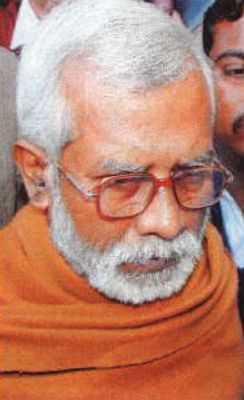 Candid confessions: Aseemanand, who is now in judicial custody and is named in the Samjhauta Express blasts by the NIA, had divulged a lot of information, but he did not link Purohit to the Malegaon blasts directly | PTI
However, Aparna believes that her husband joined the Sanghatana with honest intentions. "Purohit was a member of the Sanghatana, but that was solely to motivate and encourage the youth. This cannot be used as evidence against him," she said.
The most important charge against Purohit is that he procured 60kg of RDX, which was seized from Jammu and Kashmir in 2006. A part of it was allegedly used in the Samjhauta Express and Malegaon blasts. The Maharashtra ATS accused him of giving a portion of the substance to an Indore-based godman named Bhagwan. A witness told the ATS that Purohit had collected the RDX from Kashmir and had thrown some of it into the river Chenab. He also said Purohit had shown him the RDX, which was kept in a green sack in a cabinet in his computer table in his house at the Deolali camp in Nashik.
However, sources in the defence ministry and the Army rubbished the allegation. "It is the most ridiculous allegation made against him. It is not possible for an Army officer to sneak and steal seized material, as every possible seizure has to be made public to a team of officers, recorded and handed over to the ordnance factory or destroyed. No one can even touch the confiscated arms, ammunition, explosives and run away with it. This charge, in itself, will make the case fall flat," they said. Said Gokhale: "Colonel Purohit is being tried for the charge of stealing RDX from a seizure during his posting in J&K in the criminal court and thus cannot be tried in the AFT. Anyway, we have completely denied the charge and out of 71 Army officers who deposed before the court, about 57 supported Purohit."
Interestingly, the witness later told the court that he had confessed under duress. In addition, Shivade submitted that the Military Intelligence had found an ATS officer in Purohit's room on November 3, 2008, and that it was later that the ATS collected RDX swabs from the same house. "How can one be sure that the RDX was not planted in his room?" asked Shivade. The Maharashtra ATS, which had seized Purohit's computer, is tightlipped on whether or not it contained crucial information. The laptop could contain the names of 54 persons who underwent training in handling arms and explosives at the RSS-run Bhonsala Military School in Nashik in 2001.
According to the interrogation reports, Purohit first met Pragya at Bhopal in April 2008 when she was invited for a meeting of the Abhinav Bharat Sanghatana. The meeting was organised to highlight the Amarnath land transfer issue. (In 2008, the Jammu and Kashmir government's decision to allot 40 acres of forest land to the Amarnath Shrine Board for setting up temporary pilgrim shelters ignited violent protests following which the decision was revoked.) It was attended by Shankaracharya, Aseemanand and Mayaram Jaswani, who heads Abhinav Bharat in Madhya Pradesh. Pragya, who was ordained a nun by Swami Avadheshwar Giri Maharaj on the anniversary of Gandhi's assassination in 2007, spoke at the meeting and assured Purohit of her cooperation.
The interrogation report also states that Pragya's invitation to the meeting was made through Aseemanand. Purohit again met the sanyasin, who is the daughter of an ayurvedic physician, at her residence in Jabalpur on October 5,2008 and kept in touch with her on telephone. The previous year, he had also contacted Himani Savarkar, the daughter-in-law of Veer Savarkar and the niece of Nathuram Godse, Gandhi's assassin. Himani is a leader of the Hindu Mahasabha, founded by Savarkar. Though she was interrogated by the ATS about Purohit and Pragya, nothing substantial emerged.
After forming the Sanghatana in 2008, Purohit met Major Upadhyay, Pune RSS pracharak Sameer Kulkarni, Pune-based RSS veteran Shyam Apte, Aseemanand, Vilas Pawar of the Sri Ram Sena in Belgaum, Karnataka, Himani Savarkar and former VHP member R.P. Singh of Delhi. They aggressively pursued the Hindutva ideology of the Abhinav Bharat and held a number of public and private meetings in Maharashtra and Madhya Pradesh.
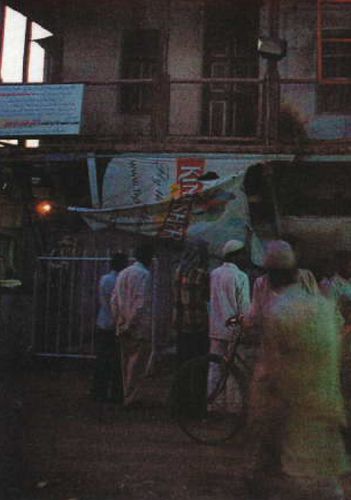 Setting a trend: Purohit and co.,including the squinteyed sanyasin Sadhvi Pragya Thakur, are the alleged key players in the theatre of Hindu terror, a term which gained currency after the Malegaon blasts (the blasts site) | Amey Mansabdar
In the shadow of these open meetings, covert operations were being carried out. Pragya, Apte, Shankaracharya, R.P. Singh, Upadhyay, Kulkarni, Rakesh Dhawade, an antique arms conservator who also runs a government-registered museum in Pune, Abhinav Bharat treasurer Ajay Rahirkar and Bharat Bhai Riteshwar of Valsad, a close associate of Aseemanand, were operating secretly to procure arms, ammunition and explosives. This is when Purohit emerged as the key figure for coordination and procurement of weapons. His Army background and Pune links helped him assimilate his position in the Sanghatana. "The arms procured by Purohit were a part of his military exercise and he never used anyone personally," said Shivade. According to the interrogation report, Purohit had been in touch with Shankaracharya ever since their first meeting in September 2007. Apte also stayed in touch with Shankaracharya and gave him Rs 5 lakh when he met him in Ujjain in August 2008. Again on August 30, Apte and Purohit met Shankaracharya at Ujjain. The charge-sheet filed by the Maharashtra ATS said that Abhinav Bharat was not a charitable organisation and there was no explanation regarding the source of a donation of Rs 2.5 lakh to the organisation apart from Rs 4.75 lakh that was "sent through hawala". Purohit could counter-argue that he was not directly involved with the money transactions.
During these meetings, Shankaracharya once made R.P. Singh speak to Purohit. R.P. Singh told him that RSS members Indresh Kumar of Delhi and Subedar Singh of Nepal were linked to the ISI and were carrying out destructive activities. He said that they were also involved in the fake Indian currency racket. However, the intelligence authorities have not established any links between Indresh Kumar and the ISI. When R.P. Singh and Shankaracharya asked Purohit to arrange a small firearm to eliminate Indresh (for his alleged ISI connection), he contacted Dhawade and asked him to get the weapon and ammunition.
In April 2008, according to the report, Dhawade gave him a 9mm country-made revolver and a dozen rounds. As directed by Shankaracharya, Purohit delivered the weapon to one Alok in Bhopal. Purohit paid Dhawade Rs 50,000 for the revolver and ammunition. The money was provided by Apte and delivered through Rahirkar.
Thereafter, Shankaracharya again demanded four small arms and ammunition. Purohit asked Apte to deliver Rs 3.20 lakh through Rahirkar to Dhawade for the weapons. Again on August 3, 2008 Shankaracharya visited Ujjain where he introduced Purohit to RSS pracharaks Sandeep Dange and Ramji Kalsangra, both of whom have been absconding since the 2008 Malegaon blasts, and asked him to arrange explosives for them. The two were considered dedicated workers and had by then selected a spot for action. Apte, who was also present in the meeting, gave Rs 5 lakh to Shankaracharya, who gave Rs 1 lakh of it to Purohit and reminded him of the explosives. He also asked him to urgently give two small firearms to Dange.
Dange called Purohit regularly, who had already asked Dhawade to get explosives and small firearms. But when Dhawade refused to obtain the weapons, Dange panicked. He visited Pune in the second week of August 2008 and hounded Purohit for the explosives. But Purohit was helpless. His inability to provide them weapons and explosives might also be cited by his lawyers in his defence.
Purohit also declined to help one Pravin from Belgaum, Karnataka, who came to Pachmarhi in August 2008 with literature on improvised explosive devices. When he asked Purohit to train him in making IEDs, the colonel expressed inability and asked him to return to Belgaum. However, Purohit arranged a meeting with Dhawade to teach Pravin the basics of IED manufacturing.
A month earlier, Purohit had declined Pragya's request for a donation of Rs 1.5 lakh for a hand-pump project in Gujarat. Her organisation, Jai Vande Mataram, is engaged in various socio-religious activities. Following this incident, there was a communication gap between the duo. But they were reconciled by Mayaram Jaswani, who said they should work together for the Sanghatana. On October 8, 2008 Pragya, who was in Ujjain, got a call from a Dharmendra of Surat. He gave her Kalsangra's phone number and asked her to call him. When she contacted Kalsangra, he asked her to meet him near Mahakal Dharamshala in Ujjain.
In Ujjain, he told Pragya that the bomb used for the 2008 Malegaon blast was planted in her motorcycle and that he had erased its chassis number. Though she had sold it to RSS pracharak, Sunil Joshi, investigators later found that it belonged to the sanyasin. Unlike the firebrand nun, Purohit has not left behind any footprints, except for a few conversations that don't substantiate any evidence, and witnesses to nail him.
Tracking the footprints
Abhinav Bharat was founded by freedom fighter Vinayak Damodar Savarkar as a secret students' society in 1904 when he was 25 years old. It was meant to start an armed struggle against the British rulers. An outspoken revolutionary. Savarkar published The Indian War of Independence, a book on the revolt of 1857. The British banned the book and, in 1910, arrested him for his connections with the revolutionary group India House. While in jail, Savarkar coined the term Hindutva and used it in his ideological treatise, Hindutva: Who is a Hindu?, in which he emphasised its distinctiveness from Hinduism which he associated with social and political disunity. A self described atheist, Savarkar regarded being Hindu as a cultural and political identity. He outlined his vision of a Hindu rashtra (nation) as 'Akhand Bharat' (united India). He was a critic of the Indian National Congress, and was one of the accused in the assassination of Mahatma Gandhi. He was acquitted for lack of proof. According to intelligence sources, Lt Col Prasad Shrikant Purohit and Sadhvi Pragya Singh Thakur, who are accused in the Malegaon blasts case, are followers of Savarkar's ideology.