



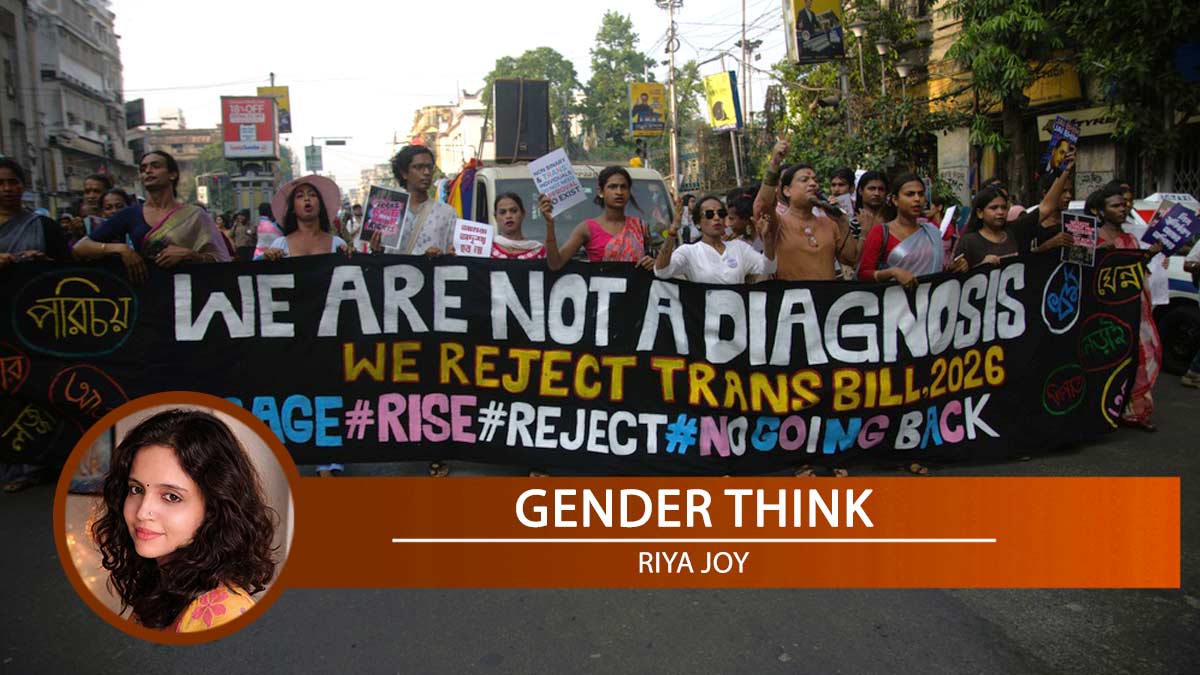
Who decides who you are?
It’s an intriguing question. Should there be somebody else to approve and acknowledge our mere existence and identity? If yes, what an existential crisis it would be! Yes, the 2026 amendment to the Transgender Persons (Protection of Rights) Act has triggered such a dilemma in the transgender community in India. While the 2019 law recognised a transgender person’s right to self-perceived gender identity, the 2026 amendment has removed this statutory recognition and introduced medical-board verification into the process of legal recognition. Though the Union government has reassured the Supreme Court that existing transgender ID cards will remain valid, the larger question of who gets to define a person’s identity remains.
As per the new amendment, a transgender person’s identity will be legally recognised only after the recommendation of a designated medical board, following which the District Magistrate issues the identity certificate. Here comes the existential dilemma: who has the ultimate authority to define someone’s gender? Is it the State? The medical board? Or the individual themselves? When self-perceived gender identity is denied, then who decides the identity? The Supreme Court has taken up petitions challenging the amendment, including the removal of statutory recognition of self-identification, with the petitioners arguing that it violates constitutional guarantees of dignity, autonomy, privacy and equality. The matter is still pending before the court.
This is not just about the threats that await the transgender community. Reading between the lines, it is an invasion of the very basic right of a transgender person to choose gender identity.
That you need medical validation to prove your identity is another cruel joke. You are in a queue, waiting for medical validation for what you are. There may be many who have intricate and complicated gender identities, like trans men, trans women or non-binary persons. Or they may be evolving as well in an identity crisis, being unaware of what they are. In such a phase of self-unawareness, how absurd will it be for them to approach a medical professional to prove that they exist, struggling to fit into the gender binaries we are familiar with? Here, bureaucracy becomes another wild measure of social and gender control.
No conventional man or woman needs a medical certificate to prove their identity, as they belong to the socially accepted gender binaries. So, the burden of all these legal formalities and medical examinations for identity approval is only on an unconventional trans person who doesn’t organically fit into the man-woman categories. While the majority born into a 'privileged gender' get a free pass, the other minority struggle to prove itself. Though the government may have explanations that the new regulation is necessary to prevent the misuse of welfare schemes, should it be at the cost of subjecting an entire community to intrusive scrutiny?
