



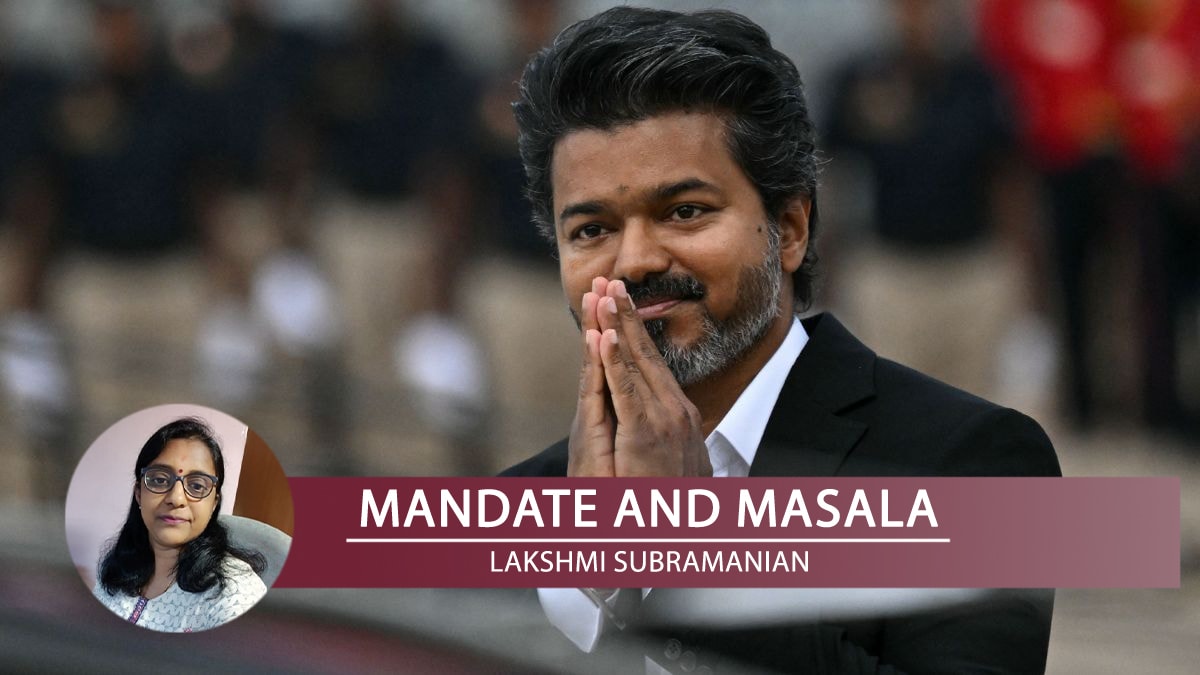
How is the new government faring in Tamil Nadu? This is the one question currently circulating through political circles and coffee shops alike. After a month in power, the curiosity surrounding new chief minister C. Joseph Vijay has reached a feverish pitch. While the public often expects a new regime to arrive with the deafening roar of grand proclamations and radical overhauls, the reality of the Vijay administration has been far more subtle. Tamil Nadu is now witnessing a quiet revolution—one defined not by the theatre of power, but by a methodical recalibration of the state’s administrative machinery.
In the past one month, since the new government under TVK leader C. Joseph Vijay took charge, I would have visited Fort St George, the state secretariat or the seat of power at least thrice every week as a journalist. And every visit, as a journalist, I have had a unique experience unlike the past one decade. On Friday, as I reached the secretariat press room to leave my belongings and climb up the stairs to meet a VIP, one of my journalist friends said, “Ma'am. Walk up the stairs and see. There is a long queue at every office room like at the Tirupathi Balaji temple.” All of there had a hearty laugh hearing this. I smiled as I proceeded to meet the VIP.
In an era where modern political leaders often prioritise high-visibility field visits and the optics of grandstanding, Vijay has staged a counter intuitive coup through simple desk work. He arrives at the secretariat by 10 am sharp every day. And stays back in the office, attending review meetings, meeting officers, visitors and remains in the office until 5 pm. And this move has dismantled the administrative inertia that often plagues state capitals. This leadership by presence has produced a remarkable salutary effect – the majority of government staff are now at their desks on time.
No wonder. The Tirupati Balaji temple-like queue has turned into a norm in most of the minister’s office. People with petitions and requests wait in a long queue in front of the offices of education minister Rajmohan Arumugam, minister for revenue and disaster management K.A. Sengottaiyan, electricity minister R. Nirmal Kumar, PWD minister Aadhav Arjuna and health minister K.G. ArunRaj. The police security are at work at least for 12 hours during the day to organise the crowd and send them inside the minister’s chamber while both the special and the political personal assistants of all the ministers have a high time attending to the visitors and responding to the petitions received.
And at the corridors of the 10-storey building that houses the office of the IAS officers, the air of discomfort has almost evaporated. The speed at which the administration is currently processing the state’s business has caught even veteran officials off guard. The clearing of files, typically a process mired in bottlenecked departments, has seen a dramatic acceleration. “All those days of lobbying has gone. We need not report to our own brethren anymore. And there is no pressure to raise party fund,” said an officer on conditions of anonymity.
Incidentally, this efficiency is the result of a significant shift in management style. By granting officers a free hand to take decisions, Vijay seems to be moving away from the stifling micromanagement of his predecessors. While this high-trust model is a high-reward move for a new leader, it is underpinned by a firm zero tolerance stance on corruption. The message to the bureaucracy is also clear – you have the autonomy to act, but the standard for integrity is absolute.
In fact, one of my sources in the secretariat said chief minister Vijay’s advice to his ministers at the first cabinet meeting held last week was to “work stress-free”. But the topmost priority was to “prevent corruption” and “not encourage bribe for transfers and postings in the departments.” Of course, this was one of the major reasons why the two Dravidian majors were voted out by the public in Tamil Nadu in the recently concluded assembly general elections.
My answer to those who have questions about the new administration is, “yes, there is a change.” The first month of the Vijay administration apparently suggests a fundamental shift from grandiosity to functioning. By focusing on the mechanics of file clearance, administrative autonomy, and a disciplined work culture, the leadership is attempting a rare feat – repairing the machinery of the state from within. While the debate over policy reforms will continue, the impact of a disciplined executive presence is undeniable. However, this leaves me with a provocative question – in the long run, is a monotonous but efficient government more valuable for a state’s progress than one defined by exciting but potentially hollow policy announcements?
