



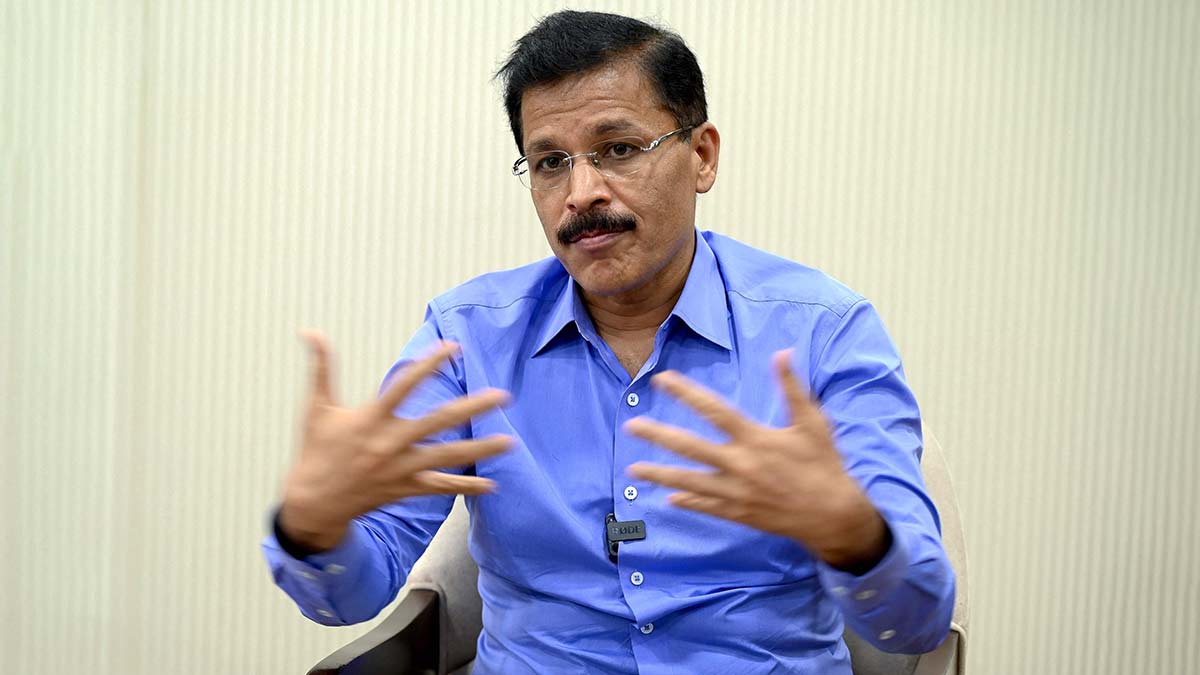
Interview/ Tukaram Mundhe, commissioner, Maharashtra Food and Drug Administration
THE MAHARASHTRA Food and Drug Administration (FDA) has been on an aggressive drive to enforce food-safety regulations. It has resulted in raids and inspections across a wide range of establishments from dairies, restaurants, hotel kitchens and gymkhana canteens to food delivery platforms and even the Bombay High Court canteen. Several licences have been suspended, and establishments have been asked to comply with regulations.
The raids have raised questions about whether the FDA has adequate manpower to inspect the state's vast food sector, and whether it is targeting only high-profile establishments.
FDA commissioner Tukaram Mundhe spoke to THE WEEK about the scale of the crackdown, and the constraints FDA faces in enforcing food-safety standards.
Edited excerpts:
Are you surprised by the number of establishments that have violated rules?
I am not surprised, and it is not a large number either. We have more than 10 lakh registrations or licences in the food sector, and more than 1.52 lakh in the drug sector. Compared with these numbers, [the extent of] the action is nothing.
The action is proportionate to the level of non-compliance. It is not that every licence has been suspended. Some have been given improvement notices, some licences have been suspended, and some have been given time to comply.
How many cancellations or closures have there been?
Cancellations have taken place, but they are fewer because the procedure after suspension involves a notice period. They have to be given a hearing, and then action is taken. So, there is a due process and an adjudication process.
People say you are only going after the big establishments.
Not at all. The law is the same; the implementation mechanism is the same. We get information [and] complaints. There are surveys and analysis. All factors are taken into account while initiating action.
Our complaints portal is unique in the sense that it has auto-assignment, auto-escalation, tracking and transparency. With the launch of this portal, the flow of complaints has increased. The complaints are filtered using AI; false complaints are not accepted.
Even if it is a vada pav-walla, we have taken action. We have taken action against restaurants, dairies, grocery owners and chains. There is no discrimination because the law does not discriminate.
The FDA mandate is to ensure that the regulations are implemented. Those who do not abide by the law cannot do business.
Are you surprised that FDA had taken no action before you came in?
I am surprised, but not shocked. I am not a foodie who eats in multiple restaurants. But my kids do, and whenever I saw these things, I thought, yes, they were not following the norms.
So I am surprised in that way, but not shocked because there is a lack of machinery.
But we did not see any action being taken against such establishments earlier.
I think actions have been taken. Maybe the number is different. Maybe we are much more aggressive now. But to say that no action was taken is erroneous.
Maybe there are constraining factors that I do not know about. But I think the other factor that is different from earlier is that we are making it public as well. We are issuing public press notes so that people become aware.
The purpose of issuing these press notes is that people must know what they are eating, where they are eating and whether those eateries are following the norms or not.
Because often it happens that there are actions and establishments are still operating. Then we take further action.
If customers want to flag violations to you, how do they do it?
It is simple now. Just go to my portal, complains.mahayoday.in, register on your mobile and flag it. It is assigned automatically to the officer. I can track it, the customer or individual can track it himself or herself, and I can see the actions as well.
How often do repeat offenders emerge? Are the existing penalties stringent enough to deter violations?
Very often. Repeat offenders will lead to suspension as well as cancellation of the licence itself.
For example, if an improvement notice is given and there is a 14-day period to comply, after 14 days there is a cross-inspection or re-verification of that business establishment or licensee. If they do not comply, the licence can be suspended.
But has this happened?
Yes. For instance, we inspected Purnima Restaurant in South Mumbai way back in January. Following that, we gave them an improvement notice. Despite that, they did not comply with the necessary requirements, and hence suspension action has been taken now.
Then again, a second improvement notice was given, although it was not actually provisional. By that time, action should have been taken. Yet again, they did not comply. So a suspension was imposed.
Now, if they continue to break the rules, we will cancel their licence and prosecute them under Section 59, which amounts to life imprisonment for providing unsafe food.
When you visit a restaurant, what do you notice first? And how do you judge, then and there, whether they are flouting norms?
First, look at the FSSAI (Food Safety and Standards Authority of India) licence. It should be prominently displayed. If you find any flaw, you can complain using the barcode mentioned there.
Then look at cleanliness, the menu card and what your food looks like.
Also, it is a must that you are provided free drinking water. If they straightaway provide bottled water, it means something is wrong. If they insist that you opt only bottled water, it is a violation.
They have to offer potable drinking water free of cost. They themselves cannot offer bottled water to you unless you ask for it.
How can customers inspect their food?
You can check whether it is unusually coloured, for example in the case of biryanis and jalebis. The red colour is basically an adulterant or additive. If a food item is unusually spicy or oily, it can also be a red flag.
For deep-fried items, one can ask how many times the oil has been reused, because its TPC level cannot be more than 25. This is a question a customer can always ask, and the staff has to give an answer.
If at any point you think something is amiss, simply click a picture and upload it. This includes the way the server carries himself or herself. Everything from gloves to headgear and shoes has to be in place.
Have restaurants attempted cosmetic clean-ups just before your inspections? How do inspectors distinguish between temporary fixes and sustained compliance?
Yes, that has been observed a number of times.
When food safety officers go in, we don't just go for a check-up; we conduct inspections. What we do is look at Schedule 4 compliances.
Schedule 4 essentially covers the manufacturing and handling of everything, right from the kitchen, reception of raw material, storage, segregation, processing, preparation and making of the food to packing it, storing it and serving it.
All these guidelines are very clearly laid down.
For example, whether vegetarian and non-vegetarian food are segregated or kept together—the latter is not allowed. They have to maintain a particular temperature. The kitchen itself has to be as per the parameters. It has to be ventilated, there has to be adequate light, the floor has to be tiled and the walls have to be tiled so that they can be kept clean.
All these guidelines are there. What you call good manufacturing practices, good hygiene or cleanliness practices, good storage practices and good laboratory practices—all of that is written down.
We check each of these parameters. We don't just go in and look at one thing. Our job is basically to inspect the kitchen where the food is prepared, and along with that, other things are also looked into.
That is reported, and there is a score point for each parameter. Everything is accounted for.
What is the extent of staff shortage at FDA?
We do have [staff shortage] here, but not as bad as in other states. The ratio [depends on] the number of establishments. For example, you have around 12 lakh food establishments in food now. Generally, for every 1,000 establishments, there has to be one FSO, or food safety officer.
That is not the case right now. A joint parliamentary committee has recommended that there has to be at least one officer for each rural taluka or block. In urban areas, there has to be one for every 1,000 establishments. I would require around 900 FSOs, whereas my sanctioned strength is around 350. So that is the gap.
This is, of course, limiting us in carrying out our work, because we cannot check all the establishments we are expected to check. We do not have that many officers.
Do you believe the current frequency of inspections is sufficient?
No. We need to do much more.
You recently took on Blinkit. Food delivery platforms display FSSAI licence numbers. Beyond verifying that a licence exists, do these platforms have any responsibility to continuously monitor compliance?
Yes, they have to abide by all the regulations applicable to any FBO (food business operator) because they are registered as an FBO.
Even though they are a platform, they are serving, purchasing or taking an order from someone and selling it. When they do that, it is their responsibility to ensure that the food prepared is as per the standards.
Many consumers assume that an FSSAI licence guarantees hygienic food. Is that a misconception?
When a licence is issued, they are expected to implement the standards. What has happened is that licences have to be issued online in a time-bound manner, so they are issued.
But it is the responsibility of the concerned FBO to adhere to the standards. If they fail, their licence can be revoked or cancelled, or they can be prosecuted.
An FSSAI licence is a licence to operate as per the standards. That is expected of everyone. Whether they actually do it or not is for us, the regulator, to inspect. That is what we are doing.
Why have these actions happened only now, since you came in?
This is a system, and that is why we are continuing it. Now there is a platform for grievances, and it will continue. In the same way, inspections are being scheduled and will continue. There is no question of discontinuing it. The moment compliance reaches the required standard and compliance is there, we will not require this level of action, and I will be the happiest person. As long as you are there, we are all sure that—when we are talking about the FDA, I am not talking about myself, of course; it is a rule of the FDA. The reason why you see such aggressive action by the FDA has a history behind it.
Before 2006, there was the Prevention of Food Adulteration Act. The focus was around preventing adulteration. That was the Act. In 2006, a 360-degree change took place in legislation. Parliament passed the Food Safety and Standards Authority of India Act. For the first time, that represented a 360-degree turn from prevention of adulteration to the safety and standards of food. The 2006 Act was passed and implemented from the beginning of 2011. There was a transition, and it was a big transition—a 360-degree transition. Then the rules came in 2011, and regulations started coming in.
As of now, we have 22 types of regulations in the food sector, and they will continue to increase as time goes on. New standards will come, and existing standards will be modified. Everything is covered, from Schedule 4, which is the basis of manufacturing, good manufacturing practices, good hygiene practices, and good laboratory practices, to packaging, branding, and advertising. All these standards are there. School nutrition standards are also there.
They have been coming in over a period of time. So, the implementation has also had to evolve because you are looking at legislation from 1954 that was changed in 2006 and started being implemented in 2011. Now the standards are increasing. Of course, it has not increased overnight because it is a 360-degree change. The food community has to know about the standards and abide by them. As a regulator, we also have to change our approach. We have changed that, and now it has started increasing. If you see across India, there is a movement of sorts. Somebody has to light a fire. Maybe that was in my way, so we started doing it.
I think we are going forward from here—not only in Maharashtra but across India. It will be for the betterment of the health of the people and the country.
If you could change one aspect of India's current food-safety regulatory framework, what would it be?
One of the biggest goals I would like to achieve will not be about the regulatory framework, but about the culture. The culture of Indian citizens around food has to change. What I am saying is that, as an individual, I need to give much more attention to what I consume and what I eat. Today, we are not paying that much attention to what we eat. We think that a branded product or a particular package or hotel is good because it is branded or because it is a hotel. We understand and appreciate that. We think that if it is a good brand, it is a good thing. If it is a good hotel, it is a good thing. If it is a renowned hotel, it is a good thing. If it is a good restaurant, it is a good thing. Please don't go by that.
We need to know exactly what we are eating and what exactly we are consuming. For example, if you purchase some food item which you consume, what we generally look at is the brand name, expiry date, and price. That is where 90 to 99 per cent of shopping starts. That is where it goes wrong. What we need to look at actually is the ingredients of what we have purchased. Don't go by what is written there in big letters. Look into the ingredients. They are written either on the front side, the side, or the back side. Look at the ingredients. What is the calorific value? What is the protein? What is the sugar? What are the ingredients in that? Look at the full label. Don't go by advertisements. Go by the ingredients.
If you start looking, you will come to know. It says "sugar-free," for example, but there may be something else there. If it is misleading or misbranded, that can be acted upon. You can report it. But beyond reporting and taking action against that particular product, you should not consume the wrong thing. When we are so much aware of our looks and what we are wearing, why can't we be aware of what we are eating and consuming? That is the key thing.
If one thing can change India for the better, it is this culture of taking things for granted. We should not take things for granted. We should look at exactly what we are consuming and not go by advertisements. Look into the ingredients of food items. For beverages, whether alcoholic or non-alcoholic, look at whether they are as per your requirements. Do not go by just the name and advertisement or look only at the big picture. Look into the fine print. It is written there. If it is not, please don't accept it. If it is written, see whether it suits you or not, because you may have some allergens. You may have sugar, and then you see "sugar-free" on the label. If it is really sugar-free, look into it.
If you change this one habit and make it part of the culture—that whatever you eat should be standard food, not so-called quality or so-called tasty food, but change from "quality and tasty" to "standards"—then standards will help make your health better. If this one thing can be done, I think the total food industry will change. That is how we should push. On the regulatory side, we are implementing it. From the demand side, people have to push. Both these wings will help make a better India.
If highly rated restaurants continue to be found violating food-safety norms, does the hygiene-rating system need to be overhauled?
Right now, the hygiene-rating scheme is advisory. It is not compulsory as of now. Hygiene is one part of it, but ultimately, whether it is star hotels, restaurants, or anything else, these standards will have to be followed: good manufacturing practices, good hygiene practices, good storage practices, and so on.
Once a restaurant's license is suspended, how quickly are food delivery platforms such as Swiggy and Zomato informed? Is there an automated system to prevent them from taking orders?
Yes. We observe whether they continue to operate after suspension or not. We are very aggressive.
In some places, even after an FDA raid, establishments have put up wrong signs outside.
Yes. Like K Rustom said that they were [closed] because they were undergoing maintenance. I said, first remove that sign and stop misdirecting people. They have now put up the board saying they have lost their licence.
In your experience, are food-safety violations largely because of negligence, cost-cutting or lack of awareness?
All of them, together. The main thing is that they have all taken us for granted, which is one of the major reasons for non-compliance.
