



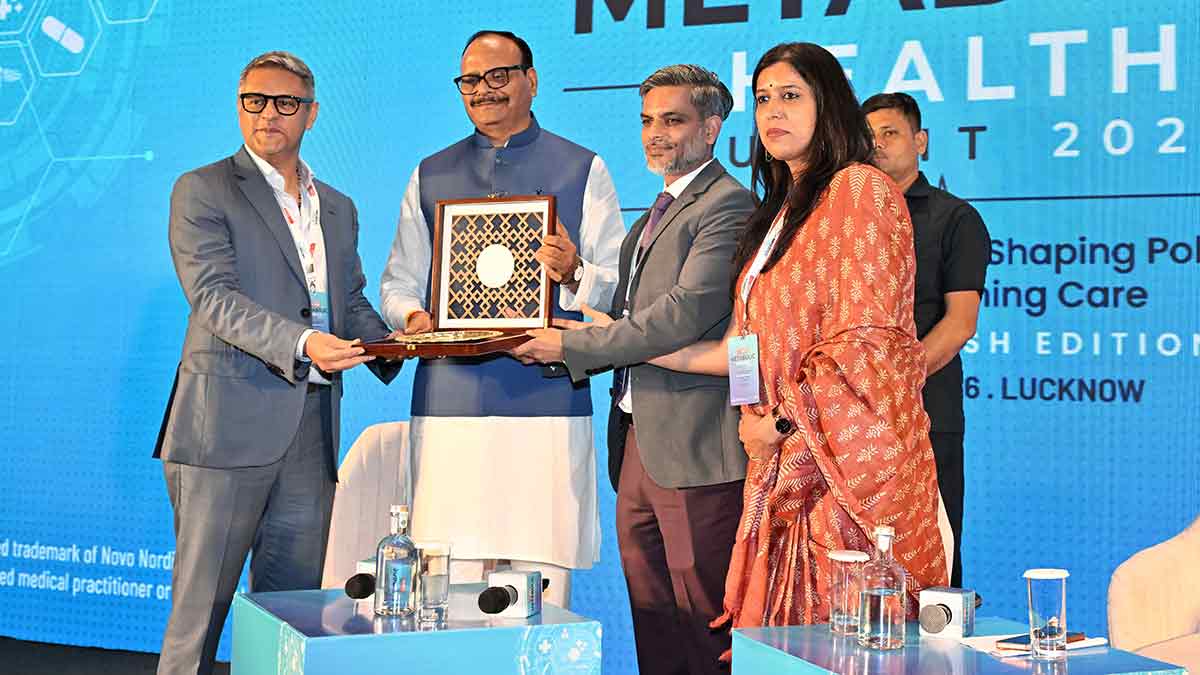
Heart attacks among people in their 20s and the growing prevalence of obesity, diabetes and fatty liver disease have prompted Uttar Pradesh to sharpen its focus on preventive health care.
Delivering the keynote address at THE WEEK’s Metabolic Health Summit 2026-Uttar Pradesh edition, Deputy Chief Minister Brajesh Pathak warned that diseases once associated largely with old age are increasingly affecting younger people. He attributed the growing burden of lifestyle-related illnesses to unhealthy eating, physical inactivity and mental stress. He called for a shift in public health priorities, with greater emphasis on preventing diseases rather than treating them after they develop. “Until our mind and body are healthy, we cannot contribute effectively to our country and our state,” he said.
Exercise, emphasised Pathak, did not necessarily require a gym membership. Brisk walking, climbing stairs and doing household chores could help people remain active. He also called for hospitals to appoint dedicated personnel to educate patients about disease prevention and urged newspapers, television and social media platforms to play a greater role in promoting healthier lifestyles. He added that the state government was open to policy suggestions from medical professionals to strengthen its response to the growing health challenge.
The need to address metabolic disorders through a combination of public awareness, stronger regulation, early screening and effective health care delivery emerged as a central theme at the summit. With Novo Nordisk as industry partner, the event brought together policymakers, doctors and researchers under the theme ‘Advancing Science, Shaping Policy and Transforming Care’.
Dr Anuj Maheshwari, president of the Research Society for the Study of Diabetes in India, highlighted the growing challenge of diabesity—the coexistence of diabetes and obesity. Changing lifestyles and declining physical activity, he said, were contributing to the problem, which was no longer confined to urban populations, with rural communities increasingly facing similar risks.
Maheshwari also drew attention to maternal health, raising concerns about inadequate care during pregnancy and poor maternal weight gain. Screening and timely intervention, he said, were important to preventing complications.
Prof Soniya Nityanand, vice chancellor of King George’s Medical University, Lucknow, called for stronger regulation and greater consumer awareness to improve India’s cardiometabolic health. Referring to measures adopted in other countries, she stressed the need for policies that encourage healthier choices and reduce the risks associated with unhealthy diets. The discussion also turned to the implementation of existing health care programmes and the need to ensure that patients receive timely and consistent treatment.

Dr Alka Sharma, additional director (health), directorate of medical health and family welfare, Uttar Pradesh, and state programme officer for the National Programme for Prevention and Control of Non-Communicable Diseases, stressed the importance of better monitoring of medicines at health care facilities. Improved indenting, dispensing and tracking of medicines, she said, could strengthen accountability and improve treatment delivery.
R.S. Yadav, state nodal officer at the National Health Mission, highlighted the role of Ayushman Arogya Mandirs in maintaining contact with patients and extending primary health care services. Medical advice, he said, needed to translate into changes in everyday behaviour. “Knowledge is there, but we have to accept it sincerely and follow it,” said Yadav, urging people to assess health risks within their families, particularly obesity.
Researchers warned that the state needed to accelerate its response to diabetes and related complications. Dr Saibal Das, scientist at the Indian Council of Medical Research, said the diabetes burden in Uttar Pradesh had grown and that interventions needed to keep pace with the challenge.
Dr Gyan Chand, professor of endocrine surgery at the Sanjay Gandhi Postgraduate Institute of Medical Sciences, Lucknow, identified cardiovascular diseases and metabolic dysfunction-associated steatohepatitis, a serious form of fatty liver disease, as significant health concerns. While fatty liver disease was common in India, said Dr Prabhat Agrawal, professor of medicine at S.N. Medical College, Agra, its progression varied between individuals. Early diagnosis was essential to identifying the condition and preventing complications.
The summit examined the challenges of managing such diseases among children. Dr Vijay Jaiswal, professor and head of paediatrics and neonatology at LLRM Medical College, Meerut, said children with type 1 diabetes could lead healthier lives with appropriate treatment, monitoring and family support.
The discussions underscored the need for Uttar Pradesh to strengthen prevention across the health care system, from early screening and primary-level interventions to reliable access to medicines, effective treatment and sustained public awareness. As metabolic disorders increasingly affect younger people and extend beyond urban centres, the challenge for policymakers and health care professionals is to make prevention an integral part of everyday health care.
