



Growing up in the late 1990s and early 2000s, I distinctly remember going through panels and panels of comic books to realise one truth—DC Comics were far superior to Imagine, Marvel, and even Dark Horse Comics.
The movies also followed the trend. (For the sake of the discussion, we will assume the 1986 Howard the Duck by Marvel and the 1997 Batman and Robin by DC did not happen in this timeline.) Marvel did have excellent studios, bringing some greats—Fox's X-Men trilogy, Sam Raimi's Spider-Man trilogy, the Blade trilogy; all saw at least one flop, but great hits too. Ghost Rider, helmed by Nicholas Cage, was also great. Take out Spider-Man 2, the rest—despite their merits could not go head-to-head with Michael Keaton's Batman and Christopher Reeve's Superman. Christopher Nolan taking the helm of Batman then cemented its supremacy.
If you looked at animation, Marvel was a disgrace except for Fox's X-Men: The Animated Series. In contrast, DC had a strong lineup with the epic Superman: The Animated Series and the legendary Batman: The Animated Series.
Everything was going well for DC, and then Robert Downey Jr's Iron Man happened, building on the momentum of Edward Norton's movie The Incredible Hulk. And just like that, the Marvel Cinematic Universe was born.
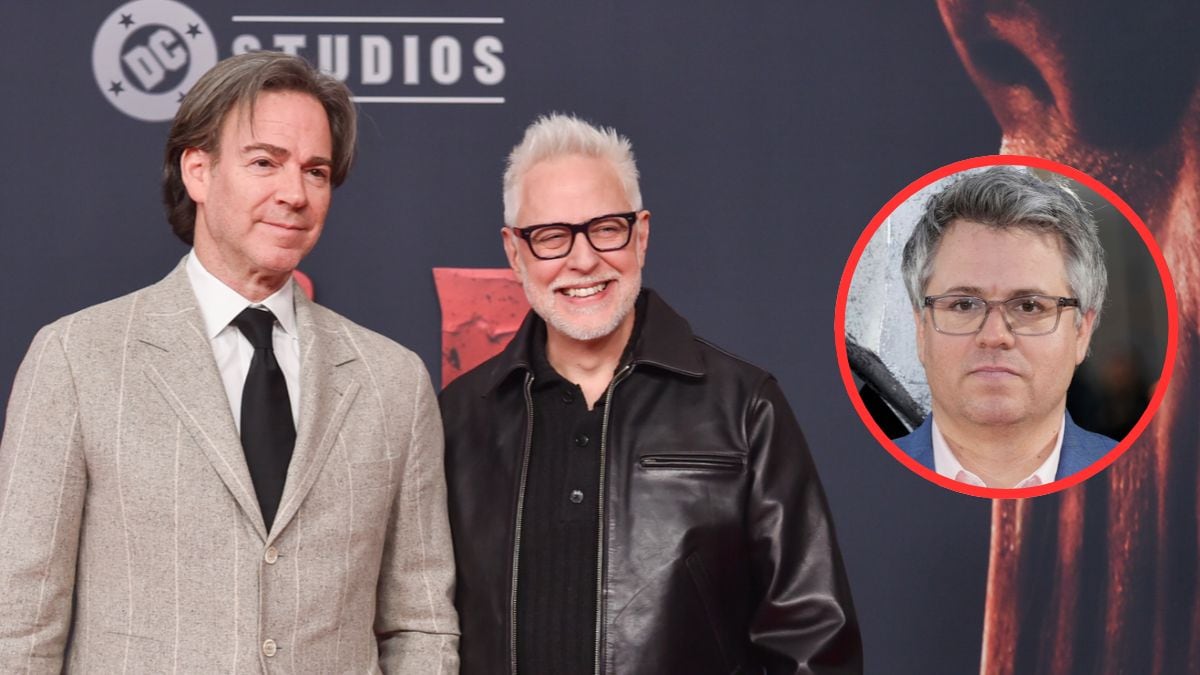
The massive success of the MCU seemed to have pushed Warner Bros. into a corner—especially with the big mouse branching Marvel Studios out as a separate unit. Suddenly, the underdog Marvel had become the dominant one. Warner Bros. seemed to have grasped at straws by then... Zack Snyder and Christopher Nolan were cooking something with Man of Steel. Ben Affleck was cast as Batman in the spiritual sequel. But then the boardroom meddling began. What started as the butchery of Batman v Superman: Dawn of Justice went on to create a ripple that, in 2026, has culminated in yet another leadership change atop DC. James Gunn and Peter Safran are set to step down as co-chief executives of DC Studios on December 1, 2026, ending a four-year attempt to rebuild DC’s screen universe around a single, connected story world.
Their departure follows Warner Bros. Discovery’s acquisition by Skydance. Jeremy Latcham, a former Marvel Studios executive, is set to take over as DC Studios’ president and chief creative officer from December 1. Gunn and Safran will continue producing selected DC projects, but will no longer run the studio.
The change closes a turbulent chapter that began with the creation of DC Films in 2016 to oversee the DC Extended Universe (DCEU), WB's answer to the MCU. Geoff Johns, a longtime DC Comics writer and executive, and Warner Bros. executive Jon Berg were appointed to lead it. Zack Snyder and Christopher Nolan were powering it.
Their vision was continuity. Films such as Suicide Squad, Wonder Woman and Justice League were supposed to be set in one shared universe. But once again, mysterious corporate hands are said to have intruded into the editing and post-production. Snyder was hastily pushed out, inviting Josh Whedon to redo parts of the hero ensemble movie. What we got was the hot mess that was ‘Josstice League’. Even the durable success of Wonder Woman could not save them. The final nail in the coffin was the original director returning from a personal tragedy and then releasing the masterpiece that was Zack Snyder's Justice League, enraging fans against the studio policies that removed him in the first place. Somewhere between all this, Johns stepped back from day-to-day leadership, and Berg decided to leave.
Reeling with inconsistent quality and internal conflict, DC Films was in shambles. By 2018, Walter Hamada took charge. He gave a bit more room for filmmakers. Hamada's tenure gave us Aquaman, which became DC’s highest-grossing film at the time. Shazam! did a decent $365 million worldwide. Robert Pattinson-helmed The Batman, released in 2022, was also developed under his tenure.
But the era also had some spectacular misfires: Birds of Prey, Wonder Woman 1984, Black Adam, The Flash, and Blue Beetle. Out of these, Birds of Prey and Blue Beetle were decent watches, but DC failed to market them decently to global audiences. The Suicide Squad was a surprise hit, along with TV's Peacemaker series, which paved the way for its director James Gunn to take the reins of DC's film unit after Hamada's departure in October 2022.
James Gunn and Peter Safran were appointed co-chairmen and co-CEOs of the newly created DC Studios. Their mandate was not limited to churning out more superhero films. It was to restart the DC universe.
In January 2023, they unveiled “Chapter One: Gods and Monsters”. The plan covered films, television and animation, with a shared continuity and a deliberate effort to distinguish the new DC Universe from the old DCEU.
Their first releases were Creature Commandos in December 2024, Superman in July 2025, Peacemaker season two in August 2025, Supergirl in June 2026, TV series Lanterns in August 2026 and Clayface in October 2026. Arguably, all of them were critically well received.
Gunn was joined by Safran as the one in charge of production, studio relationships and business strategy. The vision was ambitious. But just like Zack Snyder, we will never know what their vision really was—because they too have stepped down.
And now, it is Jeremy Latcham's turn. He inherits a studio with a defined creative foundation but unresolved commercial questions. Latcham takes charge of a DCU that has already released six rather decent projects.
The question is, will he ensure continuity and go with Gunn-Safran’s long-term plan? DC fans are also brutal. So, Latcham must decide which announced projects continue, which are delayed and whether the “Gods and Monsters” will even exist going forward. Because what many forget is that the MCU was not made in a couple of years. The gap between The Incredible Hulk and The Avengers is five years. Will the new suits atop Skydance give this time to Latcham? Or will they expect him to do magic from the get-go? DC Comics has already done it with the Absolute series. Now it is the turn of the movies.
