



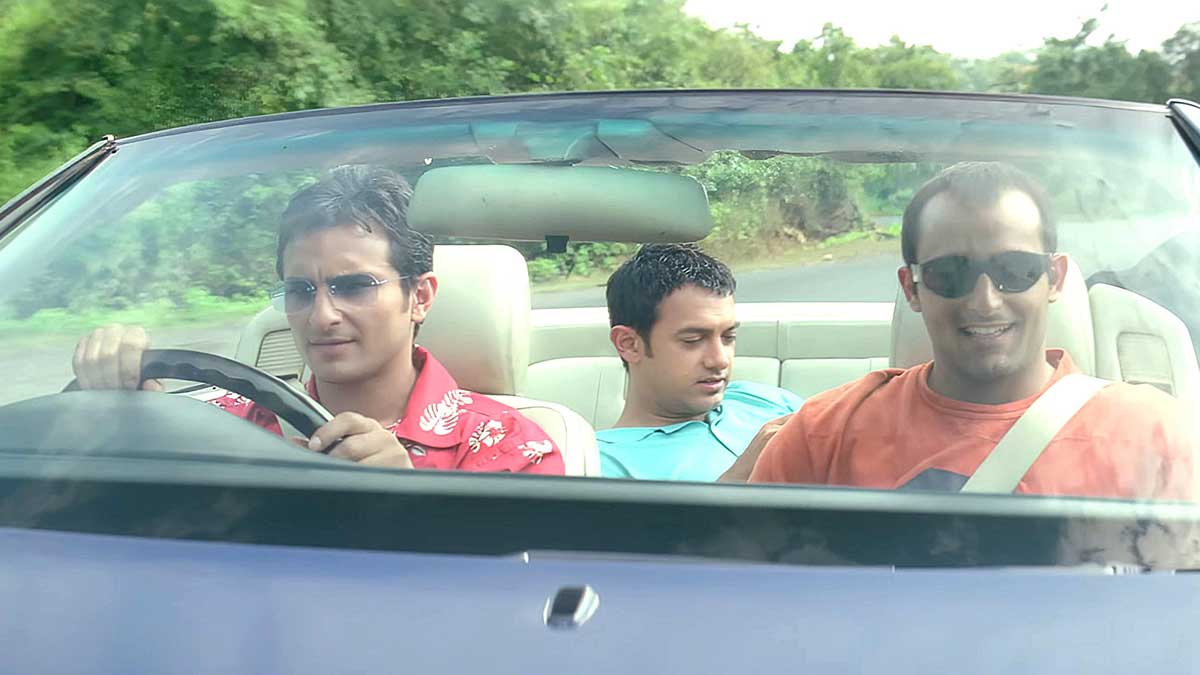
When Dil Chahta Hai released on August 10, 2001, India was already on a growth trajectory. Her cities were growing, and the aspirational middle-class was embracing a more global slant. Few Hindi films of that time captured this change as authentically as Farhan Akhtar’s directorial debut. By placing friendship, ambition and romance at the heart of its narrative, Dil Chahta Hai broke away from the established Bollywood practices and ushered in a more contemporary style of storytelling.
For millions across India, the film became a point of reference. Its lead characters made friendships and emotional strife feel refreshingly original, while its humour, aesthetics and honest writing redefined how urban youth were portrayed on the Hindi cinema screen. For people navigating adolescence, college and the first years of adulthood, Dil Chahta Hai wasn’t merely a blockbuster; it captured the spirit of its times.
The film’s influence extended far beyond storytelling. Shankar-Ehsaan-Loy crafted a music unlike anything Bollywood had experienced before. Javed Akhtar’s lyrics refined camaraderie, longing and self-discovery into songs that became defining chants of the early 2000s. ‘Dil Chahta Hai’, ‘Jaane Kyon’, ‘Koi Kahe Kehta Rahe’ and ‘Tanhayee’ remain inseparable from those times. The film also popularised Goa among young urban Indians, turning its beaches and forts into signs of freedom.
The film evokes a flood of personal memories. At my school in Delhi, boys from classes 8 to 12 rushed to get spike cuts after watching Aamir Khan’s character, Akash. Those were the days of Walkmans and wired headphones, and heartbroken souls played ‘Tanhayee’ on loop and wandered around, much like Akash, brooding over lost love. A senior from our neighbourhood tried to recreate the famous train-race sequence in Goa, only to discover that trains move much faster than they do in films.
Dil Chahta Hai refused to offer a conventional fairy-tale ending. While Akash and Sameer find happiness with the women they love, Siddharth, the most emotionally mature of the trio, is left alone after Tara’s (played by Dimple Kapadia) death. The bittersweet ending gave the film an emotional depth rarely seen in mainstream Hindi cinema at the time.
Aamir, Saif Ali Khan and Akshaye Khanna brought nuance to Akash, Sameer and Siddharth, making them feel less like characters and more like people one knew. The film also marked a turning point for Saif, whose effortless comic timing and fresh looks reshaped his screen persona, while Preity Zinta reinforced her image as the face of the modern urban Indian woman through Shalini. Everyone wanted to be a little like Akash, Sameer, Siddharth or Shalini.
Looking back, I think, Dil Chahta Hai was far more than an iconic film. It reshaped the portrayal of urban India, influenced fashion, music and travel, and rewrote the rules of Hindi cinema.
