



THE CHIEF ELECTION Commissioner can make mistakes or errors of judgment. But when mistakes are pointed out, they have to be corrected. That is the basic principle of any institution.

What concerns me is the manner in which certain decisions are being taken in the Election Commission. Take something as basic as an agenda and minutes of meetings. These are elementary procedures. You do not have to tell a senior officer to issue an agenda or maintain minutes. These things should happen from day one.
If, for a year, agendas have not been issued and minutes have not been maintained, how does anybody know what decisions have actually been taken? Obviously, decisions are being taken because files are being signed and orders are being implemented. But if other election commissioners say they were unaware of certain decisions, then there is a fundamental institutional problem.
The same concern arises with the Special Intensive Revision of electoral rolls. If somebody's name is already on the voter list, it means the system has done its verification. If you now want to remove that person, natural justice requires that you inform him before doing so and give him an opportunity to respond.
The use of Form 7 also raises questions. In the past, there could be an occasional complaint from a neighbour that somebody had moved away but their name was still on the electoral roll. That would be an exception. But if only a relatively small number of people are now filing applications seeking deletion of names, despite the exercise involving a very large number of voters, that needs to be examined carefully. What is the basis on which deletions are being sought, and why are so few people coming forward to seek them?
We should also remember how electoral rolls have traditionally been revised. There is an annual revision in which those who turn 18 are included and people who have died are removed. A Special Intensive Revision is different because, traditionally, officials go from house to house to verify the particulars of voters and ensure that eligible people are included. The Election Commission has done this historically. During the first general elections in 1951-52, officials went from house to house to ensure that people were included in the electoral process. The emphasis was on inclusion.
The present exercise is different in an important respect: the traditional house-to-house verification by officials is not being carried out in the same manner. That makes it even more important that the Election Commission clearly explains how the verification is being conducted, how voters are being identified for deletion and how they are being given an opportunity to establish their eligibility.
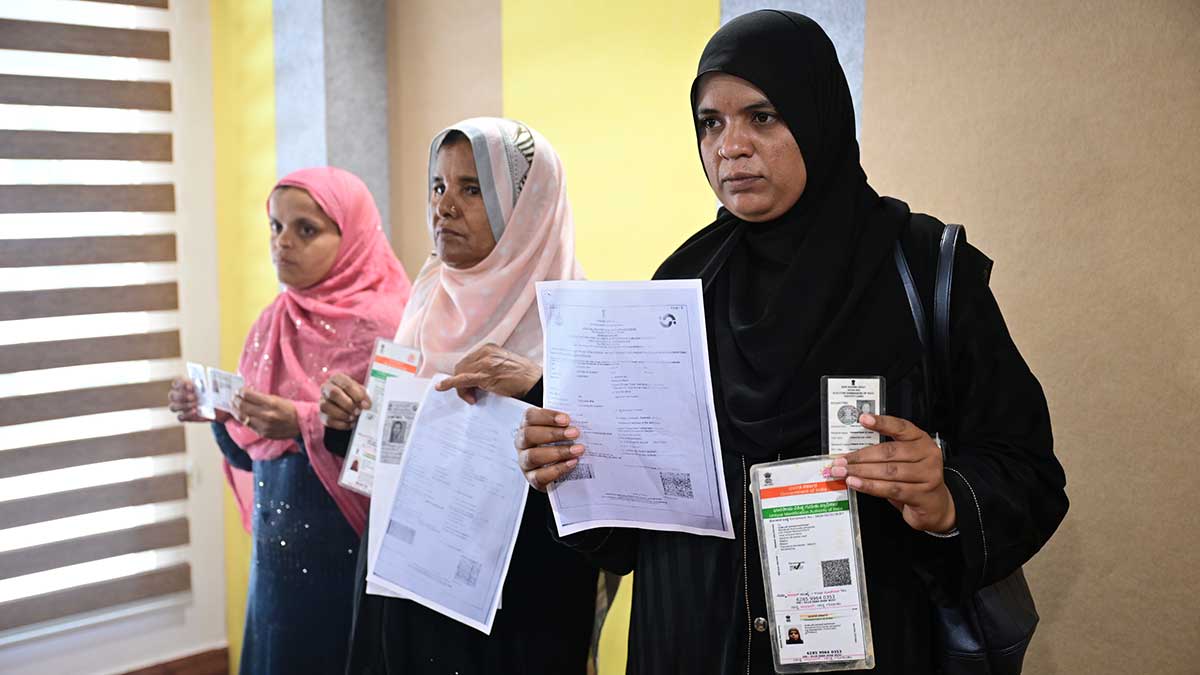
A larger concern is the question of citizenship. If the state wants a person to prove that he or she is a citizen, it must first clearly say what documents will establish citizenship.
Today, you can have a passport and be told that it is not enough. You can have Aadhaar, PAN or a ration card and still be told that none of them is sufficient. So what exactly is the threshold?
The state has to prescribe a clear list: If you have these documents, you are fine; if you do not, then you have to establish your claim through some other process. You cannot leave people guessing about what is required.
We also have to understand India's social reality. When I entered government service, I did not have a birth certificate. My school-leaving certificate was accepted as proof of my date of birth. The UPSC accepted it when I entered the IAS. I spent my career in government and eventually became Union home secretary.
So you cannot suddenly tell somebody after decades of being recognised by the state: “Are you Indian or not Indian? Prove it.” There is a fundamental irony and contradiction in that.
We must also recognise that citizenship has a constitutional and legal basis. Birth and domicile have historically been central to determining citizenship, subject to the changes introduced by law. If the approach is to verify citizenship, it should be inclusive rather than automatically exclusive.
Even where there are doubts about a person's eligibility to remain on the electoral roll, natural justice is straightforward: issue a notice, explain the doubt and ask the person to produce specified documents. That is understandable. What is difficult to accept is removing somebody without giving them a chance to be heard.
I hope the Supreme Court will ensure that these principles are followed. We have all taken an oath to uphold the Constitution. The approach should be inclusive, not exclusive. If the state has doubts, it should follow due process.
There is also a larger issue of transparency. The Election Commission is a constitutional, independent authority. It does not need political parties or pressure groups to defend it. It should defend itself by following the Constitution and being transparent.
If decisions affect millions of voters, the minutes of important meetings should be placed in the public domain. They do not necessarily have to be telecast live, but people should be able to see how decisions were arrived at.
Even if you make a wrong decision, people can point it out and it can be corrected. But if nobody knows what decision was taken or how it was taken, then nobody can question it.
—As told to Kanu Sarda
Pillai is former home secretary.
