



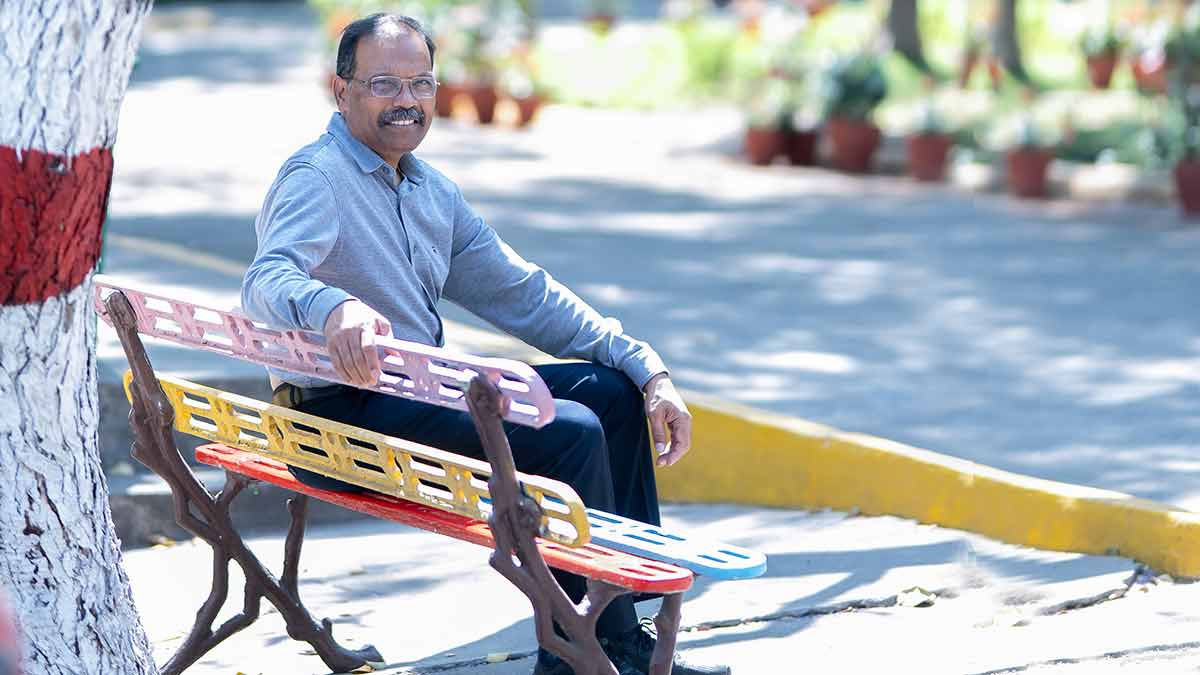
Interview/ Kumaraswamy Thangaraj CSIR Bhatnagar Fellow, Centre for Cellular & Molecular Biology, Hyderabad
Q/ How do you see yourself—as a historian, physician or a detective?
This field demands input from historians, archaeologists, anthropologists and medical geneticists. I see myself as a combination of all.
Q/ Has any discovery genuinely surprised you?
It happens constantly. Take the Andamanese—phenotypically they resemble Africans, so we expected their genomes to match. But their long isolation produced a unique set of mutations found nowhere else in the world, not even in Africa. Medical genetics throws such surprises.
Q/ What connects the Andamanese to the out-of-Africa migration 65,000 years ago?
We used different markers initially. When we sequence the complete mitochondrial DNA, as you can understand, in every cell we have nuclei that consist of 46 chromosomes. Twenty-three we inherit from our mother, and twenty-three from our father. That means both parents contribute equally.
In addition to that, we also have a mitochondrial genome. In each cell, we have a large number of mitochondria, and each mitochondrion has a large number of mitochondrial genes. It is only 16,500 bases when you compare it to the nuclear genome, which has 3 billion base pairs. Because the copy number is very high, it is useful for ancient DNA studies.
In the case of the Andamanese, we sequenced complete mitochondrial DNA, which we all inherit only from our mother. Therefore, it is very useful for tracing the maternal lineage.
When we sequenced the complete mitochondrial DNA of the Andaman tribes, we found several new mutations which are very unique to the Andaman tribes, not found anywhere in the world, not even in African tribes. Otherwise, phenotypically, they look like Africans. But because they have been in isolation for a very long time, they acquired a unique set of mutations.
That helped us in calculating the age of the population, and it turned out that 65,000 years ago they had arrived in the Indian subcontinent and settled in the Andaman Islands, taking the southern coastal route.
Q/ Can you elaborate on ancestral north Indians and ancestral south Indians?
If you look at the Indian population, unlike populations in Europe and China or many other countries where most of them typically look similar, in India you see different phenotypes, including skin colour. You may see extremely dark skin, extremely light skin and, in between, there are so many shades. That itself shows that we are all admixed populations.
That admixture happened approximately in the last 2,000 to 4,000 years. In India, we have four major linguistic groups: Dravidian, Indo-European, Austroasiatic and Tibeto-Burman.
The two founding populations, which we assume were the ancestral South Indians and ancestral North Indians, probably emerged from the early human migrations. While the Andamanese were migrating, some groups stayed in the southern part of India. The ancestral North Indians were probably early settlers in the northern part of India.
During the course of migration, people migrated from south to north and north to south, and somewhere we admixed. In the present day, there is no single group which is very unique, leaving aside the Andaman tribes. Those who are living on the mainland are all genetically admixed.
Q/ Was there a specific historical trigger for this mixing?
No single event. It was natural—people exploring new regions in search of food and resources. The mixing happened gradually over roughly 2,000–4,000 years, after which endogamy set in.
Q/ What did the Rakhigarhi skeleton reveal?
The DNA showed two ancestry components: ancient ancestral south Indian (Andamanese-type) and Iranian hunter-gatherer—but not Iranian farmer. That distinction matters. The earlier assumption was that Iranian farmers brought agriculture from the Fertile Crescent to India. But hunter-gatherer ancestry, not farmer ancestry, suggests agriculture may have developed independently in India, with the Fertile Crescent connection coming later.
Q/ Did migration also flow outward from India?
Yes. The first out-of-Africa coastal migration is clear—some groups stayed in southern India, some reached the Andamans, and others continued to Australia. Australian Aborigines are part of that same movement. We have also shown that European Roma migrated from India roughly 1,400 years ago, consistent with historical evidence of Indian migration to Indonesia and elsewhere.
Q/ How did endogamy lead to genetic diseases?
We talked about admixture between ancestral South Indians and ancestral North Indians. That happened during the last 2,000 to 4,000 years. After that, the admixture stopped and endogamy, or marrying within the community, set in. Maybe the caste system, which came much later, put more pressure on every population to marry within the group. If you visualise how populations survived about 2,000 years ago, early migrants who had settled nearly 60,000 years ago must have lived in forests and then gradually moved to other places, mainly in search of food and water.
Similarly, several groups evolved during that period. Once somebody migrated from the mainstream population to a remote place, they probably did not go back for marriage alliances. They started marrying within that small group of people who had settled there. That is probably how it happened. In our understanding, endogamy happened much before the caste system.
What happens in such a process is that the population size remains very small and people keep marrying within the community. We acquire random mutations, or changes, in our DNA. Around 1.5 to 2 per cent of the genome is essential for making proteins, and proteins are necessary for all body functions. If there is a change in the DNA within that critical region, it affects the protein, and the protein may not function properly. That can lead to disease.
Broadly, diseases can be classified into autosomal dominant and autosomal recessive disorders, leaving aside X-linked and Y-linked conditions.
We have 46 chromosomes. Twenty-three come from the father and twenty-three from the mother. That means we have twenty-three pairs of chromosomes. If there is a mutation in one copy of a gene and that alone is enough to cause disease, it is called a dominant disease.
In recessive diseases, however, one mutated copy alone does not cause disease. The person remains healthy but becomes a carrier, or what we call heterozygous, meaning one copy carries the mutation while the other copy is normal.
The disease appears only when both copies of the gene carry the same mutation, which is called the homozygous condition.
In populations practising endogamy, or marrying within the community, these mutations increase in frequency over generations. The same genetic change gets passed from one generation to the next and becomes more common within that population.
After a few generations, there can be a situation where both the boy and the girl are heterozygous carriers of the same mutation. They themselves are completely healthy because they each have only one defective copy.
But when they marry, statistically there is a 25 per cent chance that their child may inherit the abnormal copy from both parents. In that case, the disease manifests in the child.
That scenario is very common among Indian populations. In one of our studies, we predicted that at least one-third of Indian populations are expected to have a population-specific recessive disorder.
Q/ Can genetics tell us when the caste system began?
Not directly. Caste is a social category and leaves no distinct DNA signature. What genetics can detect is long-term endogamy, which does leave a mark: mutations arising within a community tend to stay there across generations, producing a level of genetic distinctiveness. But that reflects isolation, not caste per se.
Q/ Is there a genetic explanation for the high rates of diabetes and cardiovascular disease in India?
The "thrifty gene hypothesis" offers one explanation. Our genomes evolved to metabolise small quantities of food because our ancestors lived under scarcity. Today, diets are rich in sugar, fat and carbohydrates, but our metabolism has not caught up. Add to that a dramatic drop in physical activity, and the result is metabolic overload. Evolutionary adaptation to richer diets could theoretically occur over a very long period, but we can't predict when.
Q/ What's your practical advice?
No need to return to ancestral diets entirely—that's unrealistic. But regular physical exercise and limiting high-calorie food can prevent nearly 50% of diabetes cases. The principle is simple: take inspiration from how active our ancestors were.
Q/ How does genomics help with paediatric rare diseases?
A disease that is rare nationally may be highly prevalent within a specific population due to community-specific mutations. Through a department of biotechnology-funded programme coordinated by Centre for DNA Fingerprinting and Diagnostics (CDFD) across 16 institutes, patients are screened for known mutations; unidentified cases go to whole genome sequencing. Findings are shared with paediatricians for counselling, helping families reduce recurrence in future generations.
Q/ Should healthy people get genetic tests?
If a disease runs in the family, yes. For otherwise healthy individuals, more caution is needed. Carrying a mutation does not guarantee that the disease will develop; other genes may suppress it. Telling a healthy person they carry a cancer or cardiac mutation can cause significant psychological harm. These findings must be handled responsibly.
