



Wonder and despair
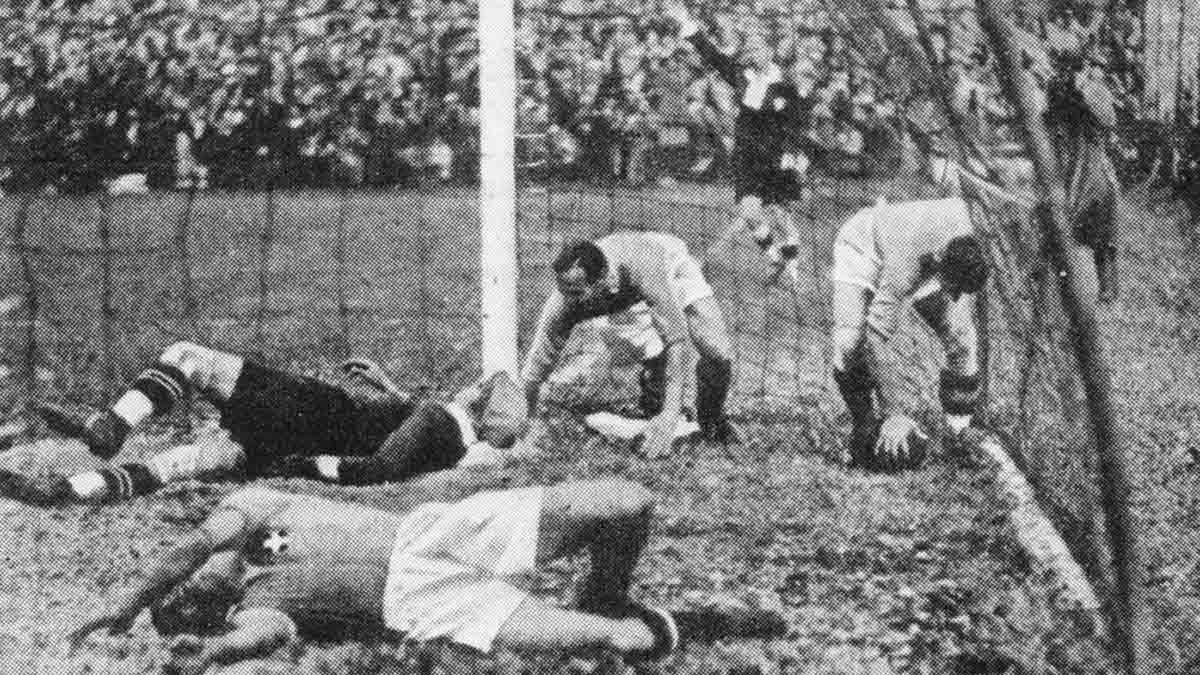
The Austrian Wunderteam of the early 1930s, built around the legendary Matthias Sindelar, had dominated European football for three years before the 1934 World Cup and arrived as strong favourites. They were beaten 1-0 in the semifinal by hosts Italy. An Italian player barged into the Austrian goalkeeper, the ball spilled, and Italy scored. Swedish referee Ivan Eklind, allegedly compromised by Benito Mussolini, allowed the goal. Italy went on to win the World Cup. There would be no second chance for the Wunderteam. Germany annexed Austria before the 1938 World Cup. Sindelar scored (he was not supposed to) in a match commemorating the Anschluss, celebrated in front of high-ranking Nazis, and repeatedly refused to play for the unified team. He was found dead in January 1939 of carbon monoxide poisoning, his girlfriend unconscious beside him. She died in hospital.

Meet the makers
Because of the cultural resonance of the Maracanazo, it is often assumed that Brazil were the outright pre-tournament favourites for the 1950 World Cup. But, England—the inventors of football, finally deigning to show up after initially considering the tournament beneath them—arrived as joint favourites. The preparation was chaotic, and the team was missing its two best players. Neil Franklin, Europe’s finest centre-half, was lured to Colombia by £170 per week (maximum wage at home was £12). He was banned on return and never played for England again. Stanley Matthews was sent on a goodwill tour to Canada. He returned before the first match but was left out by Arthur Drewry, the FA chairman and Grimsby fish merchant who picked the team instead of the manager. After a win, Drewry left Matthews out for the second match, too. England lost 1-0 to the amateurs of the US. Matthews played in the third game against Spain, but England lost again and went home. Brazil were now the clear favourites—until Uruguay beat them in the de facto final at the Maracana.
German engineering
No team has entered a World Cup as stronger favourites than Hungary in 1954. Unbeaten in four years, they had, seven months earlier, become the first overseas side to beat England at Wembley, 6-3, before hammering them 7-1 in Budapest. In the group stage, they thrashed West Germany 8-3. On the day of the final, it rained in Bern. As the pitch softened, the Germans adjusted their revolutionary Adidas screw-in studs and found another gear entirely. Hungary had led 2-0 after ten minutes. They lost 3-2. The Hungarian players spent three days hiding in Tata town as Budapest rioted. It is said those riots fanned the flames of the Hungarian revolution.
