


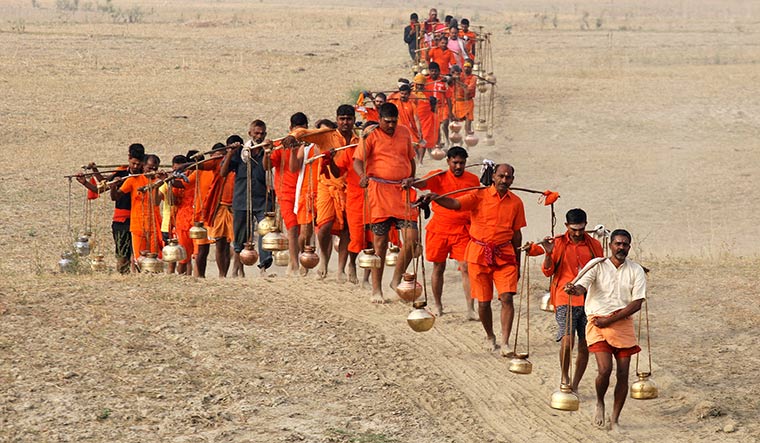
Kanwar Mela
Haridwar, Uttarakhand
A sea of saffron-clad Shiva devotees throng the Kanwar Mela in July/August to collect water from the River Ganga. Carrying kanwars (vessels balanced on bamboo poles), they either walk or cycle to Haridwar, and take home the water to offer it at the local Shiva temple | Reuters
Maner Urs
Bihar Sharif, Bihar
Music is at the heart of this February festival, held in the memory of Sufi saint Shaikh Sharfuddin Yehya Maneri. A wanderer, he was born in Maner, but finally settled down at Bihar Sharif. The town hosts a fair while the festival is on, and qawwali sessions are held at the saint’s mausoleum.
Lai Haraoba
Imphal and Moirang, Manipur
This spring festival honours the sylvan deities of the Meiteis. After the special prayers, traditional Meitei wrestling and games are organised. The highlight, however, is the folk dance and song performances.
Chetiyagiri Vihara festival
Sanchi, Madhya Pradesh
Thousands of Buddhist monks attend this festival at the end of November. The Chetiyagiri Vihara houses the relics of the Buddha’s closest disciples, Saripatta and Moggallana. The relics are put on display during the festival.
Dhinga Gavar
Jodhpur, Rajasthan
Men better keep away from this all-woman festival. While Gangaur, a spring festival held a day after Holi, is celebrated across the state, Dhinga Gavar is confined to the walled city of Jodhpur. Statues of Gavar, said to be the playful avatar of Gangaur (Parvati), are placed at various locations after sunset. Women don different getups and carry sticks to deter men from coming close to the statues.
Kuthiyottam
Thiruvananthapuram, Kerala
The Attukal Devi temple sees one of the largest congregations of women devotees for its Pongala festival in February/March. This year, however, the festival faced flak over the ‘kuthiyottam’ ritual, wherein iron hooks are pierced into the bodies of young boys. The boys, aged five to twelve, are said to represent the goddess’s wounded soldiers.
Minjar Mela
Chamba, Himachal Pradesh
There is something ‘corny’ about this festival. Named after the maize flower, the week-long mela begins on the last Sunday of July. Shoots of maize, strung on silken threads, are cast into the river Ravi to seek blessings of the local deity, Raghuvira, for a bountiful harvest.
Sarhul festival
Ranchi, Jharkhand
The sal tree stands tall during this three-day tribal festival in March/April. Men and women, with colourful headgear, bangles and anklets, worship the tree in gratitude for the food, shelter and livelihood it provides.
Chapchar Kut
Mizoram
This festival is celebrated in March to mark the jhum (slash and burn) agricultural cycle. In the old days, the festival would go on for six days, and would involve pig slaughtering, rice beer brewing, Chai dancing and merry-making. But after Christian missionaries came to Mizoram in 1894, they did away with many tribal festivals. Chapchar Kut was revived in 1952, minus the beer.
Tarnetar Mela
Saurashtra, Gujarat
Inspired by Draupadi’s swayamwar, the festival held near the Trinitreshwar Mahadev temple was once the ‘traditional Tinder site’ for nearby tribals. Young men would carry embroidered umbrellas to woo women. A woman would approach the man she liked, and (unlike Tinder) would let the elders take it forward. Now, the fair is more of a commercial affair, thanks to the presence of vendors and street performers | AFP
