



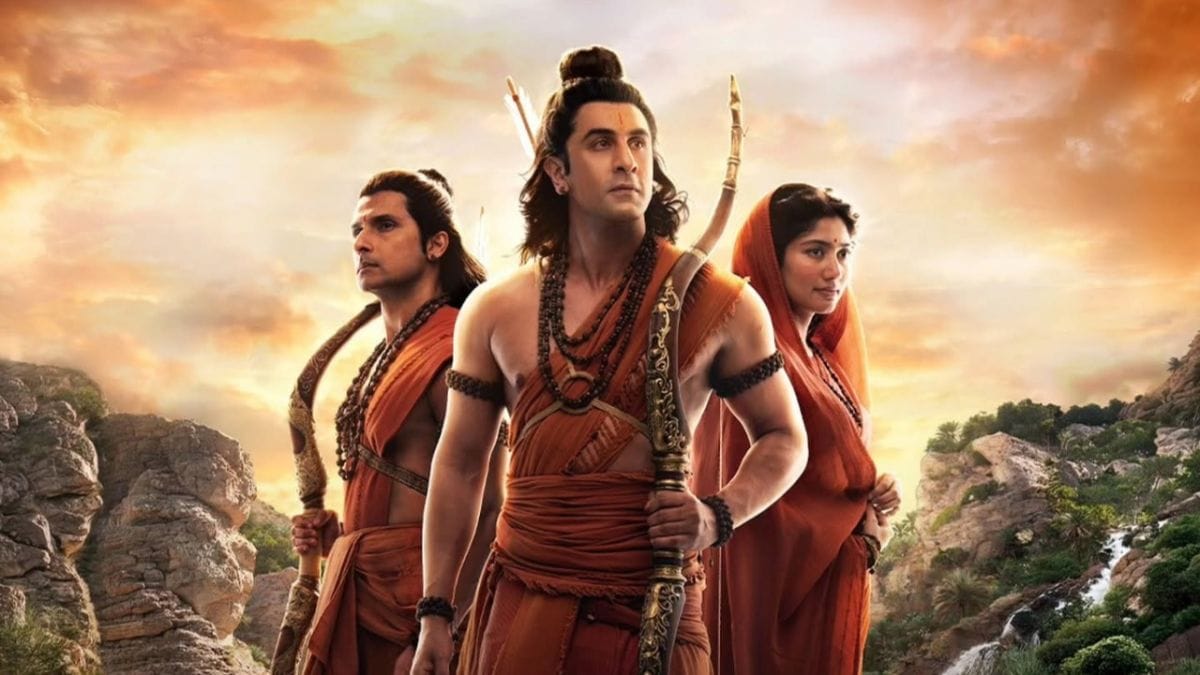
One of the biggest challenges in adapting a familiar literary work, poem, myth, legend, or historical event is that the filmmaker is trying to please everyone with a “definitive” version that appeals to everyone’s tastes. Because everyone remembers (or believes) the events differently. Everyone brings with them their own expectations and emotional associations. How do you pull off the cinematic adaptation of a story that has been retold, re-imagined and interpreted across not just multiple generations and movies but also different countries? How do you make something familiar feel unfamiliar — or fresh — again?
Hollywood tried it once and failed. The 2012 film “John Carter” is a perfect example. Re-imagined elements of its source material, Edgar Rice Burroughs' “A Princess of Mars”, had shown up in some of the biggest 'original' Hollywood properties — all blockbusters — such as “Star Wars” and “Avatar. So, when they finally adapted the original story, the reception was disastrous. Why? Because audiences have seen far better, more grandiose versions of the basic story through the lens of filmmakers who infused it — and, in the process, enhanced it — with various cinematic ingredients, genres, and themes. Despite Ram being a more familiar character to Indians than John Carter is to Americans, the risk of repetition remains.
It goes without saying that the makers of “Ramayana: Part 1” must’ve imagined multiple permutations and combinations. I'm happy to report that they've succeeded at this tremendous challenge, even if it's not what I would call a completely wholesome project. It gets the basics right. The essence of Valmiki's work, which this film follows closely, albeit with minor enhancements, remains intact.
A disclaimer at the beginning reminds us that Ramayana belongs to everyone, so everyone is free to interpret it in numerous ways. That's not to say director Nitesh Tiwari and co-writer Sridhar Raghavan have gone for a Nolan-style, non-linear reinterpretation. The approach is straightforward and linear, with enough room for both theatrical and naturalistic performances. A right balance is achieved.
Since many of us grew up with Ramanand Sagar’s original television drama, I assume the film's primary intention was to tap into that nostalgia. Well, it worked. For someone who grew up with both the show and read (and heard) some of the most accessible versions of the same story, this film appealed to the part of me curious to see how familiar events are envisioned with the aid of a humongous budget. Well, the film looks like a billion dollars.
Every rupee and dollar spent is visible on the screen. It literally looks like a Hollywood-produced epic with an enormous canvas imagined and rendered with virtual production technology, as seen in “Avatar”. It inspires, to an extent, the same kind of awe that the James Cameron blockbuster did, because no matter how many Hollywood films we have seen, we have to keep in mind that this is an INDIAN film accomplishing this feat for the first time.
Why the 'first time'? Because “Ramayana”, produced by Namit Malhotra and Yash, dwarfs every other big-budget, spectacle-driven Indian epic made before this. Despite the extensive use of VFX and CGI, we sense noticeable effort has gone into not just the little details, but also creating a tactile sense and texture, be it in the design of the creatures and demons, or the manner in which various modes of transportation react with the environment. Multiple sequences are competently staged and choreographed. Yash gets the best of the lot. The heaviest punches. The deepest cuts.
The Ravana-Jatayu battle, which forms the film's fitting finale, is the one that moved me the most, not just by the sheer emotional connection to this character's adorable appearance, but by the manner in which the entire sequence has been executed. It also serves as the right starting point for Part-2, since this is where we see Rama evolving from someone who let others write his circumstances to finally setting out to do the writing himself.
My biggest concern before going into this film, though, was the performances. The Ramanand Sagar version wasn’t exactly known for Oscar-worthy performances, but for our younger, school-going selves, it was something... new. For some of us, it was our first encounter with big-scale spectacle before Hollywood. This spectacle made us overlook the theatrical performances, too. Back then, we thought that was what acting looked like until we came across “real” acting.
The makers of “Ramayana: Part 1” understand that while nostalgia is a good thing, maintaining complete fidelity to Ramanand Sagar's version runs the risk of alienating not just younger audiences, but also audiences who outgrew the original and do not wish to see the same thing repeated on a giant movie screen. The right balance that I mentioned earlier? The actors basically understood the assignment.
Be it Ranbir Kapoor (as Ram), Sai Pallavi (as Sita), Ravi Dubey (as Lakshman), or Ravana (Yash), their performances lie somewhere between theatrical and realistic. Look, I'm not seeking complete realism in storytelling with a fantastical component. I don't think it would really work in movies about gods and demons, because, as far as I’m concerned, these imagined worlds don’t operate with the same rules as ours. A little theatricality, then, wouldn’t feel out of place. “Ramayana: Part 1” would look awkward if it tried to do what Martin Scorsese’s “The Last Temptation of Christ” did (characters speaking in New York accents, a deliberate choice that doesn't look awkward for that film).
Ultimately, what really matters is that the characters we remember remain consistent. While not every character in “Ramayana: Part 1” gets equal weight, it pays enough attention to the principal characters, who are all played by aptly cast performers. Take Sai Pallavi's Sita, for example: her behaviour becomes inconsistent in one particular instance, but then a 'twist' explains why. Sai Pallavi plays with this “transition” perfectly. She is also interpreted as a warrior princess who holds her own in fight sequences alongside Rama. Even Ravana, in Yash’s hands, isn’t a one-dimensional villain. Surprises like these, which remind you of details you may have remembered once but later forgotten, work in the film's favour.
The film's only weak point, though, is the music. It's baffling, because it has two of the world's biggest composers — Hans Zimmer and AR Rahman — working together, and yet, what we get is a pale rehash of some of Zimmer's most iconic compositions (“Gladiator”, “The Dark Knight” trilogy) and weaker versions of some of Rahman's best (“Jodha Akbar”, “Lagaan”). Look, they are not exactly... bad; at best, they're functional. But when two of the most revered titans of the music world are involved, is it wrong to expect something unique, different, and original?
Film: Ramayana: Part 1
Director: Nitesh Tiwari
Cast: Ranbir Kapoor, Sai Pallavi, Ravi Dubey, Yash, Arun Govil, Lara Dutta, Shobana, Vivek Oberoi, Rakul Preet Singh, Harish Uthaman
Rating: 3.5/5
