



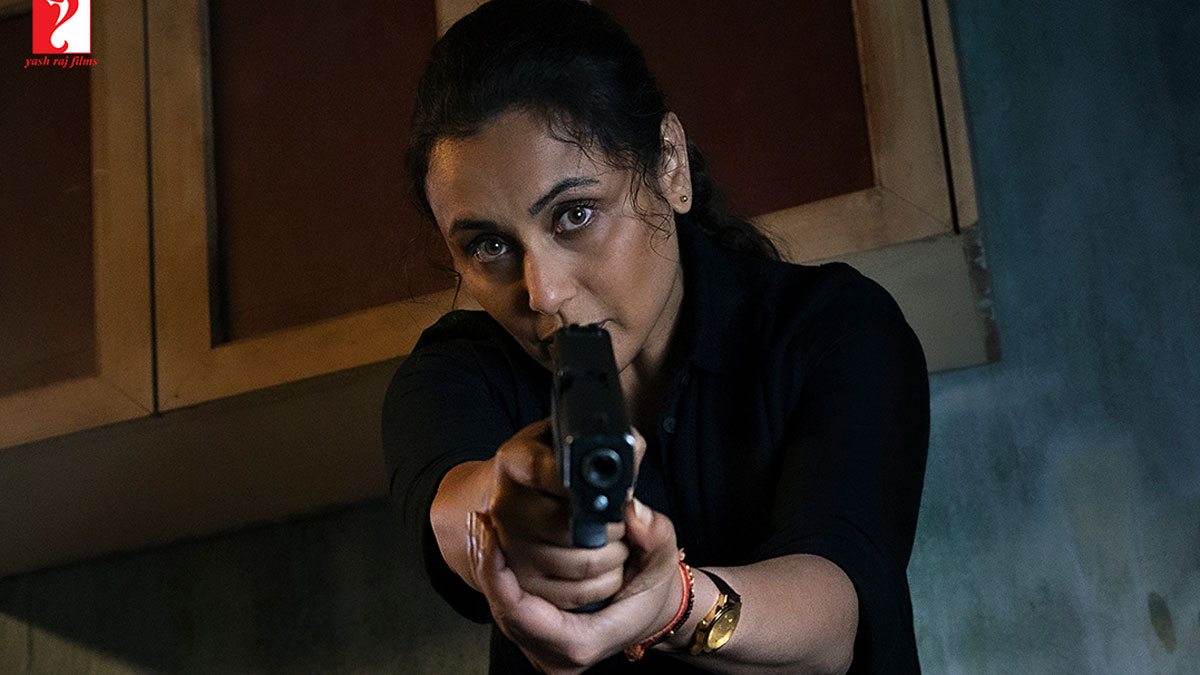
With Mardaani (2014), Rani Mukerji redefined the Hindi film cop not as a swaggering, hyper-masculine force, but as a woman whose strength lay in restraint, moral clarity and quiet rage.
Tackling child trafficking head-on, the film drew its power from discomfort rather than dramatics, making violence feel consequential. It was gritty, intimate, and deeply unsettling establishing a template for a franchise that would place women, both victims and protectors, at the centre of its moral universe.
Mardaani 2 (2019) pushed that discomfort even further. Inspired by real crimes, it confronted sexual violence with an unflinching gaze, forcing audiences to sit with their own anger and helplessness. Shivani, now older and more battle-hardened, wasn’t just fighting a criminal she was up against a system that repeatedly fails women.
Across both films, Shivani Shivaji Roy emerged not as a larger-than-life icon, but as a mirror reflecting society’s violence, apathy, and occasional courage. It is from this legacy of anger, empathy and ethical urgency that Mardaani 3 arrives.
The film stays firmly within the franchise’s moral spine, violence against women, this time framed through disappearance rather than aftermath. Missing girls immediately shifts the dread: it’s quieter, slower, more procedural, and deeply unsettling because the crime is absence itself.
This also fits Shivani Shivaji Roy’s arc. From rescuing trafficked children (Mardaani), to confronting sexual brutality (Mardaani 2), the third chapter widening the lens to missing girls feels like a commentary on how easily women can vanish in plain sight, lost in paperwork, jurisdictional apathy, and social indifference. The horror isn’t just what’s being done to them, but how little urgency their disappearance generates.
This time, opening in Bulandshahr immediately grounds Mardaani 3 in a recognisable North Indian hinterland, far from the metropolitan comfort zones Hindi cinema often retreats into. The abduction of two girls as the very first image sets the film’s tone: this is not a mystery that unfolds gradually, but a crime the audience is forced to witness.
What gives Mardaani 3 its edge is how it steadily peels away the glamour from crime to expose its chilling banality. The film is least interested in shock for shock’s sake and more invested in the systems that allow brutality to masquerade as normalcy. The missing girls are not merely plot devices; they are reminders of how easily bodies disappear into bureaucratic cracks. Minawala resists melodrama, choosing instead to let silence, waiting rooms, and half-lit corridors do the heavy lifting. The dread creeps in gradually, settling like dust rather than arriving with a bang.
Mukerji’s Shivani Roy, now seasoned and visibly wearier, carries the weight of experience with quiet authority. This is no longer a cop driven purely by rage; she is alert to the moral fatigue that accompanies endless battles with evil. Her restraint becomes her sharpest weapon. Mallika Prasad’s Amma, on the other hand, is written with unnerving calm less a monster than a manipulator who thrives on fear, loyalty, and carefully cultivated myth. Their confrontation is not just physical but ideological: order versus chaos, accountability versus absolute power.
The film’s final stretch tightens the screws without losing narrative clarity. Action is functional, never ornamental, and the violence when it comes, feels earned rather than staged. Colombo, as the setting for the climax, works less as an exotic detour and more as a reminder that crime, like complicity, knows no borders. The resolution resists easy triumph, opting instead for a measured sense of closure that acknowledges victory as temporary and vigilance as permanent.
Mardaani 3 understands that the real horror lies not in the villain’s cruelty but in the world that enables it. By grounding its thriller mechanics in a larger socio-medical reality, the film elevates itself beyond genre trappings. It is taut, morally alert, and powered by a lead performance that grows richer with each instalment. If this is Shivani Shivaji Roy’s continuing fight, it is one worth watching because the film never lets us forget that the battle against evil is neither spectacular nor simple, only necessary.
