



“Through violence you may murder the liar, but you cannot murder the lie, nor establish the truth. Through violence you may murder the hater, but you do not murder hate.”
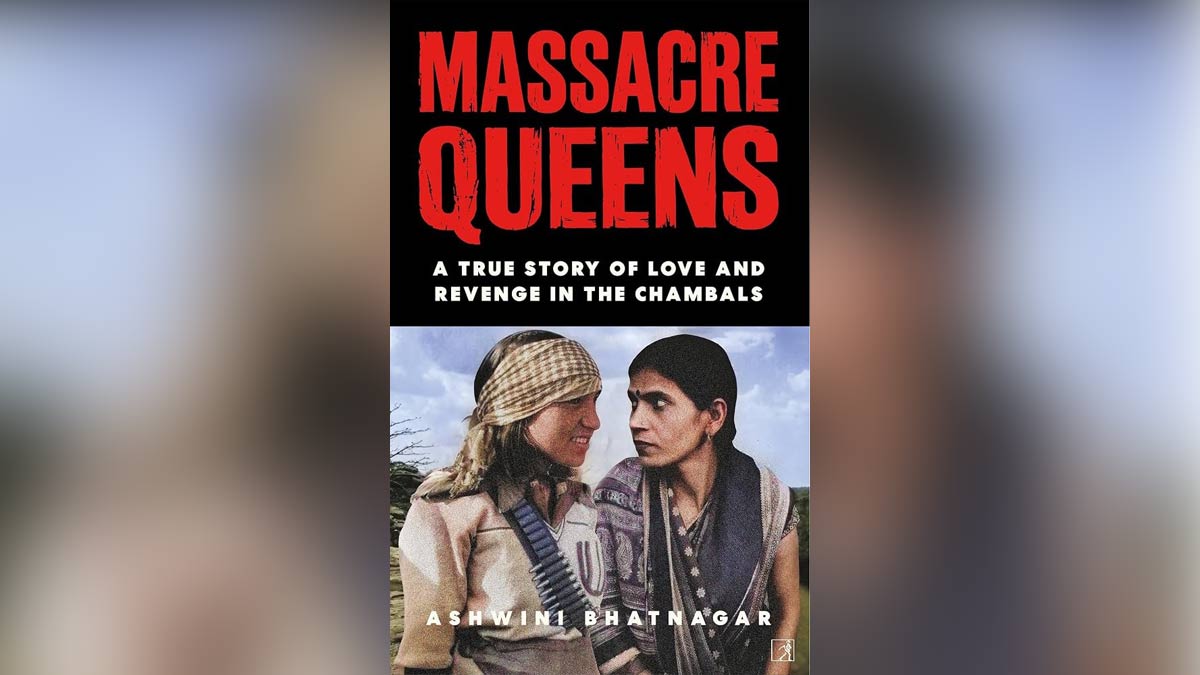
Martin Luther King’s quote sums up Ashwini Bhatnagar’s Massacre Queens. The journalist and documentary filmmaker takes the reader to the heart of the violent Chambal Ravines in his retelling of the story of India’s bandit queen. The author wrote the book after a 2025 newspaper article brought back memories of Uttar Pradesh's deadly dacoit operations in the 1980s.
The book reads like an action thriller, starting in media res. The Chambal Ravines, its geography, history, caste equations and what makes it breed violence are laid out in great detail.
Bhatnagar will reintroduce you to the familiar name: Phoolan Devi. In the 1980s, the child bride from the Mallah community turned into a deadly dacoit before ending up as a politician. The woman and the violence she unleashed upon upper-caste members in the region inspired books, movies and several documentaries.
However, little was known of her protégée-turned-rival: Kusma Nain. Her two-decade-long dacoity was driven by her anger towards Phoolan Devi. In a world less patriarchal, violent and casteist, one can imagine the two getting along. However, their harsh environment drives a wedge between them. The author delves deep into what exactly drove the two women into violence.
Bhatnagar portrays Nain as a woman who chases romance and action. She demands attention from the men who hold power and guns. On the other hand, Phoolan, who has had violence inflicted upon her by men from childhood, was infuriated by her frivolity and, took out her anger on Nain.
The two women and the men who accompanied them ran for years, from each other, the police and their past mistakes. When they crossed paths, there was rape, death and blood.
In the author's note, Bhatnagar says he pieced together the events he gathered from newspaper articles, books, and his own interview with Kusma into his narrative. The anecdotes he gathered from the witnesses add to the tension and action.
In the end, Phoolan Devi’s short stint as a dacoit managed to overshadow decades of Nain’s violence, because the former took out upper-caste men who raped and tortured her. Her directed violence seemed justified to the public compared to the chaos that Nain unleashed on poor, underprivileged castes in the Beehads. Phoolan Devi surrendered in 1983, but Nain lived the rest of her life under the bandit queen’s shadow until she died in 2025.
The Chambal Ravines has a bloody history of its own. The terrifying reign of dacoits wasn't, after all, started by the women. The lawlessness of the land is initially triggered by the needs of the people that remained unfulfilled by defunct politicians and political systems. Men from different castes and communities, who were bereft of the any other identities, banded together to form dacoit gangs to fulfil those needs.
And when men organise, their egos clash. The resulting bloodshed left scars on the men, women, children and the landscape. Bhatnagar captures the horror in his vivid portrayal. His writing at first seems dramatic; the language is crude, and the violence is unapologetic. However, it becomes clear that there is no other way to lay it out as it happened in history.
Massacre Queens: A true story of love and revenge in the Chambals
Author: Ashwini Bhatnagar
Publisher: Simon and Schuster India
Price: ₹499
Pages: 180
