



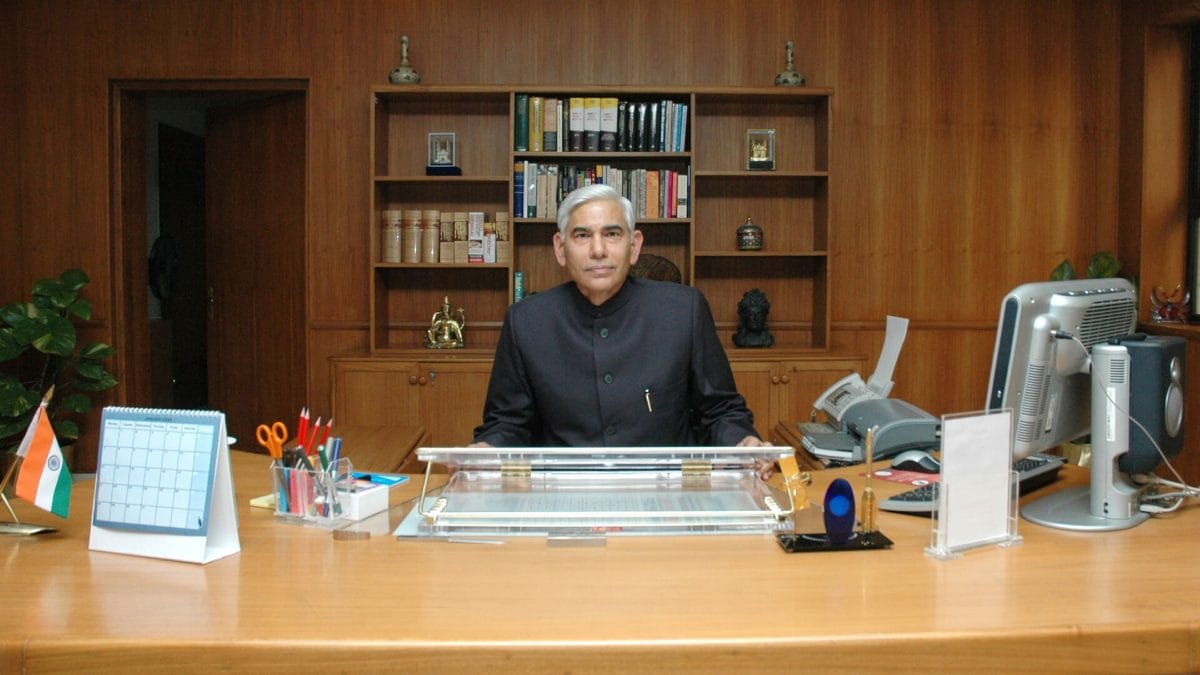
"Rai is among that rare breed of civil servants who know how to get work done in the government," remarked Forbes India, and that line neatly sums up the spirit of ‘Vinod Rai – Essence and Times’. Written and published by B. S. Chauhan, this coffee table book tells the story of Vinod Rai, IAS (Retd.), the 11th Comptroller and Auditor General (CAG) of India. The book offers a vivid look at the life of a public servant whose commitment to integrity, accountability, and excellence made a real difference to Indian governance.
The book follows Vinod Rai's journey from his middle-class childhood in 1948 to his rise as one of India's most respected Comptrollers and Auditors General. It opens with his early life, education, and the experiences that helped shape his values, personality, and leadership style. From there, it moves through his distinguished administrative career, including his posting in Nagaland, his work as Project Officer, his time as District Collector of Thrissur, and later his role as Principal Secretary (Finance) to the government of Kerala.
A major part of the book focuses on his years as CAG, especially the landmark audit reports on the 2G spectrum allocation and coal block allocation, which brought questions of public accountability into sharp national focus. But the book does not stop at his official achievements. It also gives readers a glimpse of his personal side—as an author, sports lover, and family man. Instead of simply listing his successes, it also touches on the challenges, tough choices, and setbacks he faced, which makes the story feel more balanced and relatable. The final chapters look at his efforts to strengthen the international reputation of the CAG of India and the legacy he left behind for future civil servants.
One of the most striking things about the book is its visual appeal. The vintage black-and-white photographs give it a sense of authenticity and nostalgia, almost like stepping back into another era. The carefully chosen images, interviews, reflections from colleagues, newspaper clippings, and archival material add depth to the narrative and present Vinod Rai's life from several different angles. The cover is subtle yet elegant, and it immediately sets the tone for the book. Author B. S. Chauhan describes it as more than just a coffee table book; he compares it to a khichdi—a comforting mix of ingredients that come together to create something wholesome and satisfying.
The book also stands out for its excellent production quality. Printed on 160 GSM Montblanc paper, the pages feel premium, sturdy, and pleasant to turn, adding to the experience of reading and browsing through the photographs. The choice of fonts is equally impressive. The author has used clean and elegant typography that gives the book a sophisticated yet readable look. The different fonts help distinguish headings, quotations, and the main text without making the design feel cluttered. Together, the high-quality paper and thoughtful design make ‘Vinod Rai – Essence and Times’ feel like a true collector's coffee table book.
One of the book's biggest strengths is the care with which it has been researched and written. Taking nearly ten years to complete, the book reflects remarkable dedication, patience, and attention to detail. It does a good job of presenting not just Vinod Rai's professional achievements, but also his personal interests and values, helping readers see him as a complete person rather than only as a constitutional authority. The language is simple, and the chronological structure makes it easy to follow, even for readers who may not be familiar with public administration or auditing.
That said, the book sometimes feels more celebratory than critical, especially when it comes to some of the controversies linked to Vinod Rai's tenure. A few sections could also have gone deeper into the wider national importance of the landmark audit reports, particularly the 2G spectrum and coal block allocation cases. Even so, these are minor limitations and do not take away from the book's overall value. The book shows that Vinod Rai's success came from integrity, perseverance, and dedication—not privilege or extraordinary luck. It is inspiring because it shows how someone from a middle-class background can rise to one of the country's highest constitutional offices through hard work, honesty, and a genuine commitment to public service. In that sense, the author succeeds not only in preserving Vinod Rai's legacy but also in inspiring future generations.
Overall, the book is much more than a visual biography. Through its thoughtful mix of archival photographs, personal moments, interviews, and concise storytelling, it captures the life of a man who devoted himself to integrity, accountability, and public service. While it celebrates his achievements, it also acknowledges the challenges and defining moments that shaped him. Informative, visually appealing, and genuinely inspiring, it is a strong recommendation for students, aspiring civil servants, and anyone interested in governance, leadership, and the values of ethical public service.
(The author is an intern with CAG of India)
