



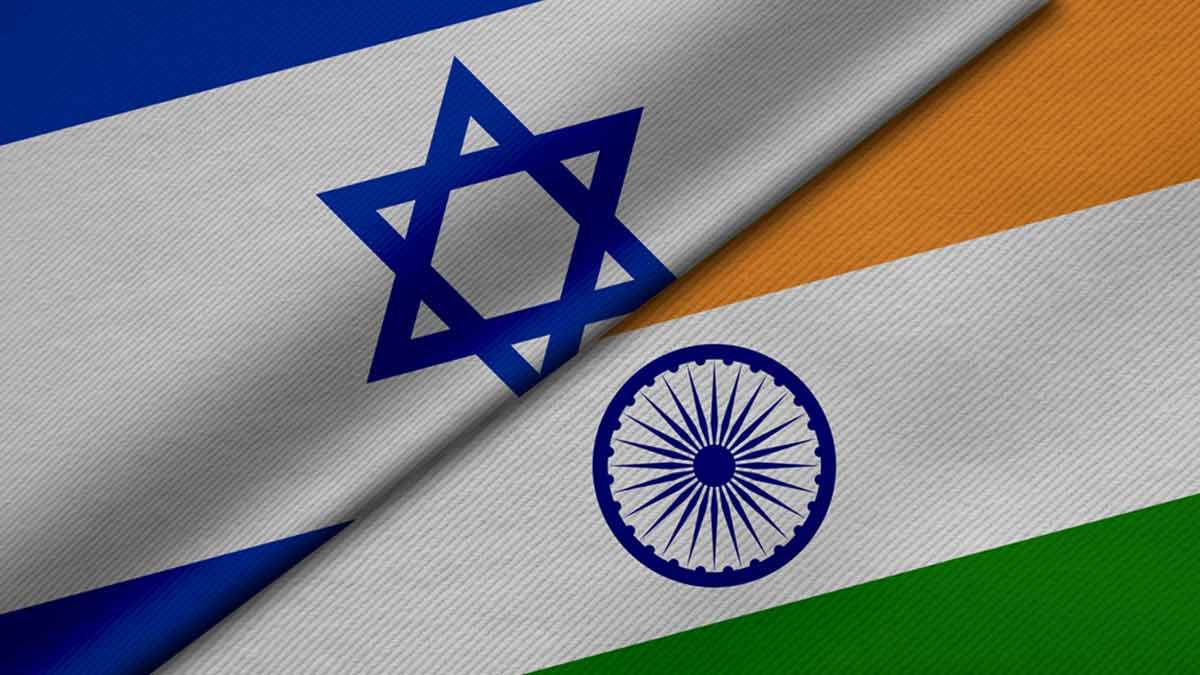
In 1947, when the UN General Assembly passed a resolution recommending the establishment of the State of Israel alongside a Palestinian state, India was among the few non-Arab countries to vote against it. The differing perceptions, however, did not come in the way of progress and cooperation between India and Israel. Israel extended strong support to India during its conflicts with China and Pakistan.
In 1992, prime minister P.V. Narasimha Rao took the bold decision to establish full diplomatic relations with Israel. In October that year, our first ambassador to Israel raised the Indian flag at the embassy in Tel Aviv. This was followed by a series of initiatives to expand and strengthen contacts between the two countries.
A study of Israeli expertise evinced some interest in India, particularly the advances Israel had made in aerospace and defence. When an opportunity arose, India decided to send a senior Air Force officer to study Israeli industries and institutions. My name was suggested for a 10-day study tour of Israel. I was accompanied by an experienced Air Force electronics specialist.
There was little briefing material on Israel available either with the ministry of defence or the ministry of external affairs. In my own search for background material, I stumbled upon Victor Ostrovsky’s By Way of Deception—The Making and Unmaking of a Mossad Officer. I was somewhat surprised to read his account of how the Israelis had mocked the ignorance of the Sri Lankan forces, selling them some useless equipment and profiteering in a big way. At the height of Sri Lanka’s military operations against the LTTE, Israel had trained a group of Sri Lankan armed forces personnel. Strangely, the training camp also had a group of LTTE combatants.
Contrary to what I had anticipated, the visit turned out to be one of the most purposeful assignments I had ever undertaken. My colleague and I flew to Tel Aviv via a circuitous route chosen for security reasons. It was the holiday season in Israel, and on the last leg, the cabin was filled with enthusiastic 18- to 25-year-olds returning home from their holidays. The aircraft was full of noise and laughter. On landing, the entire cabin burst into loud greetings and a patriotic song. It was a heartwarming sight.
I was struck by how young and lively the people of Israel appeared. Men and women in their 20s moved about casually in public places, many in army uniforms. Some carried semi-automatic rifles slung over their shoulders, the weapons looking disproportionately large on their young frames. There were smiles and laughter everywhere.
Restaurants were generally in open spaces and often quite noisy. Most officials—from a CEO to the air force chief—drove their own cars, though some may have been government vehicles. There were no attendants waiting to open the doors. At lunch or dinner, people mostly wore casual clothes; even when they wore suits, they generally did so without ties. There was little drinking apart from a glass of wine with a meal. No one clicked heels or saluted in the conventional military manner. The food was simple, largely Mediterranean and very tasty. In conversations conducted in halting English, people came quickly to the point. At times, their directness could sound almost abrupt.
During one of my meetings with the Israeli air force chief in his office, the president of Israel, Ezer Weizman, casually walked in. He pulled up a chair and sat down while the air force chief stood up. It did not appear that the president had been invited, or was expected. I was astonished. Weizman told me that he was getting bored in his own office, which, he said, was nearby. He was an accomplished fighter pilot who had also fought in the air battles of Israel’s first war of independence. Before leaving, Weizman asked me to convey his greetings to our prime minister. On my return to India, however, I realised that conveying such a message from the president of Israel to our prime minister was not practical!
The writer served as the 19th Chief of the Air Staff.
