



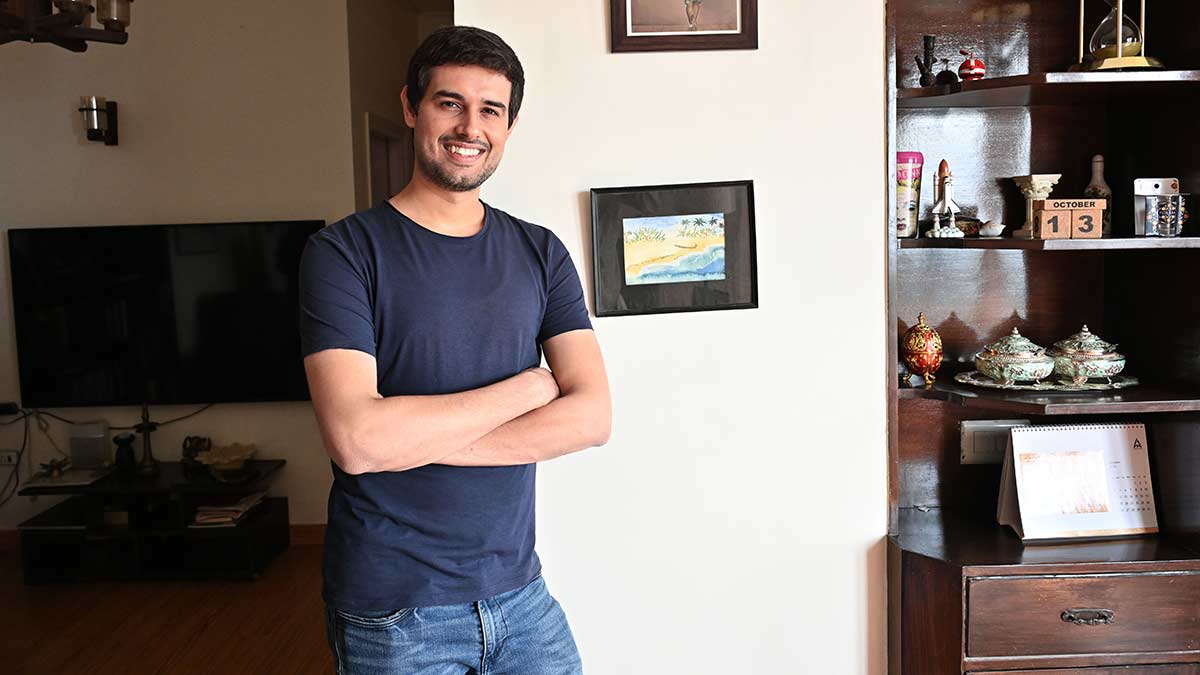
IF IT IS ACCEPTABLE FOR AN NRI to praise India, why is it not okay for one to be critical? When Dhruv Rathee was criticised for living in Germany and producing India-specific content, this question was raised often on social media.
Actually, it is not about Rathee or his political views alone. As a race, humankind prefers good news and pleasant conversations. One can’t blame them. With life overloading people with stress and fears, it is only natural to look for a little shade and a cool drink of water. Hence, people also expect the media to be peddlers of good news alone. People tend to switch off the television or toss the newspaper when they think that there is too much ‘negative news’.
Ironically, this sentiment flips when the issue affects someone directly. Then they want blanket coverage of it. I refuse to slot this as a ‘good people vs bad people’ debate. It is just human nature, and it would do us all good to remember that we are all interconnected in everything, from climate change to constitutional challenges.
Speaking to Senior Special Correspondent Kanu Sarda, Rathee said, “I criticise the government because I want my country to grow and succeed. I want my country to become a developed country, you know, and that’s my intention for doing that.”
I could also sense the father in him, when he said that he stayed away from India for the past two years because his son was young, and his wife could not easily manage the child alone. Becoming parents changes our perspective about the world, and becoming grandparents changes it further, trust me. Some people think becoming a parent makes you a coward. That does not seem to have affected Rathee though.
This issue of your favourite newsmagazine is a twin issue, with the second issue covering ancient manuscripts of India. Senior Correspondent Shubhangi Shah’s article is on how libraries and research institutes around the country are identifying, digitising and translating these manuscripts.
She also interviewed Union Minister for Culture and Tourism Gajendra Singh Shekhawat, who said that the ministry had already mapped and verified 1.2 crore manuscripts. The issue also offers a visual and textual feast of India’s 45 UNESCO World Heritage Properties.
Special Correspondent Anjuly Mathai’s article marks the 121st anniversary of Rotary International and focuses on the service bit that the organisation emphasises through its motto, Service Above Self. The article illustrates the motto with case studies from Guwahati, Gurugram and Hyderabad.
Shubhangi interviewed Rotary International president Olayinka Hakeem Babalola from Nigeria. Like many Rotarians I know, Babalola joined the movement in his teens through Interact and Rotaract, then became a Rotarian.
Through Otherwise Cracked, K.C. Verma added to my knowledge of colloquial Hindi. I didn’t know Audi was called chaar-churee (four bangles) in Delhi-NCR. Put that down with other Indo-English gems such as airdash, lathi-charge, timepass and stepney. KC, I’m waiting for the new Mahindra Twin Peaks logo to be christened the titli (butterfly).
