



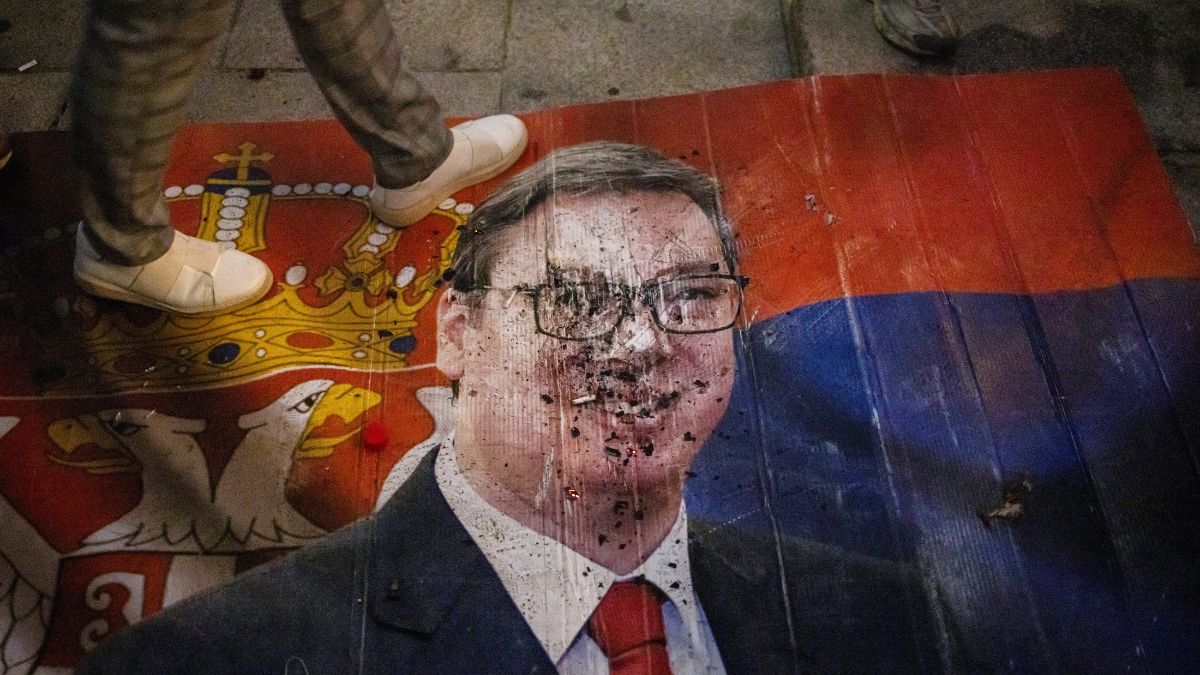
Driven by distinct political, economic, and social grievances, major protests are occurring worldwide. From France to Italy and Albania, hundreds of thousands of workers and students have taken to the streets to raise concerns over education, the high cost of living, and deteriorating public services. But in Serbia, student-led demonstrations led to the collapse of the government of Aleksandar Vučić, who had been in power since 2014.
The Student List coalition won the snap parliamentary election, marking a historic political shift in Serbia, against the ruling Serbian Progressive Party (SNS). The Student List coalition won 140 seats in Serbia's 250-seat National Assembly, capturing 51.47% of the vote to secure an outright parliamentary majority.
How it all started
Vučić had ruled as prime minister or president since 2014, and oversaw a period of strong economic growth, but he faced
growing opposition from student-led protests after the collapse of a railway station awning killed 16 people in November 2024.
What began as a localised wave of grief and anger quickly transformed into a two-year, nationwide, student-led protest movement that altered the country's political landscape.
The tragic collapse of the Novi Sad railway station canopy uncovered the deep-seated concerns over state corruption. Besides corruption, the protesters alleged a lack of transparency in government contracts and institutional oversight in the country.
Protesters organised daily and weekly road/bridge blockades, university sit-ins, general strikes, symbolic red-paint throwing at municipal buildings, and nationwide "15 minutes of silence" actions honouring victims of government negligence.
However, clashes with police occurred on many instances when police used tear gas, pepper spray and forceful crowd dispersals during major rallies and attempts to blockade municipal buildings or transport corridors.
By early 2025, student groups mobilised across more than 400 towns and cities. Massive rallies took place in Belgrade, with record-breaking turnouts reaching up to 325,000 demonstrators on single protest days.
As the government resisted accountability, student demands expanded to include significant budget increases for higher education, investigations into police conduct, media freedom, and early parliamentary elections.
The two-year movement culminated politically when grassroots student organisers organised into the "Student List" electoral coalition. In the October 2026 parliamentary elections, the coalition challenged the long-dominant ruling Serbian Progressive Party (SNS), bringing the multi-year protest cycle to an institutional end.
The students' win marks a profound political shift in the country of some 6 million people and shows what power the younger generation has when they are able to harness widespread discontent.
"That is the best thing that happened in my life. We will now breathe freely," said Milica, a law student, told Reuters.
Vučić conceded defeat on Sunday, acknowledging that the student-led opposition movement defeated his party.
