



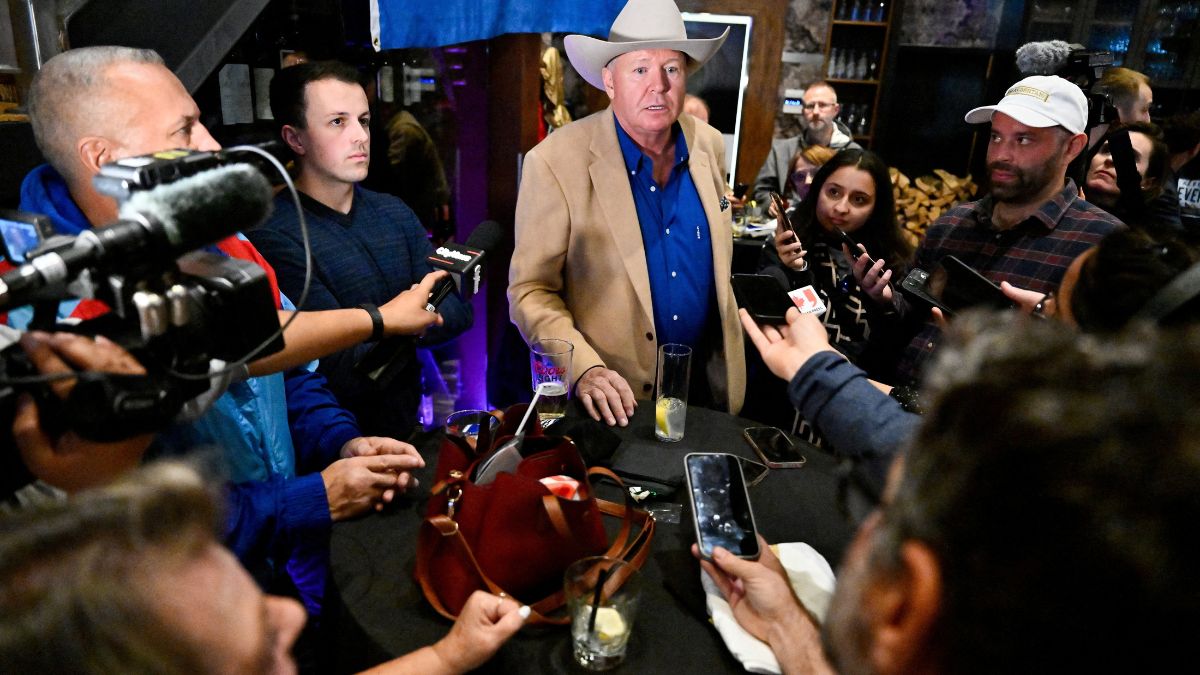
Voters in Alberta have rejected a referendum proposal that could have opened a legal path to a future vote on leaving Canada. With roughly a third of the total votes counted (as of 12 pm IST), CBC News projected that 76 per cent chose to stay and 23 per cent backed the move towards separation. Advance and mail-in voting alone drew nearly 1.3 million ballots, about 43 per cent of eligible voters. Polling stations saw long queues and delays, as voters had to complete 10 separate paper ballots, the others covering non-binding questions on provincial powers, immigration, health care and education.
Premier Danielle Smith of the United Conservative Party called the vote under pressure from separatists in her own ranks. After provincial courts blocked a petition for an immediate independence vote, she placed a question on a possible later referendum on a multi-question ballot. Federalists called it an attempt to bypass the courts. Separatists complained that they were offered a vote about a vote, not one on independence itself. Smith voted to remain, but opponents found her support tepid, since she allowed legislators to take the opposite side. The UCP slid in the polls and lost a byelection before the vote.
Prime Minister Mark Carney, an Edmonton native, led a forceful federal campaign, with large rallies in Calgary and Edmonton. He called the referendum a "dangerous bluff" that risked years of uncertainty and division, and warned Albertans against using the ballot to send Ottawa a message. Federal Conservative Leader Pierre Poilievre, who represents an Alberta seat, said Albertans were not "quitters". The main campaign for the unity side, Forever Canadian, was led by former deputy premier Thomas Lukaszuk, who hailed the result as proof of national unity.
The grievances behind the vote, however, have not gone away. Alberta has a population of five million and the world's fourth-largest proven oil reserves. Many residents believe that environmental policy under former prime minister Justin Trudeau was designed to wind down the oil sands. Others say the province has been treated as a colony, its wealth taken by Ottawa with too little returned and too little say in parliament. The recent surge grew out of grassroots anger over pandemic restrictions. It remained fragmented, with no common blueprint for an independent state and visions ranging from economic restructuring to rule by Christian doctrine.
The vote also unfolded under American pressure. A trade war launched by President Donald Trump and his repeated talk of Canada as a 51st state hung over the campaign. Separatist lawyer Jeffrey Rath travelled to Washington to seek backing from junior State Department officials, a trip that British Columbia Premier David Eby condemned as "treason". Some activists wore "Make Alberta Great Again" hats, and Treasury Secretary Scott Bessent spoke up for closer ties between the United States and Alberta. Carney warned that outside actors had an interest in breaking Canada apart.
Unionists hope the 76 per cent majority will end the talk of secession. Separatists do not agree, warning that the movement would carry on, and other leaders questioned the integrity of the count and the handling of mail-in ballots. They warned that the result could split the UCP and give birth to a dedicated independence party.
