



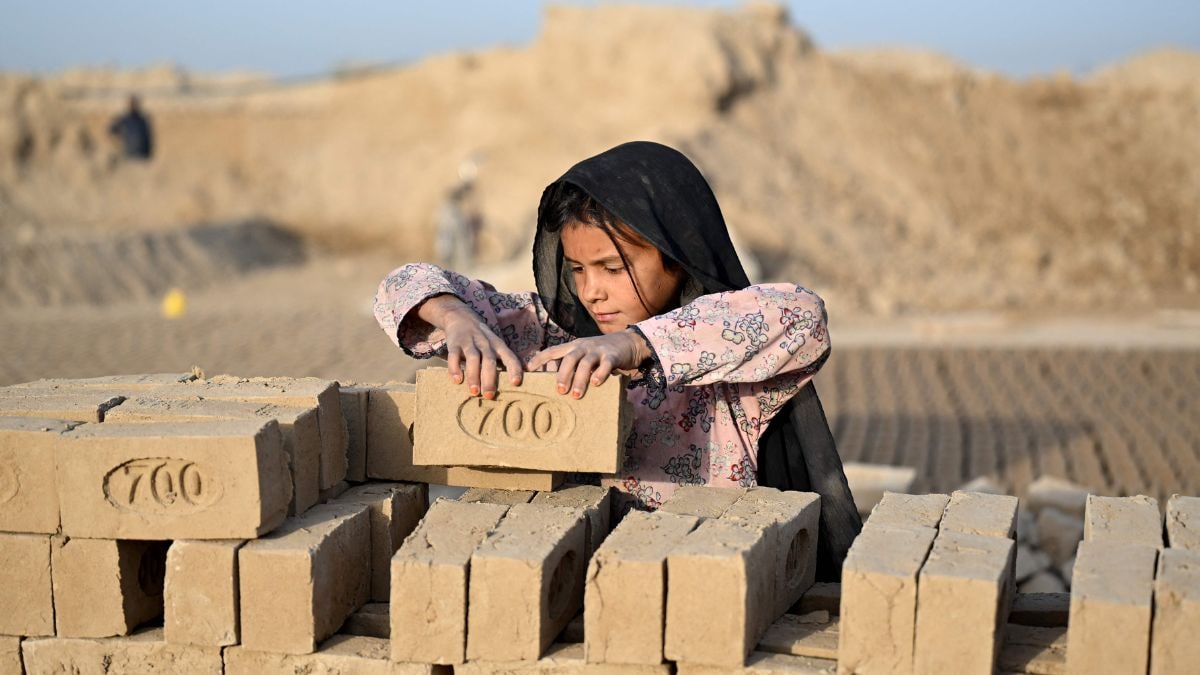
Five years after the chaotic American withdrawal and the Taliban's return to Kabul on August 15, 2021, Afghanistan has been remade politically, legally and socially. The republic's constitutional order under US occupation, which tried to reconcile Islamic governance with human rights, has been dismantled piece by piece. What has replaced it is a system in which absolute power sits with the Taliban supreme leader, Sheikh Haibatullah Akhundzada, who governs by decree from Kandahar. The Taliban mark their fifth anniversary as a victory over foreign occupation. For most Afghans, however, life has become tougher.
The regime's clearest achievement is territorial control. Unlike their first stint in power between 1996 and 2001, the Taliban now hold the whole country, and the civil war that ran for decades has nearly ended. The Islamic State-Khorasan Province, once a serious internal threat, has been considerably weakened, and Afghans can travel between provinces without the risk that once accompanied it. Kabul itself is cleaner and calmer, no longer defined by blast walls and armed convoys.
The economy, too, has improved. Foreign aid once funded 75 per cent of public spending; with that gone, the Taliban have leaned on improved tax and customs collection to keep the state afloat. They have pushed ahead with infrastructure projects such as the Qosh Tepa Canal, the TAPI gas pipeline and electricity links with Uzbekistan, and signed resource extraction deals covering lithium, copper and iron ore with companies from China, Iran and Qatar.
Their counternarcotics record is the most striking of these achievements. Since the 2022 ban on poppy cultivation, opium production has fallen by roughly 95 per cent, among the sharpest declines in illicit drug output recorded anywhere in the world. It has, however, wiped out rural household incomes without offering any alternative.
Governance has regressed sharply in human rights, especially for women. Rights groups call the situation gender apartheid. Afghan women and girls have seen rights stripped away faster and more comprehensively than anywhere else in recent memory. Afghanistan remains the only country where girls are barred from school after the sixth grade, shutting an estimated 2.4 million of them out of secondary and higher education.
Women cannot work in most professions, cannot enter parks or gyms and cannot travel without a male guardian. They have effectively been reduced to second-class status, barred even from speaking audibly in public. A marriage law passed this year removed the minimum legal age of marriage, previously 16, legalising child marriage in practice, permitting husbands to beat wives so long as no visible mark is left and stripping women of the right to divorce. Families ruined economically increasingly marry off teenage daughters to settle debts or buy food.
The discrimination has been reinforced institutionally. Specialised prosecution units, the ministry of women's affairs and the Afghanistan Independent Human Rights Commission have all been dismantled. At the same time, power has centralised further and moral policing has crept deeper into private life, alienating large parts of the population.
Diplomatically, the Taliban have pursued pragmatic bilateralism while remaining formally unrecognised. No Western government accepts them as Afghanistan's legitimate authority, and the country stays locked out of the UN and IMF, with billions in central bank reserves still frozen. Even so, recognition has crept forward informally. Russia recognised the Taliban government last year and signed a military cooperation pact, while China and the UAE have accepted Taliban ambassadors. Germany and France have set aside recognition taboos to discuss deportations with Kabul directly.
Relations with Pakistan have moved the other way. Islamabad accuses the Taliban of sheltering Tehreek-i-Taliban Pakistan militants, and the fallout has included border clashes, airstrikes and repeated closures of crossings that Afghanistan depends on for trade. That breakdown has pushed the Taliban towards India, Iran and Central Asia for alternative trade routes, with India in particular seen as central to securing the foreign capital Kabul badly needs. It is as much a hedge against Pakistan as it is an economic strategy.
The humanitarian picture remains grim. Washington's decision in early 2025 to freeze nearly all USAID contracts cut off over $1.7 billion in planned assistance and forced the closure of roughly 600 health clinics. Some 21.9 million Afghans, 45 per cent of the population, now need urgent aid and 3.5 million children under five are acutely malnourished. Nearly six million undocumented Afghans have been deported from Iran and Pakistan since 2023, adding further strain to an economy with no capacity to absorb them.
