



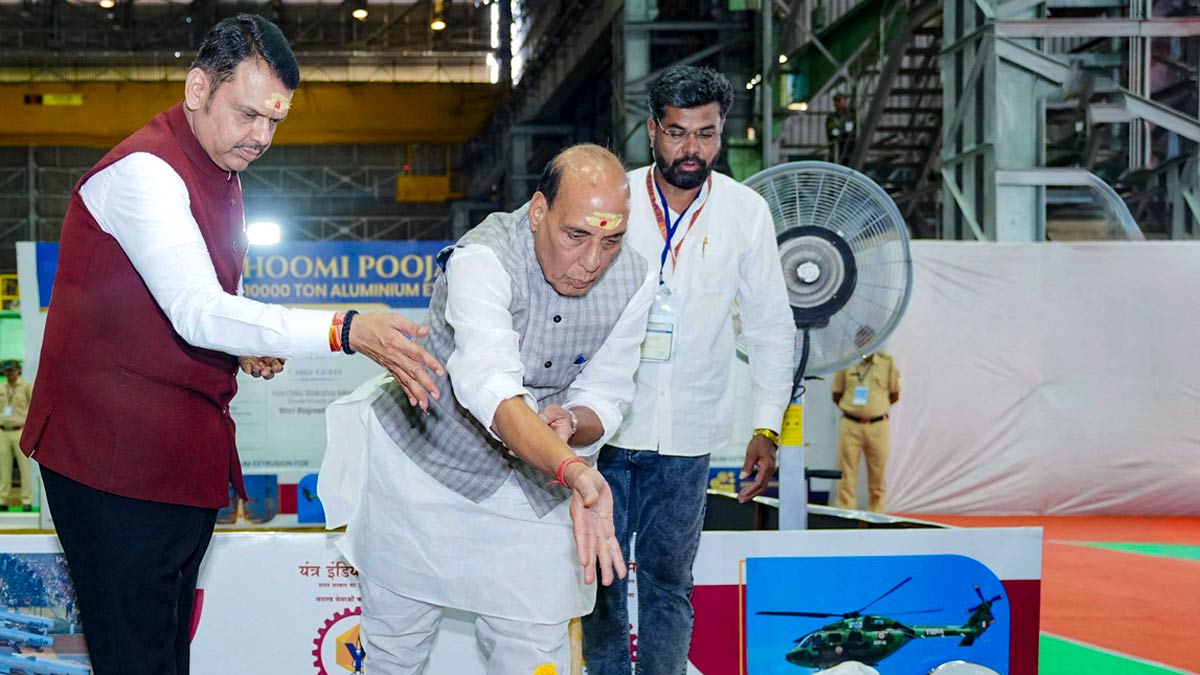
Defence Minister Rajnath Singh, on Friday, observed that conventional warfare and means are still as relevant as they were in 1947 and they will continue to be relevant even in 2047. He was speaking after 'bhoomi pujan' for a 10,000-ton aluminum extrusion press at the Yantra India Limited (YIL) facility in Nagpur.
He said it is important to accept the role of conventional warfare, even as the war is changing forms, borders are blurring, and enemies go undetectable, and added, "So, the importance of military industrial base will continue to be for a long time to come..."
Highlighting how India's defence industry base has evolved over the years, the defence minister noted, "After corporatisation in 2021, we had a clear goal. We had this idea in mind that the new units coming into existence should be given full autonomy to operate. They should be given full opportunity to advance in the field of innovation, risk-taking, research and export. Their capacity should expand and they scale new heights. I feel satisfied and happy to see that you are successfully going ahead in that direction..."
Singh highlighted the vulnerability of global supply chains during conflicts and stressed that India must build critical security-related capabilities domestically to avoid dependence on external sources during times of crisis.
Emphasising the importance of indigenisation, he said disruptions caused by wars often affect global logistics and supply systems, making self-reliance in defence production a strategic necessity.
Pointing to the growth of India's defence sector, Singh said domestic defence production has risen from around ₹46,000 crore in 2014 to a record of more than ₹1.78 lakh crore in FY 2025-26. He also noted that defence exports, which stood at roughly ₹1,000 crore in 2014, have now grown to nearly ₹40,000 crore, with Indian-made weapons being exported to overseas markets.
