



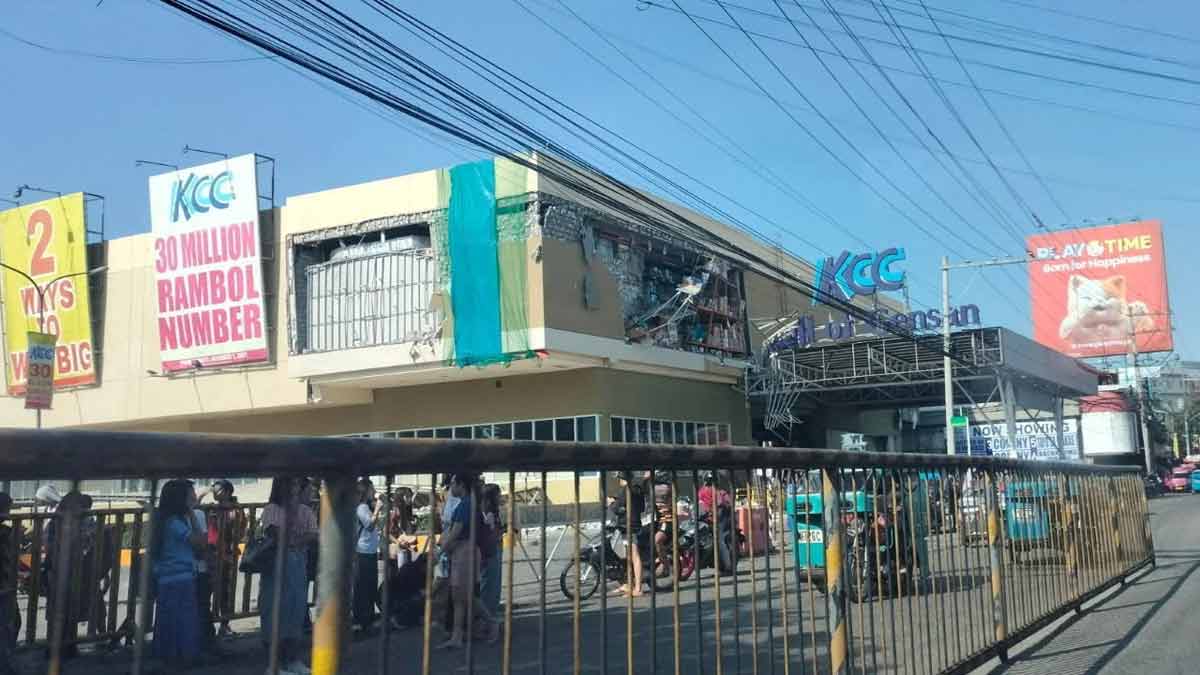
A powerful 7.8-magnitude earthquake struck the Mindanao region in the southern Philippines on Monday morning, triggering tsunami warnings across coastal areas and prompting authorities to assess potential damage.
According to the US Geological Survey (USGS), the quake's epicentre was located about 24.7 kilometres west-southwest of Burias in the Philippines at a depth of 35 kilometres.
There were unverified reports of at least five deaths in the southern city of General Santos. Agripino Dacera, the city's disaster management chief, said authorities were still verifying the fatalities as rescue teams assessed the situation on the ground.
Local broadcaster DZBB radio reported that strong tremors caused furniture to topple and damaged televisions and other household appliances. Residents rushed out of their homes as aftershocks continued to shake the area.
In Sarangani province, power and telecommunications services were disrupted, while school classes were suspended as a precautionary measure.
Tsunami alerts were issued by Philippine authorities, neighbouring Indonesia and the US Tsunami Warning System, with residents in vulnerable coastal communities advised to move to higher ground immediately.
The Pacific Tsunami Warning Center said waves of up to three metres could hit parts of the Philippines, while waves of up to one metre were possible along some coastlines in Indonesia and Malaysia.
"We advise people to evacuate to higher grounds or move further inland," said Teresito Bacolcol, head of the Philippine Institute of Volcanology and Seismology.
Smaller tsunami waves could also affect coastal areas in Taiwan, Japan, Guam, Papua New Guinea and several island nations and territories across the western Pacific, authorities said.
Philippine President Ferdinand Marcos Jr said authorities were moving fast to coordinate disaster response. "The national government is moving and we will not leave Mindanao behind," Marcos said in a statement.
The Philippines and Indonesia lie along the Pacific 'Ring of Fire', a seismically active zone where earthquakes and volcanic eruptions occur frequently. The region experiences hundreds of earthquakes each year and is regularly battered by typhoons and tropical storms.
