



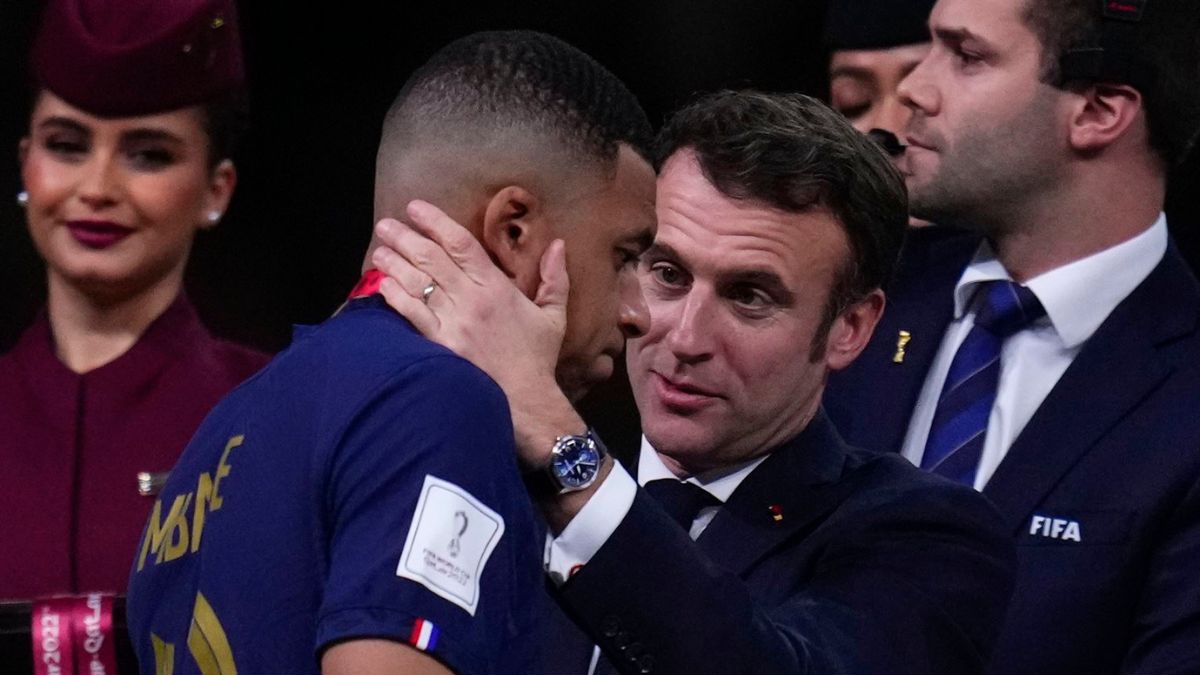
France is witnessing yet another high-profile clash between football and politics, with French captain Kylian Mbappé at the centre of a growing confrontation with the far-right Marine Le Pen and the National Rally (RN). With the French presidential election due in May next year, the stakes are unusually high. The RN, led by Le Pen and her protégé Jordan Bardella, remains among the frontrunners in opinion polls. Against this backdrop, Mbappé has used his enormous public profile to speak forcefully against the far right, provoking an equally sharp and mocking backlash from RN leaders.
The latest round of tensions was triggered by an Mbappé interview published in Vanity Fair, just weeks before he is expected to captain the French national side at the World Cup. In the interview, based on which the magazine ran a cover story, the 27-year-old forward once again warned against the rise of extremism, saying he understood the “consequences it can have for my country when those kinds of people take control”. Mbappé argued that professional athletes are citizens before anything else and therefore have a civic duty to speak out during moments of political tension. Rejecting the idea that footballers should simply “shut up and play”, he insisted that wealth and fame do not detach athletes from the daily struggles and anxieties facing ordinary people.
Mbappé’s intervention is part of a longer tradition within French football. In many ways, he is following the example of Zinedine Zidane, who publicly urged voters to reject the far right during the 2002 and 2017 elections. During France’s 2024 parliamentary elections, Mbappé described the RN’s electoral gains as “catastrophic”, while teammates such as Ousmane Dembélé and Marcus Thuram also voiced alarm over the political climate.
The French national football team has long been portrayed as a symbol of the country’s multicultural identity. Mbappé himself is of Cameroonian and Algerian heritage, reflecting the diversity that has become central to modern French football. Yet this diversity has often unsettled the far right. In 1996, RN founder Jean-Marie Le Pen notoriously claimed it was “artificial to bring in players from abroad and call them the French national team”, a remark that continues to haunt debates about national identity in France.
The RN’s response to Mbappé’s latest comments was scathing. Both Le Pen and Bardella seized upon the striker’s recent club career in an attempt to undermine his credibility. After leaving Paris Saint-Germain in 2024 to join Real Madrid, Mbappé had hoped to secure the one major trophy missing from his collection, the UEFA Champions League. Instead, PSG went on to win the competition without him, while his first season in Madrid has been widely viewed as underwhelming.
Bardella mocked Mbappé on social media, joking that he knew what happened “when Kylian Mbappé leaves PSG: the club wins the Champions League”. Le Pen joined in, saying it reassured her that Mbappé opposed her party because his strategic decisions in football had clearly failed. What might otherwise have remained light-hearted football banter quickly evolved into a broader political attack.
RN officials also accused Mbappé of overstepping his role as captain of the national side. Party spokesperson and MP Julien Odoul argued that Mbappé should represent all French citizens, including the millions who support the RN, rather than acting as a “political activist”. Bardella similarly criticised wealthy celebrities for lecturing working-class voters about morality while many families struggle with rising living costs and economic insecurity.
Despite the political storm, Mbappé has found support within French football itself. National team manager Didier Deschamps defended his captain’s right to speak openly about political and social concerns, stressing that footballers remain citizens who are naturally affected by events unfolding around them.
The dispute comes at a moment of profound political anxiety not only in France but across Europe. Le Pen and Bardella continue to command strong public support, yet legal uncertainties cloud the party’s future. Le Pen is currently appealing an embezzlement conviction and could be barred from contesting the presidency if the appeal fails. In that scenario, the 30-year-old Bardella would almost certainly become the RN’s presidential candidate. Bardella himself faces scrutiny. The European Public Prosecutor’s Office is investigating allegations involving the potential misuse of European Union funds linked to media training activities. Le Pen has dismissed the investigation as a politically motivated attempt to damage Bardella’s rising popularity before the election campaign intensifies.
The prospect of an RN victory has alarmed many of France’s European allies. Policymakers fear that an RN-led government could disrupt the European Union, weaken NATO and reduce support for Ukraine. The RN insists that France’s nuclear deterrent must remain strictly national and supports tighter border controls and protectionist economic measures within the EU. In response, several European governments are reportedly trying to lock in long-term agreements with Paris before 2027. These include efforts to deepen security cooperation and accelerate negotiations surrounding France’s nuclear umbrella. Domestically, President Emmanuel Macron is attempting to create institutional “guardrails” by appointing pro-European loyalists to powerful long-term positions within bodies such as the Bank of France and the Court of Auditors.
