



As part of the Easter truce, President Vladimir Putin on Thursday ordered the Russian military to halt all actions on the fronts. Ukrainian President Volodymyr Zelenskyy also signalled support for the ceasefire for Orthodox Easter.
The ceasefire observed for Sunday’s Orthodox Easter celebrations coincides with a broader stalemate in US-led diplomatic efforts. Mediation to resolve the four-year conflict has effectively stalled as hostilities in Iran and the wider Middle East continue to complicate the path toward a permanent settlement.
Putin's announcement was similar to a 30-hour ceasefire he ordered last year. However, each side accused the other of violating it.
"By the decision of the Supreme Commander-in-Chief...V.V. Putin, in connection with the approaching Orthodox feast of Easter (the Resurrection of Christ), a ceasefire is declared from 16:00 (13:00 GMT) on 11 April until the end of the day on 12 April 2026," the Kremlin's statement said.
"We proceed on the basis that the Ukrainian side will follow the example of the Russian Federation," the Kremlin said.
What's the significance of Orthodox Easter?
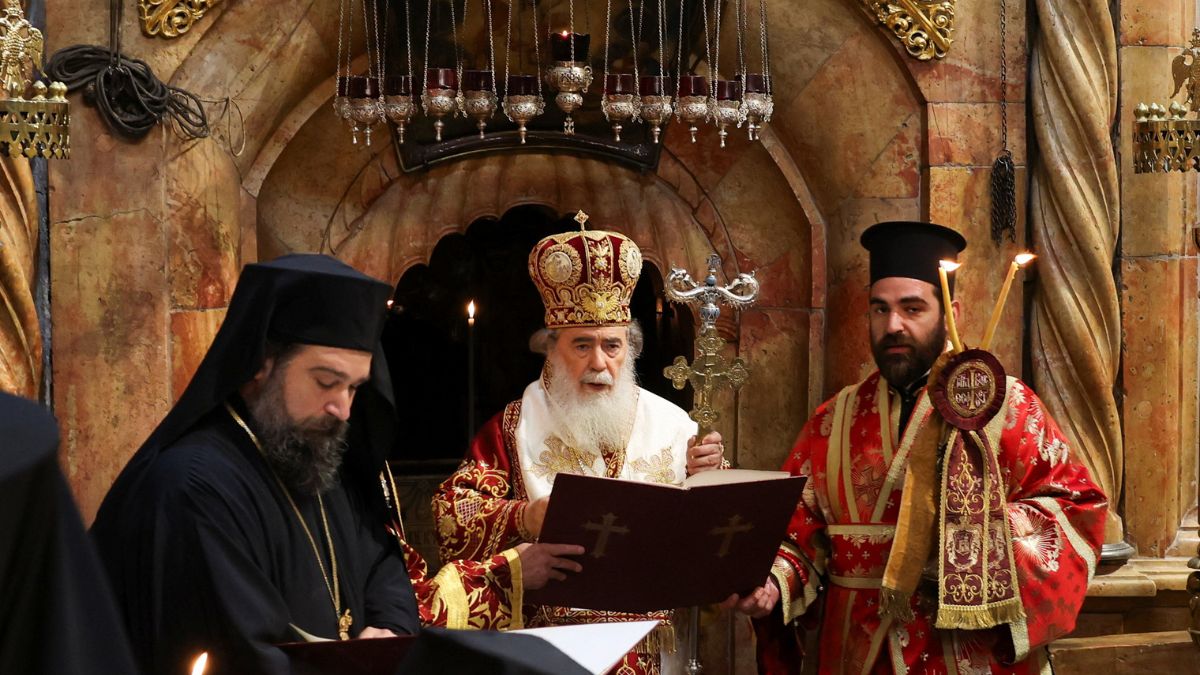
Orthodox Easter is the most important event in the Eastern Orthodox liturgical calendar, celebrating the resurrection of Jesus Christ. While it shares the core theological meaning with Western Easter, the two often fall on different dates and involve distinct traditions.
Why do the dates differ?
The most significant difference is the calendar used to calculate the date.
The Western Easter uses the Gregorian calendar (the standard civil calendar), and the Orthodox Easter uses the Julian calendar (an older system).
Because the Julian calendar is currently 13 days behind the Gregorian, and both traditions have slightly different rules regarding the spring equinox and the full moon, Orthodox Easter usually falls one to five weeks after Western Easter.
The Jewish Passover rule
A key requirement for Orthodox Easter that is not strictly followed in the West is that it must take place after the Jewish holiday of Passover. This is based on the biblical sequence of events, as the Resurrection occurred after the Passover celebration.
If the calculated date for Orthodox Easter falls before or during Passover, the Orthodox Church moves the celebration to the following Sunday.
Ukraine has said that it has repeatedly proposed a halt to fighting for Orthodox Easter. "People need an Easter without threats and a real move towards peace, and Russia has a chance not to return to attacks even after Easter," Zelenskiy wrote on Telegram.
Meanwhile, Kremlin spokesperson Dmitry Peskov told Russian state news agency TASS that Putin's ceasefire proposal had not been discussed in advance with the United States.
