



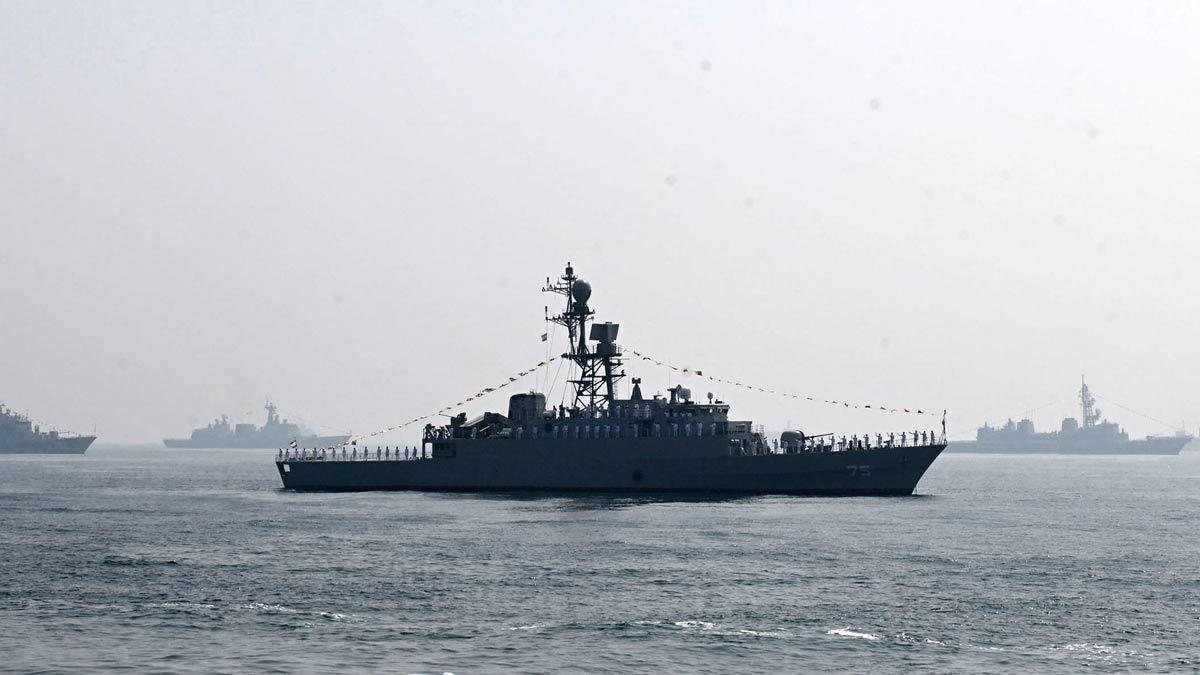
Two days after an American submarine sank the Iranian ship IRIS Dena in the Indian Ocean, approximately 19 nautical miles off Sri Lanka’s southern port city of Galle—killing dozens of sailors—the United States is reportedly pressing the island nation's government not to repatriate the survivors from the ship.
According to an internal State Department cable seen by Reuters on March 6, 2026, America has also warned Sri Lanka not to repatriate the 208 crew members evacuated from Iran’s naval auxiliary vessel IRIS Booshehr, which was docked at the Trincomalee port.
The attack on the Iranian ship, coupled with the presence of a second vessel at Trincomalee port, has created an unprecedented situation, with fear gripping the streets of Colombo as the country slowly emerges from its economic crisis.
Speaking in Parliament on Friday, Sri Lanka’s Deputy Minister of Public Security, Sunil Watagala, said the country is going through a wartime-like situation, despite the Iranian ship attack in the Indian Ocean being an undesirable development. He said Sri Lanka is now facing an unprecedented scenario, unlike anything seen in recent history and warned that it is impossible to predict who might become victims or how people could be affected under the current uncertain circumstances.
‘‘We cannot predict when, how, or who else will have to take on responsibilities like the one that Karapitiya hospital suddenly had to take on. We cannot estimate in advance the impact such a situation could have on the lives of the people of our country. In this war-like situation, it took only a day for Karapitiya hospital, thousands of miles away, to be filled with corpses. That is why we must be prepared. That is why we must adopt preventive measures. Imposing a state of emergency will not give us an Iron Drome, but it will provide us with the opportunity to prepare as much as possible,” Watagala noted.
Sri Lanka’s opposition leader, Sajith Premadasa, while speaking at the international healthcare exhibition held at the Bandaranaike international conference hall in Colombo, said that a war-like situation has risen in Sri Lanka due to the breakdown of trust and that Sri Lanka’s national aspiration should be to protect the 2.2 billion people. “We believe that we must act in accordance with the Universal Declaration of Human Rights,” Premadasa said.
Meanwhile, Sri Lanka’s Foreign Minister Vijitha Herath, speaking at a session titled “Heart of the Seas: The Future of the Indian Ocean” at the Raisina Dialogue 2026 in New Delhi, said the country would treat the Iranian sailors rescued from IRIS Dena in accordance with international law. While answering a question about whether there is international pressure from the US to not repatriate the Iranians, he replied, saying “We have taken all the steps according to international laws.” He also said Sri Lanka was caring for 32 sailors from the Iranian frigate IRIS Dena in accordance with its international treaty obligations.
Earlier Sri Lankan President Anura Kumara Dissanayake had said that his country would follow the Hague Convention, which requires a neutral state to hold combatants of a warring state until hostilities end. Dissanayake’s statement was a clear message to international pressure.
However, sources in the Sri Lankan bureaucracy told THE WEEK that the government is in talks with the International Committee of the Red Cross to decide on the next course of action in dealing with the survivors of IRIS Dena. They also said that the wounded survivors could be repatriated to Iran at their request, making note that the international humanitarian law applied to the survivors of IRIS Dena. According to the bureaucracy circles in Colombo, the Iranian diplomats in Colombo have already approached the government to take the remains of the 84 sailors killed in the IRIS Dena attack back to Iran.
