



It is 4 in the afternoon, and you ate a decent enough lunch at 1:30 PM, maybe dal-rice or a roti-sabzi. You told yourself you were done eating for a while. And then, without warning, your brain stops cooperating with the presentation you are trying to finish, your eyes drift to the drawer, or you find yourself standing in the kitchen staring into the fridge with absolutely no memory of deciding to get up.
Welcome to the most misunderstood meal of the day.
In my clinic, snacking comes up almost every session. And almost always, it comes wrapped in guilt. Clients confess to their afternoon eating the way people confess to forgetting to water a plant, sheepishly, defensively, half-expecting a lecture. "I had some biscuits," they say, lowering their voices slightly. “Or chips. Or that protein bar someone left in the break room.”
Here is what I tell them: the urge to eat between meals is not a moral failure. It is biology. The question is not whether you should snack. The real question is what you are actually putting into your body when you do.
Why 4 PM feels like a different kind of hunger
There is a reason the mid-afternoon hit is so reliable that you could set your watch by it. Between 3 and 5 PM, your body goes through a predictable dip in alertness that is linked to your circadian rhythm, the same internal clock that makes you sleepy in the early hours of the morning. This is not a sign that something is wrong with you. It is a normal physiological pattern.
At the same time, depending on what you ate for lunch and when, your blood glucose levels may be starting to fall. When blood sugar drops, the brain, which runs almost entirely on glucose, registers this as a priority signal. It sends out hunger cues. The body wants fuel, and it wants it now, preferably something quick.
This is also why the snack drawer feels irresistible at 4 PM but holds very little appeal at 11 AM. Your brain is not craving sugar because you have no willpower. It is craving sugar because sugar is the fastest way it knows to get what it needs. Your body is just doing its job. The biology is working exactly as designed.
The problem is what happens next.
The packaged snack problem (and I say this with love)
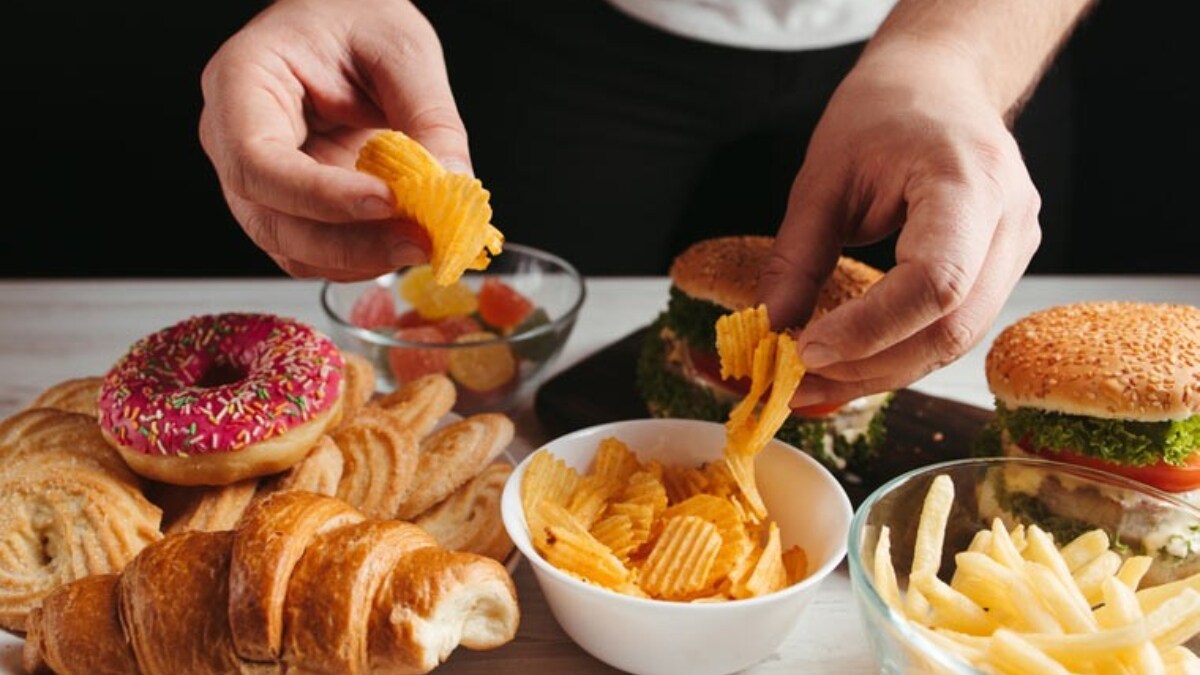
Let me tell you what happens when you eat a glucose biscuit or a packet of chips, or a "diet" namkeen, or one of those chewy bars on an empty stomach at 4 PM.
Your blood sugar spikes quickly. Your body releases insulin to bring it back down. The insulin does its job efficiently. And within 40 minutes, you are hungrier than you were before you started eating. You also, if you are paying attention, feel a little flat. A little foggy. Possibly mildly annoyed without knowing why.
This is not a coincidence. It is what refined carbohydrates with no protein or fibre to slow them down do to blood sugar. The spike is fast. The crash is faster. And then you are back at the drawer, reaching for something else.
The snack did not satisfy you. It reset the clock on your hunger and turned up the volume.
Reading the label vs. reading the marketing
The snack aisle in any Indian supermarket today is a masterclass in convincing language. The "multigrain" biscuit. The "oats and honey" cookie. The "baked, not fried" chips. The protein bar that somehow tastes exactly like a Kit Kat.
Pick up any of these and look past the front of the packet. "Multigrain" simply means more than one grain was used; it says nothing about fibre, protein, or your blood sugar. "Baked, not fried" tells you about the cooking method, not the nutrition. And that protein bar? Check how much of its weight comes from added sugar before you call it a health decision.
So what actually makes a snack work?
A snack that does its job, keeps you full, steadies your blood sugar, and does not send you back to the kitchen in 45 minutes, needs two things: some protein and some fibre.
Protein slows gastric emptying, meaning food stays in your stomach longer and you feel satisfied for longer. Fibre does something similar, it slows glucose absorption into the bloodstream, smoothing out those spikes and crashes. When you combine them, even in small amounts, the effect is noticeably different from eating refined carbohydrates alone.
Also, not everything in a packet deserves suspicion. There are genuinely good options out there, protein bars with minimal ingredients, real nuts, and no long list of additives. The difference is in the label, not the marketing. A bar with 10–12 grams of protein, minimal added sugar, and ingredients you can actually read is a legitimate snack. One dressed in health language but built on sugar and refined flour is just a chocolate bar with better PR.
The product inside does not always match the story on the outside. Your job is simply to know the difference.
What Indian kitchens already know
Roasted chana is one of the most underrated snacks in existence. It contains plant protein, fibre, and a low glycaemic load. A small katori at 4 PM does more for your energy levels than an entire packet of flavoured chips. Makhane, i.e., fox nuts, are light, easy to eat, and a reasonable source of protein and magnesium; dry roast them with a little ghee and salt and they become genuinely hard to stop eating, in the best way. A small handful of plain mixed nuts, almonds, walnuts, and a few cashews, gives you healthy fats and protein in a format that requires zero preparation and survives in a desk drawer indefinitely.
Fruits, eaten the way fruit is meant to be eaten, whole, not juiced, not dried into a sugary concentrate, come with fibre that slows the absorption of natural sugars. Buttermilk is an excellent choice in warmer months: hydrating, easy on the gut, and a source of protein. A boiled egg, if you eat eggs, is perhaps the most efficient snack there is.
The question of timing
One thing worth paying attention to is the gap between your meals. If you are eating lunch at 1 PM and dinner at 9 PM, that is an eight-hour gap. Expecting your body to function well across that stretch without any fuel is like expecting your phone to last all day when you unplugged it at noon. The battery will run out. The only question is what you do when it does.
When snacking becomes a problem
All of that said, there is a version of snacking that does not serve you well, and it is worth being honest about it.
Snacking out of boredom looks almost identical to hunger from the outside, but it is coming from a different place. If you have eaten a full meal less than an hour ago and your hands are already reaching for something, it is worth pausing and asking yourself what is actually happening. Sometimes the body wants water. Sometimes it wants a break from the screen. Sometimes it wants to not be in a meeting anymore, and the snack is a proxy for that.
Late-night snacking, particularly on heavy or refined foods after 9 or 10 PM, also tends to work against your body. This does not mean you can never eat after dinner. But if it is a nightly ritual born of habit rather than genuine hunger, it is worth examining.
The bottom line
Somewhere along the way, we were convinced that hunger between meals is a personal failing, something to be managed, suppressed, or apologised for. It is not.
Your body is simply asking to be fed. Roasted chana, a handful of nuts, a banana, a small bowl of curd, it does not take much to answer that honestly.
The opinions expressed in this article are those of the author and do not purport to reflect the opinions or views of THE WEEK
