



Mexico is the only country in the world which elects its judges by popular voting.
The new system was created by a constitutional reform law passed by the Mexican Congress in September 2024. This was proposed by the then-President López Obrador in February 2024.
He was frustrated by the judicial obstacles created by conservative judges against his progressive and populist policies and programmes. In any case, the judicial system was also stained by nepotism and corruption.
The previous system was a career judiciary system, which promoted candidates based on experience and exams.
The judicial elections were held on June 1, 2025, and saw thousands of lawyers contesting. Although the candidates are supposed to be free from political affiliation, the ruling Morena party endorsed some candidates discreetly, contributing to their success.
The requirements for aspiring judges are a law degree, good grades, and letters of recommendation. Prospective candidates are filtered by evaluation committees and submitted to the National Electoral Institute (INE) for inclusion on the ballot.
On September 1, 881 elected federal judges—including all nine Supreme Court justices—took their office. There will be another election in 2027 to elect roughly 800 more judges. Supreme Court justices serve a single 12-year term, while other federal judges serve renewable nine-year terms.
Hugo Aguilar Ortiz, the new Chief Justice of the Supreme Court, is the first Indigenous person to hold the highest judicial office in Mexico in its history. He had received the highest number of votes.
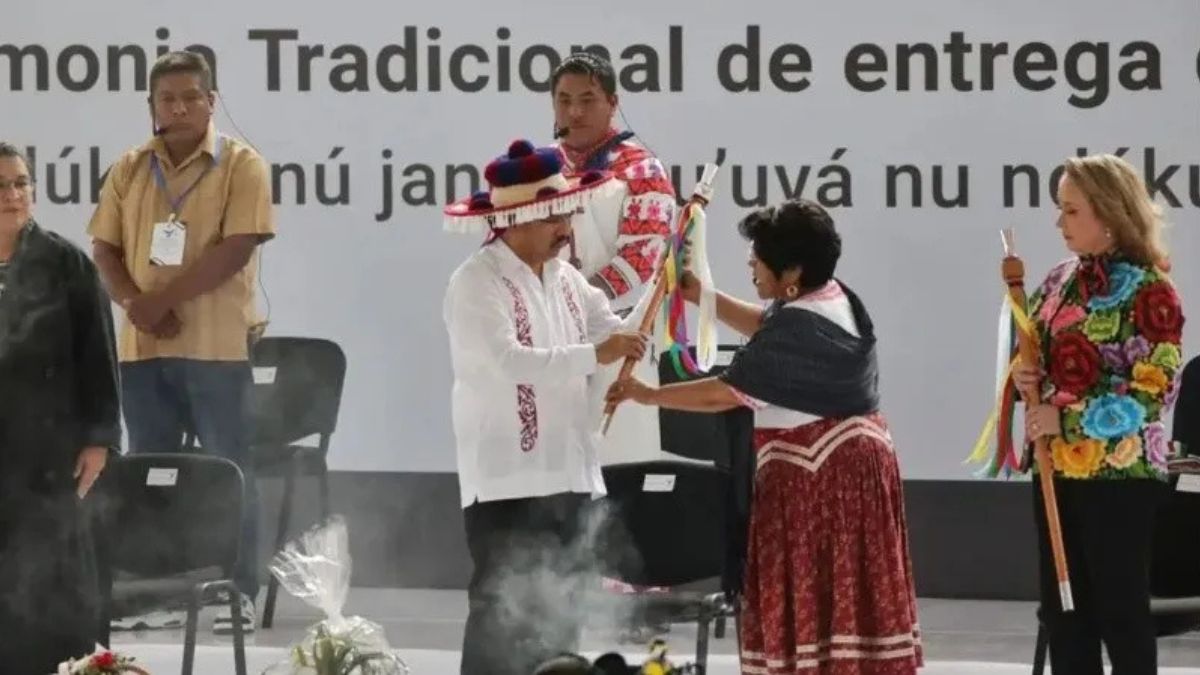
An Indigenous purification ceremony was held in Mexico City's Zócalo square to consecrate the newly elected Supreme Court justices.
This ceremonial act was a symbolic moment reflecting the recognition, inclusion and honoring of the Indigenous people of Mexico. This is an unprecedented ceremony with the presentation of the staffs of office and service from the country’s indigenous and Afro-Mexican peoples to the elected justices of the Supreme Court of Justice.
The ceremony took place in front of more than 1,500 attendees, with traditional music and copal smoke.
Hugo Aguilar Ortiz, the president-elect and sole speaker for his colleagues, said that he and his colleagues were assuming the role of “justices of the people”, with the clear mission of “cleaning up” the judiciary of corruption and nepotism.
While Mexico is the first country to elect all its judges, a system of election is practiced in 38 states of the US to select their state supreme court justices.
In fact, 8 states use a partisan method for selecting supreme court justices, where candidates appear on the ballot with their political party affiliation. These are Alabama, Illinois, Louisiana, New Mexico, North Carolina, Ohio, Pennsylvania, and Texas.
Notably, US politicians and media are the harshest critics of the New Mexican system of election, despite some of the US states using the same system.
The flawed US judiciary has allowed a convicted felon like Trump to become president and commit more crimes and atrocities. Meanwhile, the Brazilian justice system has banned Bolsonaro for the same crimes committed by Trump and has now put him on trial for his attempts to sabotage democracy.
Predictably, there is lot of criticism of the new system. These include politicisation of the judiciary, the dilution of independence, a flawed system of screening candidates, potential for manipulation of elections by cartels and lobbies, and a scope for electing candidates without adequate experience or expertise.
However, the fact that the voter turnout was a meagre 13 per cent strengthened critics' arguments. Many winners of the judicial elections—including five of the nine Supreme Court judges and Chief Justice Aguilar—are also said to have close ties to the ruling Morena party.
Still, let us not judge in haste—elected judges can cause much less damage to their countries and the world when they get elected, as compared to deranged politicians like Trump and Bolsonaro.
The author is an expert in Latin American affairs.
The opinions expressed in this article are those of the author and do not purport to reflect the opinions or views of THE WEEK.
