



The Sheesh Mahal at Amber Fort stops me in my tracks. Thousands of tiny mirrors catch the afternoon sun and break it apart across the walls. Every movement sets off another shimmer. I understand immediately why the palace builders were obsessed with them; mirrors turned ordinary light into something worth watching.
Most people come to Jaipur with the same list: Amber Fort, Hawa Mahal, City Palace, Jantar Mantar, Nahargarh. Move fast, photograph everything, leave. It works, but you miss the city.
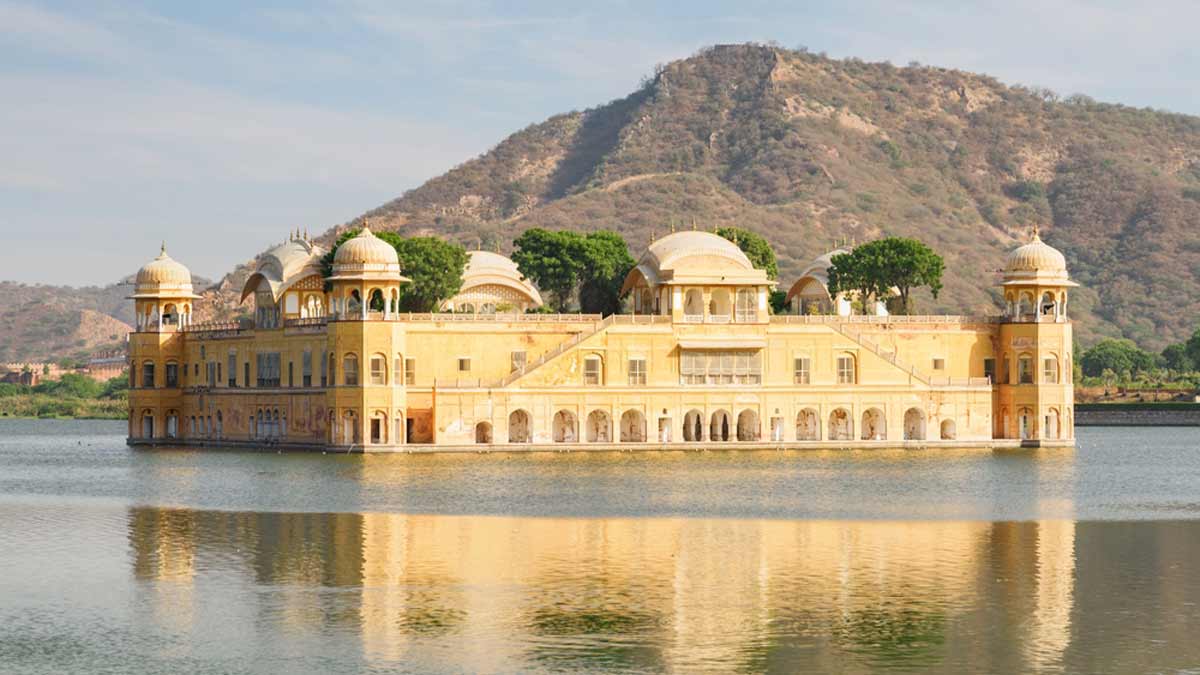
Over the years, I have found Amber Fort is worth more than a walk through the courtyards. Stay long enough and the light starts doing things to the sandstone: carvings you didn't notice earlier sharpen, the mirrored chambers shift depending on where you stand. Nearby, the Jal Mahal sits in the middle of Man Sagar Lake, half-submerged and oddly quiet for something so photographed. It's the kind of sight that makes you stop scrolling and just look.
Hawa Mahal's honeycomb facade still pulls you up short on the street below. Built so royal women could watch the city unseen; it still frames the same chaos centuries later. City Palace offers a closer look at the dynastic sweep, with portraits, armour, courtyards stacked with history, while Jantar Mantar's giant astronomical instruments, built to measure time, continue to awe with their precision – even in the age of AI.

Johri Bazaar is loud and crowded and not particularly relaxing. Textiles, gemstones, fabric, bric-a-brac, they all spill on to the pavement. But that's the point. Bargaining here requires patience and a willingness to drink a lot of chai while pretending to be less interested than you are. The lanes reward aimlessness more than a shopping list.
For me, Jaipur came back in a mirchi vada. Green chilli, spiced potato, deep-fried — a snack I hadn't thought about in years until I was standing on a street eating one. Crisp, fiery, immediately familiar. I spent part of my childhood here and had apparently buried that memory under the landmarks. Street food has a way of doing that. A plate of dal baati churma later that evening, rich, slow, and nothing like the cleaned-up versions you find in restaurants, confirmed it. Jaipur's food is some of the most distinctive in Rajasthan and gets a fraction of the attention it deserves.
The next day, I took a detour to Sanganer, a nearby workshop town built around hand block-printing. Fabric dried across courtyards while artisans pressed carved wooden blocks into cloth — fast, precise, repetitive in a way that's almost meditative to watch. Floral motifs, paisleys, vines appear block by block. The craft, alive here for centuries, shows no sign of slowing. It's the part of Jaipur's creative history that doesn't get a monument but probably should.
In the evening, I find myself at Sheesh Mahal again — the hotel bar this time. I sip a rose liqueur from Maharani Mahansar Distillery, a family operation that dates to 1768 and makes traditional spirits with rose, fennel, cardamom, and more. I notice the mirrors again, catching the last of the daylight.
Jaipur moves fast if you let it. The landmarks are real, the bazaars are great, the food is better than anyone tells you. But slow down, and the city offers something much more precious: a chance to see beyond the postcard.
