



For four decades now, Mexican football has measured itself against el quinto partido — literally the fifth match. The last time El Tri hosted the FIFA World Cup, in 1986, they reached the quarter-finals — the fifth match of the tournament. Since then, they have never gone past the round of 16, being eliminated in the first knockout stage for seven straight editions from 1994 to 2018, after missing Italia 1990. In 2022, it got even worse as they went out in the group stage.
This time, with a new round of 32 added, the new target is the sexto partido (sixth game), the spiritual successor to el quinto partido, which will be the quarter-finals. After the opening matchday of the 2026 FIFA World Cup, Mexico have put themselves in a good position to achieve this goal. They won 2–0 against South Africa at the historic Azteca Stadium in a match that saw three red cards — the most in any World Cup opener, and the joint-most in any World Cup match, behind only the 2006 'Battle of Nuremberg' (Portugal vs Netherlands), in which four players were sent off.
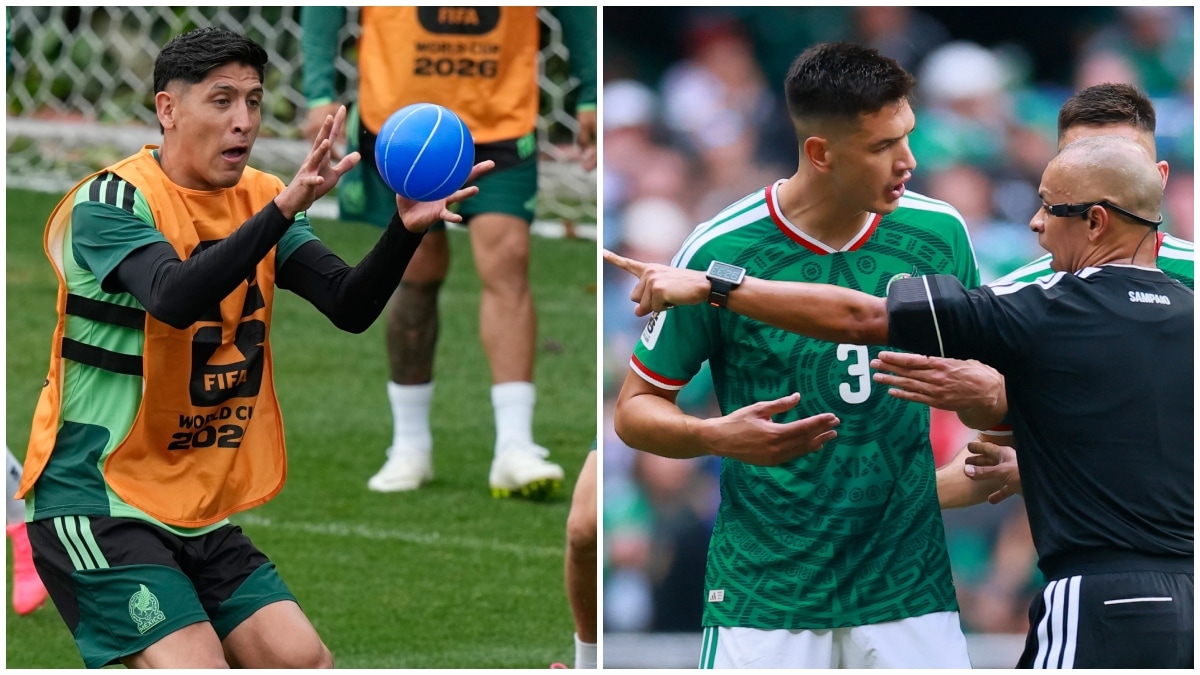
All three were straight reds — two for denying a goalscoring opportunity, one for violent conduct — and all three carry automatic one-match bans. Sphephelo Sithole and Themba Zwane will miss South Africa's must-win match against Czechia, while centre-back César Montes, who wore the armband for Mexico on the opening night, misses Mexico's next game against South Korea in Guadalajara. This could have a bigger impact on the tournament than a single red card ought to have.
If Mexico win Group A, the reward is a round of 32 match back at the Azteca in Mexico City against a third-placed qualifier. The iconic stadium sits 2,200 metres above sea level. Finish second, and the tie moves to near-sea level Los Angeles against Group B's runner-up. On paper, it is tough to decide who the more difficult opponent will be. If Canada is the Group B runner-up and Ivory Coast from Group E is the third-placed qualifier, there is an argument that Canada could be an easier match for Mexico.
However, the altitude adjustment that the Azteca provides is more reliable than squad strengths on paper. If they get to that match and win it, the Azteca will host them again in the round of 16, likely against England, as long as Thomas Tuchel's men don't stumble at their end. This is a match where home advantage could be key.
The challenge for the co-hosts now is that Montes's ban, which is unlikely to be extended beyond one match by the FIFA disciplinary committee, will be served in exactly the fixture that decides which of those routes Mexico gets. South Korea, who beat Czechia 2–1, arrive with three points and the confidence that provides. The Asians played the best football on matchday 1 and can pose a major challenge to a backline missing Montes's experience and leadership.
Luckily for Mexico, the man coming in is the one whom Montes was deputising for. Mexico coach Javier Aguirre has already indicated that Edson Alvarez, Mexico's captain, who was rested at the start of the opener as he works his way back to full fitness, is likely to start at centre-back. The West Ham United player, who was on loan at Fenerbahçe, is equally comfortable in defensive midfield and defence, and will add to ball progression and tactical acumen in the Mexican rearguard. He came on as a substitute against South Africa and looked sharp enough. But if there is any lingering fitness concern, the Korean attackers are more than capable of taking advantage of it.
The captain must then hold the fort for Mexico in this crucial second match.
